Saati Hi-Dro M3 Newman Style Roller Frame Mesh Panels 23″×31″ (6-Pack) – Thin Thread Plasma-Treated Mesh for Newman M3 Retensionable Roller Frames
Nortech
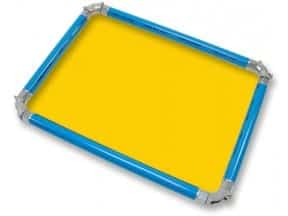
The Saati Hi-Dro M3 Newman Style Roller Frame Mesh Panels 23″×31″ (6-Pack) bring Saati’s thin-thread, plasma-treated Hi-Dro mesh to the Newman Roller Frame system — the gold standard in retensionable screen printing technology. These panels are precision-engineered for the Newman M3-UL roller frame profile (1 5/8″ roller diameter, 85N max tension). The locking strip dimensions are specific to the M3 frame. Do not order these panels for MZX-style frames — see the Description tab for a full M3 vs MZX comparison and how to identify your frame before ordering.
⚠️ CRITICAL: These panels are NOT compatible with Newman MZX-style frames
M3 and MZX frames have different roller diameters and channel profiles — the locking strip dimensions are not interchangeable. Before ordering, confirm you have M3-style frames (1 5/8″ roller diameter, larger corner hardware, 3/4″ socket bolts). See the Description tab for a full side-by-side comparison and step-by-step guide to identifying your frame type.
⚠️ Drop Ship Item: Ships directly from Nortech Graphics in Arkansas. Shipping times vary. Questions? Contact us at [email protected] or at (512) 454-0505.
Ships direct from Nortech · Free shipping over $200 · (512) 454-0505
Price range: $99.99 through $109.99
Description
Saati Hi-Dro Quality — Purpose-Built for the Newman M3 Roller Frame
Newman M3 roller frames are the production standard — retensionable, capable of reaching and sustaining 85 Newtons, and proven across decades of high-volume automatic press shops. The mesh panel is the consumable that makes the system work. These Saati Hi-Dro panels bring the same thin-thread, plasma-treated mesh that screen printers rely on for water-based, discharge, and halftone work — pre-fitted with the locking strip profile specific to the M3 frame channel. Swap mesh in minutes. Retension on demand. No adhesive, no glue, no re-stretch vendor.
📦 What’s Included
Six (6) Saati Hi-Dro mesh panels sized 23″×31″ with M3-profile locking strips, pre-woven and ready to install in your Newman M3-style roller frame. Mesh count and color selected at time of purchase. Note: This is the mesh panel only — the roller frame is not included. The Newman Roller Master stretching table or manual stretching tools are required to install and tension panels. Not compatible with MZX frames.
🔗 You’ll Also Need: Locking Strips
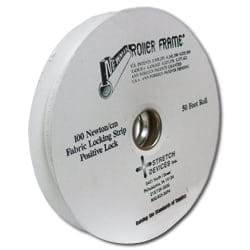
These mesh panels require locking strips to secure the mesh into your Newman roller frame channels. Locking strips are sold separately — add a roll to your order to complete your setup. → Nortech Newman Roller Frame Locking Strip (50ft Roll)
🎬 Watch: Newman Roller Frame Panel Installation
See how Hi-Dro mesh panels install into Newman roller frames and how the retensioning system works.
Why Newman Roller Frames Change What’s Possible in Your Shop
Most screen printing shops operate at 20–30 Newtons. Newman M3 roller frames can reach and sustain 85 Newtons — and the ability to retension between print runs means the mesh stays at peak performance, not drifting downward throughout the day. Here’s what that tension level actually changes:
⚡ Faster Print Speeds
High tension means faster snap-off, less squeegee drag, and cleaner ink release — enabling over 1,000 prints per hour on properly set up automatic presses.
🎯 Tighter Registration
Higher, sustained tension means minimal mesh distortion under squeegee pressure — enabling dot-on-dot registration that is simply not achievable with low-tension fixed frames.
💪 Less Squeegee Pressure
At high tension, ink clears the screen more easily. Less squeegee force needed — which means less ink driven into the garment, softer hand, and reduced wear on squeegee blades.
🔄 Retension On Demand
Mesh relaxes during use. Newman frames let you tighten back to spec between print runs and after reclaiming — hardening the mesh over time rather than letting it permanently stretch out.
🏥 Reduced Wrist & Arm Fatigue
Less squeegee pressure means less physical exertion per stroke. Newman documented that high-tension printing significantly reduces the risk of repetitive strain injuries including carpal tunnel syndrome.
⚗️ Faster Flashing
Thinner, smoother ink deposits from high-tension printing flash faster and at lower temperatures — saving time and energy costs across every multi-color production run.
⚠️ M3 vs. MZX — You MUST Order the Correct Panel for Your Frame
Newman M3 and MZX frames look similar but have fundamentally different roller tube diameters and channel profiles. The mesh panels are manufactured with locking strips specific to each frame type. Installing an M3 panel on an MZX frame (or vice versa) will not work correctly. Identify your frame before ordering.
| Specification | 🔵 M3 Frame (This Product) | 🟠 MZX Frame |
|---|---|---|
| Roller Tube Diameter | 1 5/8″ — Larger | 1 7/16″ — Smaller |
| Max Tension Capacity | 85 Newtons | 35 Newtons |
| Corner & Bolt Hardware | Larger corners & bolts | Smaller corners & bolts |
| Socket Size for End Bolts | 3/4″ socket | Smaller socket |
| Max Torque (black bolts) | 55 ft/lbs | 35 ft/lbs |
| Tube Configuration | 4 round tubes only | 4 round tubes OR 3 round + 1 square bar |
| Frame Weight & Rigidity | Heavier — 300% stronger than MZX | Lighter — thinner tube walls |
| Best For | Medium-large auto press shops, high-volume production | Manual shops, small auto shops, lower-volume work |
| Panel Compatibility | M3 panels ONLY | MZX panels ONLY |
🔍 How to Identify Your Frame Before Ordering
Step 1 — Measure the Roller Tube
Use calipers to measure the outer diameter of one of the round roller tubes. M3 = 1 5/8″ (41.3mm). MZX = 1 7/16″ (36.5mm). This is the most reliable method.
Step 2 — Check the Corner Hardware
M3 frames have noticeably larger, heavier corner castings and larger bolts. If the corners look robust and the frame feels heavy, it’s likely M3. MZX corners are smaller and lighter.
Step 3 — Check for Frame Markings
Many Newman frames are stamped or labeled on the corner hardware or tubes. Look for “M3” or “MZX” stamped near the corner pieces or on the bolts. Good lighting and a close look often reveals the model.
Step 4 — Check the Socket Size
M3 end bolts require a 3/4″ socket to tighten. If your stretching wrench is 3/4″, you have M3 frames. MZX bolts use a smaller socket. When in doubt, call us: (512) 454-0505.
Why Hi-Dro Mesh Is Ideal for Newman M3 Frames
Newman M3 frames are capable of reaching 85 Newtons. At those tension levels, the benefits of Hi-Dro’s thin-thread, plasma-treated construction compound significantly:
🔬 Thinner Thread at High Tension
Hi-Dro’s 48µm thread at 157 count vs. Hi-Tex’s 64µm means the mesh openings are significantly wider — 109µm vs ~83µm. At the high tension levels Newman M3 frames achieve, this translates to even more complete ink release and less squeegee force needed to clear the screen.
⚡ Plasma Treatment = Instant Coating
Hi-Dro’s proprietary DBD plasma surface treatment eliminates the degreasing prep step. With a roller frame system built around speed and consistency, not having to degrease between installations saves meaningful time at scale. Install the panel, tension to spec, coat with emulsion immediately.
💧 Water-Based at Production Speed
Hi-Dro is purpose-built for water-based and discharge inks. The plasma treatment’s antistatic properties and the wider mesh openings reduce drying-in-screen incidents during long production runs — critical when running water-based at the speeds that Newman M3 roller frames enable.
Hi-Dro ECO Panel 23″×31″ — Mesh Count Guide for Newman M3 Frames
All Hi-Dro mesh counts below are available as M3 Newman roller frame panels. Select your count based on your ink system and detail requirements.
| Mesh Count | Color | Thread Dia. | Open Area | Best For |
|---|---|---|---|---|
| 110 Hi-Dro | ⬜ White | 64 µm | ~60% | Discharge white inks, heavy water-based deposits, thick specialty inks |
| 157 Hi-Dro | ⬜ White | 48 µm | 46% | General water-based spot colors, all-around production printing |
| 157 Hi-Dro | 🟨 Yellow | 48 µm | 46% | Most popular. Halftones, water-based, plastisol — 40–55+ LPI. Yellow absorbs UV scatter for sharper edges. |
| 198 Hi-Dro | 🟨 Yellow | 40 µm | 44% | Fine detail, lighter ink deposits, photographic simulated process |
| 230 Hi-Dro | 🟨 Yellow | 40 µm | 38% | High-detail halftones, 4-color process, fine-line artwork |
| 305 Hi-Dro | 🟨 Yellow | 31 µm | ~36% | Ultra-fine photographic detail — handle with extra care |
🟨 Yellow Mesh vs. White Mesh — Which to Choose for Newman M3
⬜ White Hi-Dro — Maximum Exposure Energy
White threads allow UV light to pass through and scatter during exposure. Best for large solid coverage areas, bold designs, discharge whites, and heavy water-based deposits where maximum exposure energy is beneficial. Use 110 and 157 White for your general production printing.
🟨 Yellow Hi-Dro — Sharper Stencil Edges
Yellow threads absorb UV wavelengths that cause internal scattering during exposure — keeping the light path clean and direct. The result is sharper stencil edge definition, better halftone dot integrity, and higher achievable LPI. At the tension levels Newman M3 frames deliver, yellow mesh and precise tension work together for exceptional dot-on-dot halftone results. Use for all halftone, simulated process, and fine-detail work.
Hi-Dro vs. Hi-Tex — Choosing the Right Mesh for Your Newman M3 Frame
Both Hi-Dro and Hi-Tex panels are available for Newman M3 roller frames. Most high-performance shops stock both and switch between them based on job type. Here’s how to decide:
| Feature / Factor | 💧 Hi-Dro (This Product) | 🔴 Hi-Tex M3 Panels |
|---|---|---|
| Thread Diameter (157/158 count) | 48 µm — Thinner | 64 µm — Thicker |
| Open Area (157/158 count) | 46% — More Open | ~38% — Less Open |
| Ink Flow at High Tension | Excellent — wider openings clear faster | Good — proven reliable |
| Water-Based Performance | Excellent — purpose-built | Good — must degrease first |
| Plastisol / Heavy Deposit | Good — softer hand at high tension | Excellent — workhorse for underbases |
| Halftone Performance | Excellent — less dot clipping | Good — thicker threads clip fine dots |
| Surface Treatment | Plasma treated — coat immediately | None — must degrease before use |
| Tear Resistance | Handle with care at high tension | More durable under high tension |
| Best For on Newman M3 | Water-based, discharge, halftones, simulated process, soft-hand plastisol at production speed | High-opacity plastisol, white underbases, heavy-deposit production runs |
Pro tip: Most high-performance Newman M3 shops stock both. Hi-Dro for water-based, discharge, and all halftone work. Hi-Tex M3 panels for your heavy-deposit plastisol and underbase runs. The roller frame’s quick retensioning makes switching mesh types between jobs a fast, practical workflow.
Roller Frame Panels vs. ECO Frame Panels — What Is the Difference?
We also carry Saati Hi-Dro ECO Frame panels for the Nortech ECO Frame system. These are different products — same Saati mesh, different locking strip profiles built for different frame systems. Make sure you are ordering the correct panel for your frame:
Newman M3 Roller Frame Panels (This Product)
Locking strip sewn into the mesh edge to fit the Newman M3 roller tube channel. For shops with Newman M3 roller frame systems. Tensioned using the Newman Roller Master or manual stretching tools with torque wrench. Up to 85 Newtons.
Locking strip profile fits the Nortech ECO Frame channel system. For shops with ECO Frames. Tensioned using the Nortech ECO Stretching Tool — no torque wrench needed. Simpler installation, 2-minute swaps. Different frame system entirely.
⚠️ Hi-Dro Thin Thread — Handle With Care
Hi-Dro’s thinner thread is more fragile than standard Hi-Tex mesh, especially at the high tension levels Newman M3 frames can reach. Use proper stretching technique, follow Newman’s tension chart recommendations, avoid exceeding rated tension for your mesh count, and keep sharp objects away from the mesh surface. The print quality improvement is significant and well worth the care required.
Saati Hi-Dro vs. Hi-Tex — Which Newman M3 Roller Frame Panel Is Right for Your Job?
Both Hi-Dro and Hi-Tex mesh are available as Newman M3 roller frame panels. Most high-performance shops with M3 frames stock both — Hi-Dro for water-based, discharge, and halftone work, and Hi-Tex for heavy plastisol production. Here’s how to choose:
| Feature / Factor | 💧 Hi-Dro (This Product) | 🔴 Hi-Tex |
|---|---|---|
| Thread Diameter (157/158 count) | 48 µm — Thinner | 64 µm — Thicker |
| Open Area (157/158 count) | 46% — More Open | ~38% — Less Open |
| Ink Flow at High Tension | Superior — wider openings + high tension = maximum ink transfer | Good — reliable heavy deposit |
| Squeegee Pressure Required | Lower — amplified by M3 high tension | Higher — needs more force to clear |
| Water-Based Performance | Excellent — purpose-built | Good — must degrease first |
| Plastisol Performance | Excellent — softer hand at high tension | Excellent — heavy opacity workhorse |
| Halftone Performance | Excellent — less dot clipping | Good — thicker threads clip fine dots |
| Print Hand Feel | Softer — less ink driven in | Standard — heavier deposit |
| Surface Treatment | Plasma treated — coat immediately | None — must degrease before every use |
| Tear Resistance | Handle with care — thinner thread | More durable under aggressive pressure |
| Best For | Water-based, discharge, halftones, simulated process, soft-hand plastisol | High-opacity plastisol, heavy underbases, maximum durability production |
Pro tip: At Newman M3 high tension levels, Hi-Dro’s advantage compounds — wider openings plus high tension means even more complete ink release and less squeegee effort than Hi-Dro at lower tensions. Most serious M3 shops run Hi-Dro for everything except their heaviest plastisol underbase work.
How Newman Roller Frame Panels Work — The Locking Strip System
Unlike traditional glued screens where mesh is bonded to fixed aluminum frames with adhesive, Newman roller frame panels use a sewn-in plastic locking strip that locks into the roller frame’s channel system. This is what makes retensioning possible — and it’s a fundamentally different approach to screen management:
🧵 Locking Strip is Sewn In
The plastic locking strip on these panels is sewn into the mesh edge using high-quality polyester thread — not glued or pressed. This creates a permanent, chemical-resistant bond between the strip and the mesh that can withstand roller frame tension levels that would destroy any adhesive-based system.
🔩 Locks Into Roller Channels
The locking strip seats into the channel cut into the roller tube surface. As you tighten the frame bolts, the rollers pull outward — stretching the mesh evenly in all four directions. The strip holds the mesh to the roller without any glue, tape, or adhesive that could degrade under chemical exposure.
🔄 Retension Without Removing Mesh
When mesh tension drops during use, simply loosen the bolts slightly, retighten with a torque wrench to spec, and continue printing. The mesh work-hardens over multiple retensioning cycles — becoming more stable over time. This is what makes Newman frames an indefinite asset rather than a consumable.
Retensioning Schedule — Getting the Most From Your Hi-Dro Panels
Mesh work-hardens with each retensioning cycle. Newman and Stretch Devices recommend a break-in schedule to harden fresh mesh and achieve stable, sustained high tension:
🆕 New Panel — First Use
Tension to your target Newton level. Print 2–3 jobs. Tension will drop slightly as the new mesh fibers seat into the locking strip channels. This is normal.
🔄 First Retension
After 2–3 print runs, retension back to target. Print another 2–3 jobs. The mesh is beginning to work-harden and will hold tension better after each cycle.
✅ Work-Hardened Mesh
After 4–6 retensioning cycles, the mesh stabilizes significantly. Tension holds longer between retensioning. Retension after every reclaim and before critical registration jobs.
📊 Always Use a Torque Wrench
Never use a ratchet — it cannot read torque accurately. M3 black bolts: 55 ft/lbs max. Never exceed rated torque. Hi-Dro thin thread requires extra care not to over-tension.
Also Available — Related Roller Frame Panels & Supplies
>
We also carry MZX-style panels, Hi-Tex roller frame panels, and all the emulsions and inks to complete your setup.
🧵 Saati Hi-Tex M3 Roller Frame Panels →
Same M3 profile, standard thick-thread Hi-Tex mesh. Better for heavy plastisol underbases and high-volume production where maximum durability is the priority.
🟠 MZX Style Hi-Dro Roller Frame Panels →
Need panels for MZX frames instead? We carry Hi-Dro and Hi-Tex panels for Newman MZX roller frames as well. Make sure you have MZX frames before ordering.
Hi-Dro panels coat immediately after installation — no degreasing. Chromaline, Murakami, and Saati emulsions for every ink system and mesh count.
Water-based, discharge, plastisol, and specialty inks from Inktek, TW Graphics, Matsui, and more — matched to every Hi-Dro mesh count.
At Newman M3 tension levels, less squeegee pressure is needed — squeegee blades last significantly longer. Shop our full squeegee range.
Ink removers, emulsion removers, and degreasers. No adhesive in the locking strip system means no glue contamination during reclaim.
(512) 454-0505 · [email protected] · Same-day shipping before 3:30 PM CT · Free shipping over $200
Technical Specifications
Technical Specifications — Saati Hi-Dro M3 Newman Roller Frame Panels 23″×31″ (6-Pack)
Manufacturer: Saati · Drop Ship via Nortech Graphics, Arkansas
| Mesh Type | Saati Hi-Dro — high modulus, low elongation monofilament polyester with proprietary DBD plasma surface treatment |
| Frame Compatibility | Newman M3-style roller frames only — 1 5/8″ roller diameter. NOT compatible with MZX frames. |
| Frame Size | 23″ × 31″ outer dimension |
| Pack Quantity | 6 panels per pack |
| Available Mesh Counts | 110 (White) · 157 (White) · 157 (Yellow) · 198 (Yellow) · 230 (Yellow) · 305 (Yellow) |
| Thread Diameter Range | 31 µm (305 count) to 64 µm (110 count) — thinner than Hi-Tex at same mesh count |
| Surface Treatment | Proprietary plasma treatment (DBD — Dielectric Barrier Discharge) — no degreasing required |
| Degreasing Required | No — coat directly after installation |
| Ink Compatibility | Water-based, discharge, HSA, and plastisol inks — purpose-built for water-based |
| M3 Frame Specs | Roller diameter: 1 5/8″ · Max tension: 85 Newtons · Torque (black bolts): 55 ft/lbs max · Socket: 3/4″ |
| Panel Note | Mesh panel only — roller frame not included. Newman Roller Master or manual stretching tools required for installation. |
| Handling Note | Thin thread — more fragile than Hi-Tex. Handle with care. Follow Newman tension chart recommendations for each mesh count. |
| Shipping | Drop ship — ships direct from Nortech Graphics, Arkansas. Times vary. Contact us at [email protected] or (512) 454-0505. |
Technical Sheets / Safety Data Sheets / Documents
FREQUENTLY ASKED QUESTIONS
Are these panels compatible with MZX Newman roller frames?
No. These panels are M3-specific. MZX frames have a different roller diameter and channel profile — the locking strips are not interchangeable. Confirm your frame type before ordering. See the question below for how to identify your frame.
How do I tell if I have M3 or MZX Newman roller frames?
Measure the roller tube diameter with calipers: M3 = 1 5/8″ (41.3mm), MZX = 1 7/16″ (36.5mm). Also check: M3 requires a 3/4″ socket for end bolts; M3 corners are larger and heavier; M3 frames often have “M3” stamped on corner hardware. Not sure? Call us at (512) 454-0505 before ordering.
What is the difference between Newman M3 and MZX roller frames?
M3: 1 5/8″ roller, 85N max tension, 300% stronger, production auto press frame, 3/4″ socket, 55 ft/lbs max torque.
MZX: 1 7/16″ roller, 35N max tension, suited for manual and small auto shops. The M3 is Newman’s production frame with no tension ceiling limitations for most shops.
Do I need to degrease Hi-Dro panels before coating?
No. Hi-Dro’s plasma treatment eliminates the degreasing step. Install, tension to spec, and coat with emulsion immediately. Standard Hi-Tex mesh must be degreased before every use.
What are the benefits of Newman M3 roller frames over fixed frames?
High sustained tension (up to 85N), retensioning between print runs, dot-on-dot registration accuracy, 1000+ prints/hour capability, less squeegee pressure, softer hand prints, faster flashing, longer squeegee blade life, and reduced wrist/forearm strain. Fixed frames cannot retension — the mesh drifts downward permanently.
Is this the roller frame or just the mesh panel?
Mesh panel only — the roller frame is not included. You must already own Newman M3-style roller frames. The Newman Roller Master stretching machine or manual stretching tools are required to install and tension the panels.
Which Hi-Dro mesh count is best for Newman M3 frames?
157 Yellow is the most popular all-around count — handles halftones, water-based, and plastisol at 40–55+ LPI. 110 White for discharge and heavy deposits. 230 Yellow for high-detail halftones and 4-color process. Always follow Newman’s tension chart for each count at M3 tension levels. Questions? (512) 454-0505.
What is the difference between Newman roller frame panels and ECO frame panels?
These are different panel systems for different frame types — same Saati mesh, different locking strip profiles. Newman M3 roller frame panels (this product) are for Newman M3 retensionable roller frames and use a locking strip sewn into the mesh edge that fits the M3 roller tube channel. Nortech ECO Frame panels use a different locking strip profile for the ECO Frame channel system. They are not interchangeable. Order based on your frame system, not just the mesh type.
Where do these panels ship from?
Drop ship — ships directly from Nortech Graphics in Arkansas. Shipping times vary. Contact us at [email protected] or (512) 454-0505.
Not sure if you have M3 or MZX frames? Call us before ordering.
(512) 454-0505 | [email protected]
Reviews
Only logged in customers who have purchased this product may leave a review.
You May Also Like
Related products
-

Saati Hi-Tex M3 Newman Style Roller Frame Mesh Panels 23″×31″ (6-Pack) – Standard Thread Heavy-Duty Mesh for Newman M3 High-Tension Production Roller Frames
Price range: $99.99 through $139.99 -
Saati Hi-Tex MZX Newman Style Roller Frame Mesh Panels 23″×31″ (6-Pack) – Standard Thread Heavy-Duty Mesh for Newman MZX High-Tension Production Roller Frames
Price range: $99.99 through $139.99 -

Nortech Newman Roller Frame Locking Strip 50ft Roll
$99.99 -
Saati Hi-Dro MZX Newman Style Roller Frame Mesh Panels 23″×31″ (6-Pack) – Thin Thread Plasma-Treated Mesh for Newman MZX Retensionable Roller Frames
Price range: $99.99 through $121.99
Reviews