Chromaline ChromaBlue Photopolymer Emulsion – Fast-Exposing Screen Printing Emulsion for Plastisol Inks
Chromablue
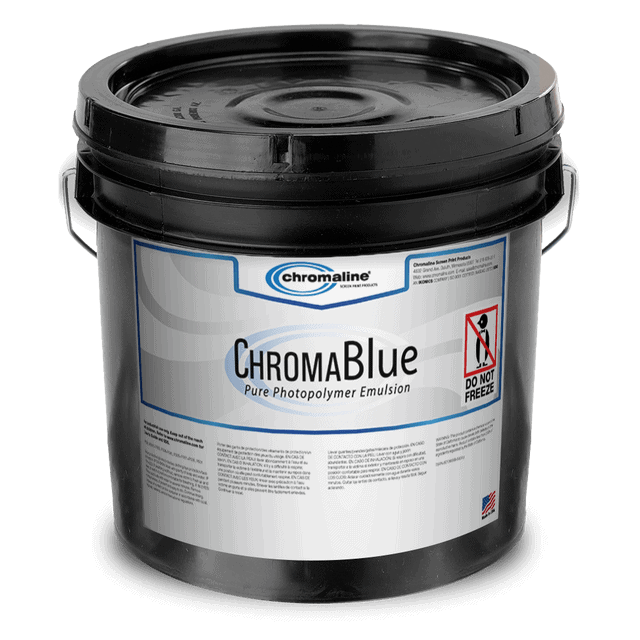
Chromaline ChromaBlue is the pure photopolymer emulsion that set the standard for SBQ-based textile screen printing emulsions — and still hasn’t been matched. Pre-sensitized and ready to use straight from the container, ChromaBlue delivers blazing-fast exposure times, 50% solids content (with no inert fillers), and a single 1+1 coat that outperforms the 2+2 coating routine of lower-cost emulsions. If you’re printing plastisol on textile and want more screens per bucket, faster turnaround, and easy reclaim, this is the emulsion your screen room has been looking for.
No diazo to mix — pre-sensitized, use straight from the container
More active chemistry per bucket = more screens, lower cost per stencil
As low as 3 seconds on LED — fastest SBQ emulsion in its class
One coat per side = four wet-on-wet diazo coats — more screens per bucket
4600 CPS medium viscosity covers all mesh counts cleanly and consistently
Breaks down cleanly with Chroma/Strip — no stubborn residue or ghost staining
Price range: $35.18 through $5,600.00
Description
The SBQ Photopolymer Standard — Chromaline ChromaBlue
ChromaBlue isn’t just another emulsion — it’s the benchmark that every SBQ photopolymer emulsion on the market gets measured against. Developed for textile screen printers printing with plastisol inks, it’s Chromaline’s best-selling emulsion for good reason: it exposes faster, dries faster, and goes further per bucket than competing products that require double the coating passes. The pre-sensitized, one-part formula means you open the container and start coating — no mixing, no waiting for diazo to dissolve, no sensitized shelf-life clock ticking in the background.
What Screen Printers Are Saying
“1+1 coating with ChromaBlue eliminated double stroking my whites — now I’ve nearly doubled my production rate.”
★★★★★ Verified Screen Printer
“3-second exposure on LED… are you kidding me!? Detail is perfect and reclamation is super easy. Since we only need 1/1, the bucket seems to last forever!”
★★★★★ Peterson Print Services
“No matter what chemical I clean it with, it always melts off at reclaim. I get more screens per bucket and order less often.”
★★★★★ Verified Screen Printer
Why 50% Solids Actually Matters
Lower-cost emulsions pad their solids with inert fillers. ChromaBlue’s 50% solids are entirely active photopolymer chemistry — what gives you superior mesh bridging, a dense stencil wall, and long print runs without edge breakdown.
Pre-Sensitized = No Mixing, No Waste
Diazo emulsions require mixing a sensitizer packet, a 30-minute de-gas wait, and careful refrigeration. ChromaBlue is a one-part photopolymer with a 24-month shelf life. Stir before use and coat. That’s it.
The 1+1 Cost Advantage
ChromaBlue’s standard 1+1 coating equals four wet-on-wet coats with a typical diazo emulsion. Your bucket goes dramatically further and your cost per screen drops — often below what cheaper alternatives actually cost per screen.
LED-Ready, Blazing Fast
ChromaBlue’s SBQ chemistry is highly sensitive to UV — including modern LED exposure units. Real-world users report exposure times as short as 3 seconds on LED. More screens per hour, less time at the exposure unit.
What You Receive
ChromaBlue vs. Diazo vs. Dual-Cure
| Feature | ChromaBlue | Diazo | Dual-Cure |
|---|---|---|---|
| Sensitizer | Pre-sensitized | Must mix diazo | Must mix diazo |
| Exposure | Very Fast | Slow | Moderate |
| Solids | 50% (no fillers) | 30–38% | 36–42% |
| Coating Ratio | 1+1 | 2+2 or more | 1+1 to 2+2 |
| Shelf Life | 24 months | 3–4 months mixed | 4–6 weeks mixed |
| Durability | Excellent | Good | Very Good |
| Reclaim | Excellent | Good | Good |
⚠ Freeze Warning
ChromaBlue is NOT freeze/thaw stable. Frozen emulsion is permanently damaged. River City ships from San Antonio, TX — our mild winters mean more ship days than northern distributors. We’ll communicate any holds at order time.
⚠ Exposure Accuracy Is Critical
Because ChromaBlue exposes so fast, the margin for timing error is narrower than with slower diazo emulsions. Always run a step-exposure test when setting up a new mesh, light source, or emulsion batch.
⚠ Safelight Conditions
Always coat under yellow safelight. Avoid fluorescent lighting — it emits UV that can begin crosslinking SBQ emulsions prematurely. Keep the pail covered when not actively coating.
How ChromaBlue Compares to the Full Chromaline Line
Not sure this is the right emulsion for your shop? Use this table to find your best match — then click any product to view it on our site.
| Emulsion | Type | Ink Compatibility | Exposure | Best For |
|---|---|---|---|---|
| ChromaBlueYOU ARE HERE | Pure Photopolymer (SBQ) | Plastisol | Very Fast | High-volume plastisol, LED shops |
| ChromaLime ↗ | Pure Photopolymer (SBQ) | Plastisol | Very Fast | Inkjet positives, humidity, registration |
| Hydro X Blue ↗ | Hybrid Photopolymer | Plastisol, WB, Discharge | Very Fast | All-purpose, water-based/discharge |
| Hydro X Red ↗ | Hybrid Photopolymer | Plastisol, WB, Discharge | Very Fast | Halftone/fine detail, LED units |
| CP-Tex ↗ | Diazo | Plastisol, WB, Discharge | Moderate | High-run WB/discharge durability |
| UDC-2 ↗ | Dual-Cure | Plastisol, Solvent, UV | Fast | Graphic + textile, halftone detail |
| UDC-HV ↗ | Dual-Cure | Plastisol, Solvent, UV | Fast | All mesh counts, forgiving shops |
| GSR ↗ | Pure Photopolymer (SBQ, solvent-resistant) | UV, Solvent, Plastisol | Fast | UV/solvent inks, freeze/thaw stable |
| Chromaline PL ↗ | Pure Photopolymer (SBQ) | Plastisol | Very Fast | High-build plastisol, thick deposits |
How to Use ChromaBlue — Step by Step
Step 1 — Degrease
Work up a lather of Chroma/Clean™ mesh degreaser on both sides of the screen. Flood thoroughly with water and allow to dry completely. Never skip — oil and residue are the leading cause of pinholes and adhesion failure.
Step 2 — Coat
Stir ChromaBlue before use. Apply one coat to the print (t-shirt) side, then flip and apply one coat to the squeegee side. For a thicker stencil, add coats to the squeegee side while still wet. Work under yellow safelight conditions.
Step 3 — Dry
Dry horizontally, print side down, in a totally dark, clean cabinet. Do not exceed 110°F (43°C). ChromaBlue’s low water content means faster drying than diazo emulsions.
Step 4 — Expose
Place the emulsion side of your film positive in contact with the print side of the screen. Exposure times are very short — always run a step-exposure test to dial in your specific setup before committing to a production time.
Step 5 — Develop
Gently spray both sides with lukewarm water. Wait up to 30 seconds, then wash the print side until the image is fully open. Rinse both sides thoroughly and dry completely before printing.
Step 6 — Reclaim
Apply Chroma/Strip™ to both sides. Scrub with a stiff nylon brush until the stencil begins to dissolve, then remove with a pressure washer and flood with a garden hose. ChromaBlue reclaims cleanly regardless of press-wash chemistry.
🔍 Running into issues? Pinholes, emulsion breakdown, washout problems?
Watch: Screen Making 101
New to making screens? This step-by-step Chromaline video covers mesh prep, emulsion coating, exposure, and washout from start to finish.
What Is SBQ Photopolymer Chemistry?
SBQ (Stilbazolium Quaternary) crosslinks rapidly and densely under UV without requiring a sensitizer activator. The result is a very fast, very sharp stencil with clean edge definition — the gold standard for high-speed textile production.
Recommended Companion Chemicals
Chroma/Clean™ mesh degreaser before coating, Chroma/Strip™ for reclaim, Chroma/Haze™ for ghost images, Chroma/Fill™ for pinholes and blockout. Matched chemistry takes the guesswork out of troubleshooting.
Mesh Count Guide
Official exposure data covers 110, 230, and 390 mesh. For general plastisol production: 110–160 mesh. For halftones and fine detail: 196–230 mesh. ChromaBlue’s 4600 CPS viscosity and 50% solids provide strong bridging across the full range.
Frequently Bought Together
All-in-one screen wash — cleans, degrease and prep in one formula.
Degreaser and reclaiming aid for clean mesh and better adhesion.
Dial in your exposure unit fast. LED or metal halide.
Required for applying emulsion — a sharp scoop coater ensures an even, consistent coating on every screen.
Technical Specifications
Chromaline ChromaBlue — Technical Specifications
| Specification | Value |
|---|---|
| Emulsion Type | Pure Photopolymer (SBQ — Stilbazolium Quaternary) |
| Sensitization | Pre-sensitized — use straight from container, no diazo required |
| Color | Blue (dyed formulation only) |
| Solids Content | 50% (no inert fillers) |
| Viscosity | 4600 CPS (Medium) |
| Exposure Speed | Very Fast |
| Primary Ink Compatibility | Plastisol inks (textile screen printing) |
| Standard Coating | 1+1 (print side + squeegee side); additional squeegee-side coats for thicker stencil |
| Drying | Horizontal, print side down, dark cabinet; max 110°F (43°C) |
| Film Positive Placement | Emulsion side of positive against print (t-shirt) side of screen |
| Washout | Lukewarm water — spray both sides, 30-sec dwell, wash print side until open |
| Exposure — 110 Mesh (5KW @ 40″) | 1×1: 30 sec (165 mJ/cm²) | 1×2: 40 sec | 1×3: 50 sec |
| Exposure — 230 Mesh (5KW @ 40″) | 1×1: 20 sec (107 mJ/cm²) | 1×2: 25 sec | 1×3: 30 sec |
| Exposure — 390 Mesh (5KW @ 40″) | 1×1: 15 sec (78 mJ/cm²) | 1×2: 20 sec | 1×3: 25 sec |
| Degreaser | Chroma/Clean™ mesh degreaser (required before every coating) |
| Reclaim Chemistry | Chroma/Strip™ + stiff nylon brush + pressure washer |
| Optional Chemicals | Chroma/Haze™ (ghost images), Chroma/Fill™ (blockout) |
| Shelf Life | 24 months at room temperature |
| Max Storage Temp | 80°F (27°C) |
| Freeze/Thaw Stability | NOT freeze/thaw stable — protect from freezing at all times |
| Safelight | Yellow safelight required — avoid fluorescent lighting |
| Available Sizes | Quart, Gallon, 3.5 Gallon |
| Manufacturer | Chromaline Corporation (IKONICS Company) — Duluth, MN, USA | ISO 9001 |
Exposure data from Chromaline official User Guide (5KW unit at 40″). Always run a step-exposure test for your specific setup. Contact us at (512) 454-0505 for technical support.
🔍 Encountering exposure, washout, or on-press issues? Our guide covers the most common problems and solutions.
Technical Sheets / Safety Data Sheets / Documents
FREQUENTLY ASKED QUESTIONS
Frequently Asked Questions — Chromaline ChromaBlue
Do I need to add a diazo sensitizer to ChromaBlue?
No. ChromaBlue is a pure photopolymer emulsion that comes pre-sensitized and ready to use straight from the container. There is no diazo to mix, no waiting period, and no sensitized shelf-life countdown. Simply stir before coating and keep the lid on tightly when not in use.
What makes ChromaBlue more cost-effective than cheaper emulsions?
ChromaBlue’s 50% solids content with no inert fillers means a standard 1+1 coating builds a stencil equivalent to four wet-on-wet coats with a typical diazo emulsion. If a competing emulsion costs less per gallon but requires a 2+2 routine, your actual cost per screen with ChromaBlue is likely lower — add faster exposure and drying times and the advantage compounds quickly.
How fast does ChromaBlue expose?
Very fast. Chromaline’s official data shows starting points as low as 15–30 seconds on a 5KW metal halide at 40 inches. On modern LED units, real-world users report times as short as 3 seconds. Always run a step-exposure test before committing to a production time — the short exposure window means precision matters.
What inks is ChromaBlue designed for?
ChromaBlue is optimized for plastisol inks in textile screen printing on cotton, blended, and synthetic garments. If you’re printing primarily with water-based or discharge inks, Hydro X Blue and CP-Tex are better suited. Contact us and we’ll match you to the right emulsion.
What mesh counts work best with ChromaBlue?
Chromaline’s official exposure data covers 110, 230, and 390 mesh. For general plastisol production, 110–160 mesh is common. For halftones and fine detail, 196–230 mesh is typical. The 4600 CPS viscosity and 50% solids provide strong bridging and minimal pinholes across the full range.
Which size should I order?
The Quart is ideal for beginners, hobbyists, or trying ChromaBlue for the first time (~20–25 screens). The Gallon is the most popular for production shops (~80–100 screens) — the best balance of price and manageable quantity. The 3.5 Gallon is for high-volume shops burning screens daily (~280–350 screens) and delivers the lowest cost per screen. Estimates are based on standard 1+1 coating; actual yield varies with mesh count and frame size.
How do I wash out ChromaBlue screens?
After exposure, gently spray both sides with lukewarm water. Let dwell up to 30 seconds, then gently wash the print side until the image is fully open. Rinse both sides thoroughly and dry completely before printing. No specialty washout chemistry is required.
How do I reclaim ChromaBlue screens?
Apply Chroma/Strip™ to both sides of the screen. Scrub with a stiff nylon brush until the stencil begins to dissolve, then remove with a pressure washer. ChromaBlue is widely praised for clean, easy reclaim regardless of press-wash chemistry. For ghost images, follow up with Chroma/Haze™ before recoating.
Can ChromaBlue freeze during shipping?
ChromaBlue is NOT freeze/thaw stable — frozen emulsion is permanently damaged. River City Supply ships from San Antonio, Texas — one of the warmest major US cities — which means we can ship emulsions more days during winter than northern or midwestern distributors. We’ll communicate any cold-weather holds at order time.
How long does ChromaBlue last in the container?
24 months at room temperature — no sensitizer clock, no refrigeration required. Store below 80°F (27°C), keep the lid tight, and stir gently before each use. A major advantage over diazo emulsions, which begin degrading the moment you mix in the sensitizer.
I’m having emulsion issues — where can I get help?
River City Supply maintains a dedicated emulsion troubleshooting guide covering pinholes, exposure issues, washout problems, and stencil breakdown. You can also call our team directly at (512) 454-0505 — we’re glad to help diagnose screen room issues.
🔍 Emulsion Troubleshooting Guide
Pinholes, premature breakdown, washout problems, film sticking — our guide covers it all.
More questions about ChromaBlue?
River City Supply’s team is here to help — call or email anytime.
Reviews
Only logged in customers who have purchased this product may leave a review.
You May Also Like
Related products
-

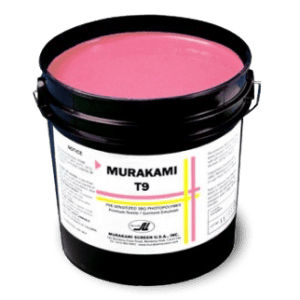
Murakami T9 Pink Emulsion – High-Performance Photopolymer Screen Printing Emulsion for Water-Based, Discharge, HSA & Plastisol Inks
Price range: $29.99 through $3,150.00 -

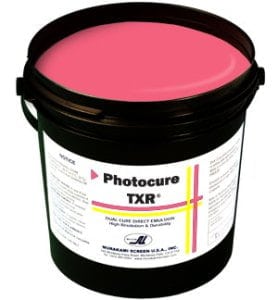
Murakami TXR Emulsion – High-Performance Photopolymer Screen Printing Emulsion for Water-Based, Discharge & Plastisol Inks
Price range: $29.99 through $2,765.00 -
Murakami MS Emulsion Reclaimable Hardener – Post-Exposure Stencil Hardener for Screen Printing
$49.99 -
SAATI Graphic PU Photopolymer Screen Printing Emulsion – Fast-Exposing Pure Photopolymer Emulsion for Plastisol & Graphic Inks
$119.99
Reviews