Matsui Retarder SP-1 Flow Additive | Improve Flow of Thick Water-Based Inks for Smoother Screen Printing

Matsui
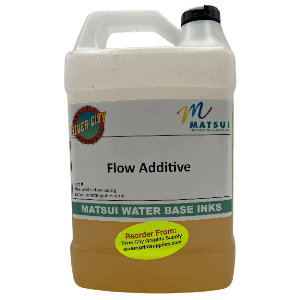
Matsui RM0492 Retarder SP-1 is a specialized flow additive designed to improve the on-screen flow of thick, heavy-bodied Matsui water-based inks — without thinning them like a reducer would. Add 1-2% by weight to inherently thick inks like white bases, underbase blockers, puff bases, discharge whites, and high-opacity specialty inks to achieve smoother squeegee strokes, easier flood coats, and more consistent ink release through the mesh. Unlike RV Additive, which reduces viscosity by lowering the overall body of the ink, Retarder SP-1 modifies how the ink flows under shear — improving on-press movement while maintaining the ink’s original coverage, opacity, and deposit thickness. It also extends open time in the screen, slowing the drying that makes thick inks even harder to work with during production. PVC-free.

Price range: $129.99 through $499.99

--- GLOBAL RULE LOCATIONS ---
Array
(
    [0] => stdClass Object
        (
            [post_id] => 1714
            [meta_key] => _pricing_rules
        )

    [1] => stdClass Object
        (
            [post_id] => 2853
            [meta_key] => _pricing_rules
        )

    [2] => stdClass Object
        (
            [post_id] => 2854
            [meta_key] => _pricing_rules
        )

    [3] => stdClass Object
        (
            [post_id] => 2884
            [meta_key] => _pricing_rules
        )

    [4] => stdClass Object
        (
            [post_id] => 2937
            [meta_key] => _pricing_rules
        )

    [5] => stdClass Object
        (
            [post_id] => 2941
            [meta_key] => _pricing_rules
        )

    [6] => stdClass Object
        (
            [post_id] => 2944
            [meta_key] => _pricing_rules
        )

    [7] => stdClass Object
        (
            [post_id] => 2955
            [meta_key] => _pricing_rules
        )

    [8] => stdClass Object
        (
            [post_id] => 2956
            [meta_key] => _pricing_rules
        )

    [9] => stdClass Object
        (
            [post_id] => 2957
            [meta_key] => _pricing_rules
        )

    [10] => stdClass Object
        (
            [post_id] => 2958
            [meta_key] => _pricing_rules
        )

    [11] => stdClass Object
        (
            [post_id] => 2959
            [meta_key] => _pricing_rules
        )

    [12] => stdClass Object
        (
            [post_id] => 2960
            [meta_key] => _pricing_rules
        )

    [13] => stdClass Object
        (
            [post_id] => 2961
            [meta_key] => _pricing_rules
        )

    [14] => stdClass Object
        (
            [post_id] => 2962
            [meta_key] => _pricing_rules
        )

    [15] => stdClass Object
        (
            [post_id] => 2963
            [meta_key] => _pricing_rules
        )

    [16] => stdClass Object
        (
            [post_id] => 2964
            [meta_key] => _pricing_rules
        )

    [17] => stdClass Object
        (
            [post_id] => 2965
            [meta_key] => _pricing_rules
        )

    [18] => stdClass Object
        (
            [post_id] => 2966
            [meta_key] => _pricing_rules
        )

    [19] => stdClass Object
        (
            [post_id] => 2967
            [meta_key] => _pricing_rules
        )

    [20] => stdClass Object
        (
            [post_id] => 2968
            [meta_key] => _pricing_rules
        )

    [21] => stdClass Object
        (
            [post_id] => 2977
            [meta_key] => _pricing_rules
        )

    [22] => stdClass Object
        (
            [post_id] => 3114
            [meta_key] => _pricing_rules
        )

    [23] => stdClass Object
        (
            [post_id] => 4638
            [meta_key] => _pricing_rules
        )

    [24] => stdClass Object
        (
            [post_id] => 4639
            [meta_key] => _pricing_rules
        )

    [25] => stdClass Object
        (
            [post_id] => 4667
            [meta_key] => _pricing_rules
        )

    [26] => stdClass Object
        (
            [post_id] => 3690
            [meta_key] => _pricing_rules
        )

    [27] => stdClass Object
        (
            [post_id] => 3692
            [meta_key] => _pricing_rules
        )

    [28] => stdClass Object
        (
            [post_id] => 3731
            [meta_key] => _pricing_rules
        )

    [29] => stdClass Object
        (
            [post_id] => 3752
            [meta_key] => _pricing_rules
        )

    [30] => stdClass Object
        (
            [post_id] => 3762
            [meta_key] => _pricing_rules
        )

    [31] => stdClass Object
        (
            [post_id] => 3792
            [meta_key] => _pricing_rules
        )

    [32] => stdClass Object
        (
            [post_id] => 3852
            [meta_key] => _pricing_rules
        )

    [33] => stdClass Object
        (
            [post_id] => 3980
            [meta_key] => _pricing_rules
        )

    [34] => stdClass Object
        (
            [post_id] => 4013
            [meta_key] => _pricing_rules
        )

    [35] => stdClass Object
        (
            [post_id] => 4020
            [meta_key] => _pricing_rules
        )

    [36] => stdClass Object
        (
            [post_id] => 4022
            [meta_key] => _pricing_rules
        )

    [37] => stdClass Object
        (
            [post_id] => 4044
            [meta_key] => _pricing_rules
        )

    [38] => stdClass Object
        (
            [post_id] => 4205
            [meta_key] => _pricing_rules
        )

    [39] => stdClass Object
        (
            [post_id] => 4270
            [meta_key] => _pricing_rules
        )

    [40] => stdClass Object
        (
            [post_id] => 4272
            [meta_key] => _pricing_rules
        )

    [41] => stdClass Object
        (
            [post_id] => 4620
            [meta_key] => _pricing_rules
        )

    [42] => stdClass Object
        (
            [post_id] => 4651
            [meta_key] => _pricing_rules
        )

    [43] => stdClass Object
        (
            [post_id] => 4673
            [meta_key] => _pricing_rules
        )

    [44] => stdClass Object
        (
            [post_id] => 4946
            [meta_key] => _pricing_rules
        )

    [45] => stdClass Object
        (
            [post_id] => 5355
            [meta_key] => _pricing_rules
        )

    [46] => stdClass Object
        (
            [post_id] => 5390
            [meta_key] => _pricing_rules
        )

    [47] => stdClass Object
        (
            [post_id] => 5398
            [meta_key] => _pricing_rules
        )

    [48] => stdClass Object
        (
            [post_id] => 5407
            [meta_key] => _pricing_rules
        )

    [49] => stdClass Object
        (
            [post_id] => 5445
            [meta_key] => _pricing_rules
        )

)

Description

Matsui Retarder SP-1 — The Flow Additive Designed for Thick, Heavy-Bodied Inks

Some Matsui inks are thick by design. White bases, underbase blockers, puff bases, discharge whites, flock binders, and high-opacity specialty inks are all formulated with higher viscosity because their job demands it — they need to deposit a heavier film to achieve full coverage, full opacity, or a specific physical effect. That thickness is a feature, not a flaw.

But thick ink creates real-world on-press problems. It fights the squeegee. It refuses to flood smoothly. It builds up on the back of the screen. It drags instead of flowing through the mesh openings. It dries faster in the stencil because the heavier body does not move away from the mesh threads as efficiently. These problems slow down production, cause inconsistent deposits, and drive printers to add too much water or RV Additive — which reduces the ink’s viscosity but also dilutes the resin system, weakening opacity, wash fastness, and overall coverage.

Retarder SP-1 is the additive Matsui formulated specifically for this situation. It improves the flow behavior of thick inks on the screen without diluting them.

Why Thick Inks Are Hard to Print — The Physics of On-Screen Flow

When you pull a squeegee across a screen, you apply shear force to the ink. That shear force pushes the ink through the tiny mesh openings and deposits it on the garment below. For the ink to print cleanly, two things must happen in rapid sequence:

  1. The ink must shear thin under the squeegee — it must flow like a liquid as the squeegee passes over it, filling each mesh opening fully and releasing onto the garment.
  2. The ink must recover its body after the squeegee passes — it must thicken back up so the deposit holds its shape on the garment without spreading.

Thin inks do step 1 easily but struggle with step 2 (they spread too much). Thick inks handle step 2 naturally but struggle with step 1 — they resist the squeegee, they do not fill the mesh openings completely, and they release inconsistently. The result is spotty coverage, uneven deposits, drag marks, and excessive squeegee pressure that fatigues the printer and can damage the screen.

Retarder SP-1 solves step 1 without breaking step 2. It reduces the shear resistance of the ink — making it easier to push through the mesh — while maintaining the resting viscosity that gives the ink its coverage and opacity. The ink still deposits the same thick, opaque film, but it gets there with less effort, less fighting, and more consistency.

The Problem Retarder SP-1 Solves — What Happens Without It

On-Press Problem What You Experience Root Cause How SP-1 Fixes It
Ink won’t flood smoothly Flood bar drags across the screen instead of gliding. Ink piles up in front of the flood bar leaving dry patches in the stencil. Ink is too thick to flow freely across the screen surface under light flood pressure Improves on-screen flow so ink floods evenly with normal pressure
Spotty, uneven deposits Light areas, skip marks, or inconsistent coverage — especially in the center of large fill areas Thick ink doesn’t fill all mesh openings completely before the squeegee passes, leaving unfilled gaps Improves mesh filling so every opening releases ink consistently
Excessive squeegee pressure required Printer has to push extremely hard to force ink through the mesh. Arm fatigue on manual presses. Screen deflection on autos. Ink resists shearing and requires higher force to move through the mesh openings Reduces shear resistance so less squeegee pressure is needed for a clean print stroke
Ink drying in the screen mid-run Stencil starts closing in. Fine details clog. Image loses definition as the run progresses. Thick ink has lower water content relative to resin and pigment, so it dries faster in the mesh Retarder component extends open time, slowing evaporation and keeping the stencil open longer
Ink buildup on the back of the screen Ink accumulates on the print side (contact side) of the mesh, leaving unwanted residue on garments Thick ink doesn’t release cleanly from the mesh — it splits unevenly, leaving ink behind Improved flow behavior promotes cleaner mesh release with less ink left behind on the screen
Ink collecting on the squeegee blade Ink rolls up and accumulates on the front of the squeegee instead of flowing past it and into the mesh Ink’s high resting viscosity prevents it from shearing cleanly at the squeegee edge Improved shear behavior lets ink flow past the squeegee edge and into the mesh more efficiently

Retarder SP-1 vs. Other Matsui Viscosity Additives — Why SP-1 Is Different

Matsui makes several additives that affect ink flow and viscosity. Printers often confuse them because they sound similar. Here is how Retarder SP-1 is distinct from every other option:

Additive What It Does Dosage Best For Does It Thin the Ink?
Retarder SP-1 Improves on-screen flow of thick inks + extends open time. Modifies flow behavior under shear without reducing the ink’s resting body. 1-2% Thick inks: whites, underbases, puff, discharge whites, specialty inks — any ink that fights the squeegee No — maintains body, coverage, and opacity
Retarder MG (PrintGen) Extends open time / prevents ink from drying in the screen. Slows evaporation. 1-5% Any Matsui ink drying too fast in the screen, especially in low humidity or on long runs No — primarily slows drying, minimal flow improvement
RV Additive (Catalyst 3000) Reduces overall viscosity. Thins the ink and promotes fabric penetration. 1-3% Ink too thick for the mesh count. Improving flow through high mesh. Enhancing fabric penetration. Yes — reduces viscosity, which can reduce opacity and deposit thickness at higher dosages
Softener MG Silicone softener for hand feel. Also acts as a mesh lubricant when applied to the screen surface. 1-5% Softer print feel. Mesh lubrication (30% Softener + 70% water applied to ink side of mesh). Slightly — lubricates more than thins
Quick Additive Pre-mixed combination of Retarder MG + Fixer WF-N + Softener MG 7-10% General-purpose convenience additive for standard-viscosity inks Slightly — at 7-10% it softens and loosens the ink
Adding water Dilutes the ink system. Reduces viscosity by watering down the resin, pigment, and binder. Variable Emergency thinning, misting screens to prevent drying Yes — and weakens the ink. Reduces resin concentration, opacity, wash fastness, and pigment density.

The key distinction: When your thick ink is hard to push through the screen, you have two choices. You can thin the ink (RV Additive or water) — which solves the flow problem but sacrifices opacity and coverage. Or you can improve the flow behavior without thinning (Retarder SP-1) — which solves the flow problem while preserving the full coverage your thick ink was formulated to deliver.

Which Matsui Inks Need Retarder SP-1 Most

Retarder SP-1 is compatible with any Matsui water-based ink, but it was specifically designed for the thick, heavy-bodied products in the Matsui lineup. These are the inks where printers most commonly experience on-screen flow problems:

Matsui Ink Why It’s Thick Common Flow Problem SP-1 Benefit
301 White / Matte 301M White High titanium dioxide pigment loading for opacity on dark garments Hard to flood, spotty coverage, excessive squeegee pressure Smoother flood coats, more consistent coverage, less arm fatigue
EasyPrint White Medium opacity white formulated for stretch/performance fabrics Can drag on lower mesh counts, especially on first print stroke Easier first stroke, more consistent deposit across the print area
Kombat White High-performance white designed for blocking and opacity on synthetic fabrics Very heavy body, fights the squeegee, hard to flood on tight mesh Reduces shear resistance for cleaner print strokes and flood coats
Stretch White / Soft Stretch White Elastomeric base formulated for high-stretch fabrics Thick and elastic consistency can resist flowing through mesh Improved flow without compromising the stretch and elasticity of the cured print
Dye Blocker / Underbase Blocker 301 High-solids formula designed to block dye sublimation from polyester Heavy body that requires significant squeegee pressure Easier to print the underbase layer before subsequent colors
Discharge Whites (Brite DW, DSFP White) High pigment loading for maximum whiteness after discharge reaction Notoriously thick — many printers report it being almost paste-like straight from the bucket Makes discharge white printable without over-diluting with water or base
Puff / Foaming Base HT Foaming agent creates a heavy, paste-like consistency Heavy body that can be difficult to flood and push through lower mesh counts Improved flow for more consistent puff deposits
Flock Binder 301 Heavy adhesive base for direct flocking process Extremely thick adhesive that resists flowing through the mesh Improved flow for a more even adhesive deposit, better flock adhesion
Foil Adhesive TFG 301 Adhesive base for foil and flock transfer Heavy adhesive consistency similar to flock binder Smoother adhesive layer for better foil transfer and bonding

Matsui Retarder SP-1 Flow Additive  Key Features:

  • Improves Flow of Thick Inks Without Thinning Them: Retarder SP-1 modifies the shear behavior of thick inks so they flow more easily under squeegee pressure while maintaining their full resting viscosity, opacity, and deposit thickness.
  • Reduces Squeegee Pressure Required: Thick inks that fight the squeegee become easier to push, reducing arm fatigue on manual presses and lowering squeegee pressure settings on automatic presses.
  • Smoother Flood Coats: Inks that pile up in front of the flood bar instead of gliding across the screen will flood more evenly with SP-1 added.
  • More Consistent Ink Deposits: By improving how the ink fills and releases from the mesh, SP-1 produces more uniform coverage with fewer skip marks, light spots, or uneven areas.
  • Extends Open Time in the Screen: The retarder component slows ink drying in the mesh, keeping the stencil open longer during production — especially important for thick inks that tend to dry faster.
  • Reduces Ink Buildup on the Back of the Screen: Improved flow promotes cleaner mesh release, reducing the residue that accumulates on the contact side of the screen during printing.
  • Preserves Ink Opacity and Coverage: Unlike RV Additive or water, SP-1 does not dilute the resin or pigment system. White ink stays just as opaque. Underbase blocker still blocks. Puff still puffs.
  • Low Dosage, High Impact: Only 1-2% by weight is needed to produce a measurable improvement in on-screen flow.
  • No Pot Life Limitation: SP-1 does not trigger a crosslinking reaction. Mixed ink remains usable.
  • Compatible with All Matsui Water-Based Inks: While designed for thick inks, SP-1 can be used with any Matsui ink where improved on-screen flow is desired.
  • PVC-Free: Consistent with the Matsui PVC-free product line.

Why Screen Printers Use Matsui Retarder SP-1

“My white ink is too thick to flood and I’m getting spotty coverage.” This is the #1 scenario SP-1 was designed for. Matsui white inks (301 White, Matte White, Kombat White, EasyPrint White) are intentionally thick for opacity, but that thickness makes them difficult to flood evenly. Adding 1-2% SP-1 gives the ink enough on-screen mobility to flood cleanly without diluting the opacity.

“My discharge white is almost like a paste straight from the bucket.” Matsui discharge whites are notoriously thick. Forum after forum has printers asking how to make discharge white more workable. The traditional answers — add water, add discharge base, add retarder — all dilute the ink system. SP-1 improves the flow behavior without diluting the pigment loading that makes discharge white actually white.

“I’m fighting my squeegee on every stroke and my arm is burning.” On manual presses, thick ink is a physical endurance problem. The printer has to push harder on every stroke, which leads to fatigue, inconsistency, and eventually poor print quality as the printer tires over a long run. SP-1 at 1-2% reduces the force required per stroke, keeping the printer fresh and the prints consistent from first shirt to last.

“My automatic press is deflecting the screen because the ink is too heavy.” On automatic presses, excessive squeegee pressure to push thick ink through the mesh can deflect the screen, causing registration problems and uneven deposits. SP-1 reduces the shear resistance so the auto press can run at normal pressure settings.

“My stencil is closing in because the thick ink dries faster than my standard colors.” Thick inks tend to dry faster in the screen because their higher solids-to-water ratio means there is less water to keep the system wet. SP-1 has a retarder component that slows this evaporation, keeping the stencil open longer so you can maintain production speed without constant screen cleaning.

“I added too much water or RV Additive to thin my white ink and now it’s not opaque enough.” This is the trap: the ink is too thick to print well, so you thin it, but now it does not cover well enough. SP-1 breaks this cycle by solving the flow problem without sacrificing coverage. You get the flow you need at the opacity you need.

How to Use Matsui Retarder SP-1

Step 1 — Identify the Problem. Make sure your on-press issue is actually a thick-ink flow problem before reaching for SP-1. If your ink is drying in the screen but flows fine when wet, Retarder MG is the better choice. If your ink is thin and bleeding, you need Thickener B, not SP-1. SP-1 is specifically for inks that are too thick to flow well on the screen.

Step 2 — Weigh Your Ink. Place your thick Matsui ink on a scale and record the weight.

Step 3 — Calculate the Dosage. Add 1-2% Retarder SP-1 by weight. Start at 1%.

Ink Amount 1% SP-1 1.5% SP-1 2% SP-1
1 Pint (approx. 454g) 4.5g 6.8g 9g
1 Quart (approx. 908g) 9g 13.6g 18g
1 Gallon (approx. 3,632g) 36g 54g 73g

Step 4 — Mix Thoroughly. Add the calculated amount to your ink and mix until fully integrated. Use clean mixing utensils.

Step 5 — Test Print. Run a test print to evaluate the improvement in flow, coverage, and flood behavior. If the flow is still too heavy, increase to 1.5-2%. If the flow is noticeably improved but you want even more open time, you can also add 1-2% Retarder MG on top of the SP-1.

Step 6 — Print and Cure Normally. No changes to your print setup or cure settings. Cure at the standard temperature recommended by your base ink (typically 320°F / 160°C).

Pro Tips for Best Results

  • SP-1 is for flow problems, not drying problems. If your ink flows fine when wet but dries in the screen, use Retarder MG instead. If your ink is difficult to push through the mesh even when freshly loaded, use SP-1. If you have both problems — thick and drying fast — use both SP-1 (1-2%) and Retarder MG (1-3%) together.
  • Start at 1% and test. The 1-2% dosage range is narrow for a reason — SP-1 is potent. 1% is usually sufficient for a noticeable improvement. Go to 2% only if 1% was not enough.
  • SP-1 can be combined with other Matsui additives. You can use SP-1 alongside Retarder MG (for open time), Softener MG (for hand feel), Fixer WF-N or Fixer L (for wash fastness), and even a small amount of RV Additive (for additional flow) in the same batch. All are compatible.
  • Consider SP-1 before you reach for water or RV Additive on thick inks. Water dilutes your resin system and weakens the ink. RV Additive thins the ink, which can reduce opacity. SP-1 improves flow without these tradeoffs. It should be your first choice for thick-ink flow problems.
  • The Softener MG mesh lubricant spray also helps. For the toughest thick-ink jobs, you can use both SP-1 in the ink (1-2%) and the Softener MG mesh lubricant on the screen surface (30% Softener MG + 70% water, sprayed and wiped on the ink side of the mesh before printing). This combination — SP-1 improving the ink’s flow + Softener MG reducing mesh friction — makes even the heaviest inks dramatically easier to print.
  • SP-1 is especially valuable on manual presses. Automatic presses can compensate for thick ink with higher squeegee pressure settings. Manual press printers cannot — they rely on their own strength. SP-1 at 1-2% reduces the physical effort required per stroke, which matters over a 100+ piece run.
  • Keep the screen flooded between prints. Even with SP-1 extending the open time, always flood your screen between print strokes to prevent drying. This is standard best practice for all water-based inks, but it is especially critical with thick, heavy-bodied products.
  • Use clean mixing vessels and utensils. As with all Matsui products, contamination from other ink sources or non-approved additives can compromise the PVC-free certification.

Technical Specifications

Specification Detail
Product Name Matsui Retarder SP-1 Flow Additive
Product Code RM0492
Type Flow modifier / retarder for thick, heavy-bodied water-based inks
Primary Function Improve on-screen flow of thick inks without reducing viscosity, opacity, or deposit thickness
Secondary Function Extend open time in the screen to prevent thick inks from drying mid-run
Recommended Dosage 1-2% by weight
Mixing Requirement Standard hand mixing — mix thoroughly until fully integrated
Pot Life Once Mixed No limit
Effect on Color / Opacity None at recommended dosage — does not dilute pigment or resin system
Effect on Ink Viscosity Improves shear-thinning behavior (flow under pressure) without reducing resting viscosity
Effect on Cure Temperature None — follow base ink specifications (typically 320°F / 160°C)
Compatible Ink Types All Matsui water-based inks — designed specifically for thick, heavy-bodied products
Ideal For White inks, underbase blockers, discharge whites, puff/foaming bases, flock binder, foil adhesive, high-opacity specialty inks
Formulation PVC-free, environmentally safe
Storage 65°F to 95°F (18°C to 35°C). Avoid direct sunlight. Store in a cool, dry place.
Cleanup Water and mild soap or detergent
Available Sizes Quart, Gallon

Benefits at a Glance

  • Improve the on-screen flow of thick, heavy-bodied Matsui water-based inks without thinning them or sacrificing opacity
  • Reduce squeegee pressure required to push thick ink through the mesh — less arm fatigue on manual presses, lower pressure settings on automatics
  • Achieve smoother, more even flood coats with thick white inks, underbases, discharge whites, and specialty inks
  • Produce more consistent ink deposits with fewer skip marks, light spots, and uneven areas
  • Extend open time in the screen to prevent thick inks from drying and clogging the stencil mid-run
  • Reduce ink buildup on the back of the screen for cleaner prints with less maintenance stoppages
  • Preserve full ink opacity, coverage, and deposit thickness — unlike water or RV Additive, SP-1 does not dilute the resin or pigment system
  • Low dosage (1-2%) with high impact on printability
  • No pot life limitation — mixed ink remains usable indefinitely
  • Compatible with the full Matsui additive lineup — use alongside Retarder MG, Softener MG, Fixer WF-N, and others
  • PVC-free formulation consistent with the Matsui eco-friendly product line

Technical Sheets / Safety Data Sheets / Documents

FREQUENTLY ASKED QUESTIONS

What does Matsui Retarder SP-1 do?

Retarder SP-1 improves the on-screen flow of thick, heavy-bodied Matsui water-based inks.

It makes inks easier to:

  • Flood
  • Push through the mesh
  • Deposit consistently

It also extends open time to help prevent drying — without thinning the ink or reducing opacity.


How much Retarder SP-1 should I add?

Recommended usage: 1–2% by weight

  • Start at 1% and test
  • Increase to 1.5–2% only if needed

Example: Add approximately 9 grams per quart at 1%.


What is the difference between Retarder SP-1 and Retarder MG?

Retarder MG (PrintGen):

  • Anti-drying agent
  • Extends open time
  • Slows evaporation

Retarder SP-1:

  • Flow additive
  • Improves movement of thick inks under squeegee pressure
  • Does not thin the ink

Retarder MG solves drying problems.
Retarder SP-1 solves flow problems.

They can be used together when ink is both thick and fast-drying.


What is the difference between Retarder SP-1 and RV Additive?

RV Additive (Catalyst 3000):

  • Reduces overall viscosity
  • Thins ink
  • Can reduce opacity at higher dosages

Retarder SP-1:

  • Improves flow under shear
  • Maintains resting viscosity
  • Preserves opacity and coverage

Use SP-1 when you want better movement without sacrificing body or opacity.


Which Matsui inks is Retarder SP-1 designed for?

SP-1 is ideal for thick, high-viscosity inks, including:

  • 301 White
  • Matte White
  • EasyPrint White
  • Kombat White
  • Stretch White
  • Dye Blocker
  • Under Base Blocker 301
  • Discharge Whites
  • Puff / Foaming Base HT
  • Flock Binder
  • Foil Adhesive
  • Other heavy specialty inks

Can I use SP-1 with standard-viscosity Matsui inks?

Yes.

SP-1 is compatible with all Matsui water-based inks. However, it provides the greatest benefit with thick inks that are difficult to print.

Standard-viscosity systems like 301 RC, Alpha, and Infinity colors typically do not require SP-1.


Will Retarder SP-1 reduce the opacity of white ink?

No.

At 1–2%, SP-1 does not dilute pigment or resin systems. White inks retain full opacity and covering power.


Can I use Retarder SP-1 and Retarder MG together?

Yes.

For thick inks that are also drying quickly:

  • SP-1 at 1–2% – Improves flow
  • Retarder MG at 1–3% – Extends open time

Using both addresses separate performance issues.


Does SP-1 change cure temperature?

No.

SP-1 does not alter cure requirements. Continue curing according to your base ink specifications (typically 320°F / 160°C).


My discharge white is too thick to print. Will SP-1 help?

Yes.

Discharge whites are among the thickest inks in the Matsui lineup. SP-1 at 1–2% improves on-screen flow without reducing brightness or pigment loading.


Does Retarder SP-1 have a pot life?

No.

SP-1 does not trigger crosslinking and does not expire once mixed. Your ink remains usable indefinitely.


Can I use Retarder SP-1 on a manual press?

Yes — and manual printers often benefit the most.

SP-1:

  • Reduces physical force required per stroke
  • Decreases fatigue
  • Improves print consistency over long runs

It makes heavy-bodied inks significantly easier to print manually.

Reviews

Reviews

Only logged in customers who have purchased this product may leave a review.

You May Also Like

Additional Options