Matsui Soft-Tex White 350 | Polyurethane Rubber-Binder Water-Based White Ink for Maximum Stretch & Extreme Elasticity Screen Printing

Matsui
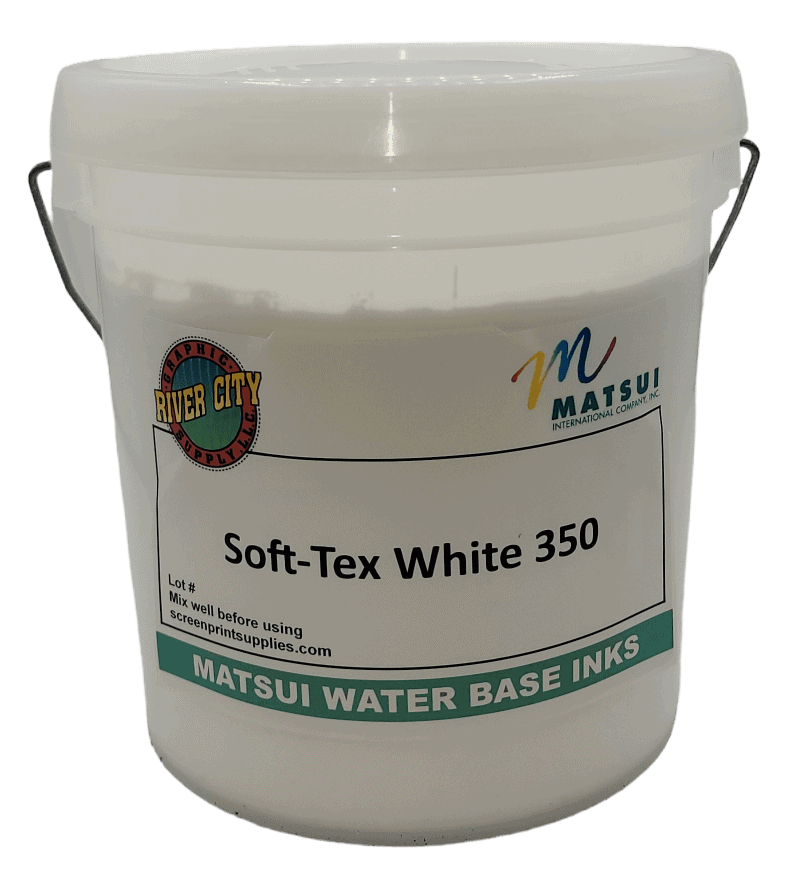
Matsui Soft-Tex White 350 (WS0542) is a premium polyurethane rubber-binder water-based white ink engineered for maximum stretch and extreme elasticity on performance fabrics. This is the only Matsui white built on polyurethane chemistry instead of acrylic — delivering rubber-like flexibility, smoothness, and rebound that surpasses every acrylic white in the lineup. Part of the Matsui 350 Series system. Produces soft, silicone-like prints with built-in foil resistance and zero tackiness. Use Clear 350G as an undercoating for enhanced texture and flexibility. Prints through mesh 110-160/inch. Uses <a href=”https://dev.screenprintsupplies.com/products/wb-ink/additives/fixer-v/”>Fixer V</a> (NOT Fixer WF-N) at 2-3% for wash fastness — this is a different additive than all other Matsui whites require. Cures at 320°F (160°C). PVC-free. Eco-friendly.

Price range: $159.99 through $4,659.99

--- GLOBAL RULE LOCATIONS ---
Array
(
    [0] => stdClass Object
        (
            [post_id] => 1714
            [meta_key] => _pricing_rules
        )

    [1] => stdClass Object
        (
            [post_id] => 2853
            [meta_key] => _pricing_rules
        )

    [2] => stdClass Object
        (
            [post_id] => 2854
            [meta_key] => _pricing_rules
        )

    [3] => stdClass Object
        (
            [post_id] => 2884
            [meta_key] => _pricing_rules
        )

    [4] => stdClass Object
        (
            [post_id] => 2937
            [meta_key] => _pricing_rules
        )

    [5] => stdClass Object
        (
            [post_id] => 2941
            [meta_key] => _pricing_rules
        )

    [6] => stdClass Object
        (
            [post_id] => 2944
            [meta_key] => _pricing_rules
        )

    [7] => stdClass Object
        (
            [post_id] => 2955
            [meta_key] => _pricing_rules
        )

    [8] => stdClass Object
        (
            [post_id] => 2956
            [meta_key] => _pricing_rules
        )

    [9] => stdClass Object
        (
            [post_id] => 2957
            [meta_key] => _pricing_rules
        )

    [10] => stdClass Object
        (
            [post_id] => 2958
            [meta_key] => _pricing_rules
        )

    [11] => stdClass Object
        (
            [post_id] => 2959
            [meta_key] => _pricing_rules
        )

    [12] => stdClass Object
        (
            [post_id] => 2960
            [meta_key] => _pricing_rules
        )

    [13] => stdClass Object
        (
            [post_id] => 2961
            [meta_key] => _pricing_rules
        )

    [14] => stdClass Object
        (
            [post_id] => 2962
            [meta_key] => _pricing_rules
        )

    [15] => stdClass Object
        (
            [post_id] => 2963
            [meta_key] => _pricing_rules
        )

    [16] => stdClass Object
        (
            [post_id] => 2964
            [meta_key] => _pricing_rules
        )

    [17] => stdClass Object
        (
            [post_id] => 2965
            [meta_key] => _pricing_rules
        )

    [18] => stdClass Object
        (
            [post_id] => 2966
            [meta_key] => _pricing_rules
        )

    [19] => stdClass Object
        (
            [post_id] => 2967
            [meta_key] => _pricing_rules
        )

    [20] => stdClass Object
        (
            [post_id] => 2968
            [meta_key] => _pricing_rules
        )

    [21] => stdClass Object
        (
            [post_id] => 2977
            [meta_key] => _pricing_rules
        )

    [22] => stdClass Object
        (
            [post_id] => 3114
            [meta_key] => _pricing_rules
        )

    [23] => stdClass Object
        (
            [post_id] => 4638
            [meta_key] => _pricing_rules
        )

    [24] => stdClass Object
        (
            [post_id] => 4639
            [meta_key] => _pricing_rules
        )

    [25] => stdClass Object
        (
            [post_id] => 4667
            [meta_key] => _pricing_rules
        )

    [26] => stdClass Object
        (
            [post_id] => 3690
            [meta_key] => _pricing_rules
        )

    [27] => stdClass Object
        (
            [post_id] => 3692
            [meta_key] => _pricing_rules
        )

    [28] => stdClass Object
        (
            [post_id] => 3731
            [meta_key] => _pricing_rules
        )

    [29] => stdClass Object
        (
            [post_id] => 3752
            [meta_key] => _pricing_rules
        )

    [30] => stdClass Object
        (
            [post_id] => 3762
            [meta_key] => _pricing_rules
        )

    [31] => stdClass Object
        (
            [post_id] => 3792
            [meta_key] => _pricing_rules
        )

    [32] => stdClass Object
        (
            [post_id] => 3852
            [meta_key] => _pricing_rules
        )

    [33] => stdClass Object
        (
            [post_id] => 3980
            [meta_key] => _pricing_rules
        )

    [34] => stdClass Object
        (
            [post_id] => 4013
            [meta_key] => _pricing_rules
        )

    [35] => stdClass Object
        (
            [post_id] => 4020
            [meta_key] => _pricing_rules
        )

    [36] => stdClass Object
        (
            [post_id] => 4022
            [meta_key] => _pricing_rules
        )

    [37] => stdClass Object
        (
            [post_id] => 4044
            [meta_key] => _pricing_rules
        )

    [38] => stdClass Object
        (
            [post_id] => 4205
            [meta_key] => _pricing_rules
        )

    [39] => stdClass Object
        (
            [post_id] => 4270
            [meta_key] => _pricing_rules
        )

    [40] => stdClass Object
        (
            [post_id] => 4272
            [meta_key] => _pricing_rules
        )

    [41] => stdClass Object
        (
            [post_id] => 4620
            [meta_key] => _pricing_rules
        )

    [42] => stdClass Object
        (
            [post_id] => 4651
            [meta_key] => _pricing_rules
        )

    [43] => stdClass Object
        (
            [post_id] => 4673
            [meta_key] => _pricing_rules
        )

    [44] => stdClass Object
        (
            [post_id] => 4946
            [meta_key] => _pricing_rules
        )

    [45] => stdClass Object
        (
            [post_id] => 5355
            [meta_key] => _pricing_rules
        )

    [46] => stdClass Object
        (
            [post_id] => 5390
            [meta_key] => _pricing_rules
        )

    [47] => stdClass Object
        (
            [post_id] => 5398
            [meta_key] => _pricing_rules
        )

    [48] => stdClass Object
        (
            [post_id] => 5407
            [meta_key] => _pricing_rules
        )

    [49] => stdClass Object
        (
            [post_id] => 5445
            [meta_key] => _pricing_rules
        )

)

Description

Matsui Soft-Tex White 350 — Different Chemistry, Different Results

Every other white ink on this page uses acrylic binder chemistry. The same acrylic platform. The same additives. The same cure behavior. They differ in opacity, mesh range, hand feel, and finish — but they are all fundamentally acrylic inks.

Soft-Tex White 350 is not.

It is built on a polyurethane rubber binder — a completely different polymer platform that delivers a fundamentally different type of stretch. Acrylic whites stretch well. Soft-Tex White 350 stretches like rubber. The difference is not incremental. It is categorical.

When a garment is pulled to its maximum stretch — compression tights at full extension, a jersey stretched over shoulder pads, a performance top pulled overhead — acrylic inks flex with the fabric. Soft-Tex White 350 rebounds with the fabric. The polyurethane rubber binder stores and releases energy the way rubber does. It does not just stretch and hold. It stretches, rebounds, and returns to its original shape with the garment.

This is why Soft-Tex White 350 exists as a separate product with separate chemistry, separate additives, and a separate system. The 350 Series is not a variation on the acrylic platform. It is a parallel system built for applications where acrylic stretch — even excellent acrylic stretch — is not enough.

Critical: Soft-Tex White 350 uses different additives than every other Matsui white. It requires Fixer V for wash fastness — NOT Fixer WF-N. Fixer V is the polyurethane crosslinker. Using the wrong fixer will compromise performance. This is the single most important thing to know about Soft-Tex White 350.

Where Soft-Tex White 350 Fits — The Extreme-Stretch Specialist

Matsui makes nine different white inks. Eight of them use acrylic binder chemistry. Soft-Tex White 350 is the ninth — and it is in a category by itself.

Here is where it sits relative to every other Matsui white — and exactly when the polyurethane difference matters.

The Complete Matsui White Ink Comparison — Every White, Side by Side

White Ink Product Code Max Mesh Opacity Primary Substrates Stretch/Elasticity Hand Feel Finish Binder Type Special Features Best For
COTTON-FOCUSED WHITES
301W-B White WS0537 305/inch (120/cm) High 100% light-colored cotton Standard (not stretch-rated) Ultra-soft Matte Acrylic Highest mesh count of any Matsui white (305). Cotton specialist. Ultra-soft deposit. Premium cotton t-shirts. Fashion/retail decoration. Fine-detail white on cotton.
PERFORMANCE / STRETCH WHITES (ACRYLIC BINDER)
EasyPrint White 301 WS0529 225/inch (89/cm) Medium Performance fabrics, Dri-Fit, high-stretch poly blends, cotton Excellent Buttery soft Soft sheen Acrylic Highest mesh of any Matsui performance white (225). Fine detail specialist. Fine-detail printing on performance garments. High-mesh athletic prints.
Stretch White 301 WS0502 150-180/inch High Performance fabrics, Dri-Fit, athletic wear, compression garments Excellent Silicone-like soft Silicone-like Acrylic Balanced workhorse — high opacity WITH excellent elasticity. Works as standalone and underbase. Bold, opaque white on dark athletic wear. Go-to performance white for jerseys, team uniforms.
Soft Stretch White WS0525 150-180/inch High Performance fabrics, Dri-Fit, high-stretch synthetics Excellent Silicone-like, barely there Silicone-like Acrylic Softest hand feel of any Matsui stretch white. Prioritizes barely-there softness. Premium activewear. Luxury athletic brands. Any stretch garment where hand feel is #1.
Kombat White WS0545 160/inch (63/cm) Very High — brightest Performance fabrics, high-stretch synthetics, poly blends, Dri-Fit Excellent Silky soft Bright white Acrylic BRIGHTEST standalone white. Anti-foil stickiness. NOT for overprinting — top-layer white only. Maximum brightness standalone white on dark performance fabrics. Foil-process garments.
Acrylicon White WS0531 160/inch (63/cm) High — superior whiteness Performance fabrics, high-stretch synthetics, Dri-Fit Excellent Silicone-like, zero tack Matte, silicone-like Acrylic Only Matsui acrylic white with true matte finish AND zero tack. Premium finish that rivals silicone ink. Premium matte-finish athletic prints. Luxury performance apparel.
301W-10-4 White WS0472-1 160/inch (63/cm) High Cotton, polyester, blends, Dri-Fit, performance fabrics Excellent Extremely soft, low tack Standard Acrylic Proven general-purpose premium performance white. Multi-substrate. Low tack. Shops needing one reliable premium white for all substrates and applications.
Simple White WS0562 160/inch (63/cm) High Cotton, polyester, blends, Dri-Fit, performance fabrics Excellent Soft Standard Acrylic Economical version of Stretch White. Broadest substrate compatibility. Lowest cost per print. Multi-substrate shops on a budget. Plastisol-to-water-based transition.
⚠️ SPECIALTY SUBSTRATE WHITE — DIFFERENT BINDER CHEMISTRY (POLYURETHANE)
Soft-Tex White 350 WS0542 110-160/inch High Performance fabrics requiring MAXIMUM / rubber-like elasticity MAXIMUM — polyurethane rubber binder. Rubber-like stretch and rebound. Silicone-like, no tack Rubber / silicone-like POLYURETHANE (not acrylic) COMPLETELY DIFFERENT BINDER CHEMISTRY. Rubber-like stretch and rebound. Built-in foil resistance. Uses Fixer V (NOT Fixer WF-N). Part of the 350 Series system with Clear 350G undercoat. Extreme-stretch applications where acrylic elasticity is not enough. Compression garments, extreme-flex sportswear, high-stretch technical apparel.

Soft-Tex White 350 vs. Stretch White — Rubber Binder vs. Acrylic Binder

This is the fundamental chemistry comparison. Both are performance whites for stretch fabrics. But they are built on completely different polymer platforms.

Spec Soft-Tex White 350 (WS0542) Stretch White 301 (WS0502)
Binder Chemistry POLYURETHANE (rubber) Acrylic
Stretch Type MAXIMUM — rubber-like stretch and rebound Excellent — acrylic-level elasticity
Mesh Range 110-160/inch 150-180/inch
Hand Feel Silicone-like, no tack — rubber-smooth surface Silicone-like soft
Foil Resistance Yes — built-in No
Wash Fastness Fixer Fixer V at 2-3% — POLYURETHANE crosslinker Fixer WF-N at 1-5% — acrylic crosslinker
System 350 Series — separate system with Clear 350G undercoat 301 Series — standard acrylic system
Choose This When… Garments undergo extreme stretch beyond what acrylic can handle. Compression, technical sportswear, extreme-flex applications. Standard to high-stretch performance fabrics. Athletic wear, jerseys, Dri-Fit — where acrylic elasticity is sufficient.

The bottom line: Stretch White handles 90% of performance fabric work. Its acrylic elasticity is excellent for jerseys, Dri-Fit, athletic wear, and standard compression garments. Soft-Tex White 350 is the 10% solution — for garments that are pushed to extreme stretch where acrylic flex reaches its limit. If your clients are printing compression tights, extreme-flex technical apparel, or any garment where the print is stretched to the absolute maximum in normal wear, the polyurethane rubber binder in Soft-Tex White 350 delivers stretch and rebound that acrylic chemistry cannot match.

Soft-Tex White 350 vs. EasyPrint White — Extreme Stretch vs. Fine Detail

Spec Soft-Tex White 350 (WS0542) EasyPrint White 301 (WS0529)
Binder Chemistry Polyurethane (rubber) Acrylic
Max Mesh Count 110-160/inch 225/inch (89/cm)
Stretch MAXIMUM — rubber-like Excellent — acrylic-level
Design Type Bold graphics, fills, logos at standard mesh Fine detail, thin lines, small text, halftones at 200+ mesh
Choose This When… The garment undergoes extreme stretch and rubber-like elasticity is essential You need fine detail at 200+ mesh on performance fabrics and acrylic stretch is sufficient

The bottom line: Completely different tools for completely different problems. Soft-Tex White 350 solves stretch problems. EasyPrint White solves detail problems. They do not compete.

Why Screen Printers Choose Soft-Tex White 350

“My prints crack on compression garments no matter which acrylic white I use.”
This is the #1 reason shops move to Soft-Tex White 350. If you have tried Stretch White, Soft Stretch White, or any other acrylic performance white and prints still crack under extreme garment stretch — the problem is not the ink quality. The problem is the binder chemistry. Acrylic has a stretch limit. Polyurethane rubber does not hit that limit under the same conditions. Soft-Tex White 350 solves cracking on extreme-stretch garments because the polymer itself has more elasticity to give.

“I print on technical sportswear where the garments are stretched to their maximum in normal use.”
Compression tights. Extreme-flex jerseys. High-performance technical apparel where the garment is designed to be stretched to its limits. These are not “standard stretch” garments — they are engineered for maximum elasticity, and they need an ink that is engineered the same way. The polyurethane rubber binder in Soft-Tex White 350 matches the mechanical behavior of extreme-stretch fabrics in a way that acrylic inks cannot.

“I need a white with built-in foil resistance for multi-process work.”
Like Kombat White, Soft-Tex White 350 has built-in foil resistance — preventing unwanted foil adhesion during heat-press foil transfers. For shops that print both screen-printed white and foil on extreme-stretch garments, Soft-Tex White 350 delivers both the rubber-like stretch AND the foil resistance in one ink.

“I want the smoothest, most rubber-like silicone hand feel possible in a water-based system.”
The polyurethane rubber binder creates a print surface that feels distinctly different from acrylic — smoother, more rubbery, more like a true silicone or rubber print. Combined with no tack, this gives Soft-Tex White 350 a premium tactile quality that some clients specifically request for high-end technical apparel.

“I want to build the highest-performance print stack on extreme-stretch garments.”
The 350 Series is a complete system. Use Clear 350G as an undercoating for enhanced texture and flexibility before applying Soft-Tex White 350. For dark polyester, print Under Base Blocker 350 first, flash, then White 350, flash, then Clear 350 with colors. This layered approach delivers the maximum-performance print stack on extreme-stretch garments.

Key Features

  • Polyurethane Rubber Binder — DIFFERENT Chemistry from All Other Matsui Whites: The only Matsui white built on a polyurethane platform. Delivers rubber-like stretch and rebound that exceeds the elasticity limits of acrylic binders. This is a fundamentally different type of flexibility.
  • Maximum Stretch and Rebound: Prints stretch with extreme-flex garments and rebound to their original shape. Designed for applications where acrylic elasticity reaches its limit — compression tights, technical sportswear, extreme-flex apparel.
  • Silicone-Like Hand Feel with Zero Tack: Cured prints feel smooth, rubber-soft, and non-sticky. The polyurethane binder creates a premium tactile surface that is distinctly different from acrylic.
  • Built-In Foil Resistance: Prevents unwanted foil adhesion during heat-press foil transfer processes. Essential for multi-process workflows combining screen-printed white and foil on the same garment.
  • Part of the 350 Series System: Use with Clear 350G undercoating for enhanced texture and flexibility. For dark polyester, use Under Base Blocker 350 for optimal dye sublimation blocking within the 350 system.
  • High Opacity: Delivers bright, opaque white coverage on dark performance fabrics through 110-160 mesh.
  • ⚠️ Uses Fixer V for Wash Fastness — NOT Fixer WF-N: This is critical. Fixer V is the polyurethane-specific crosslinker at 2-3%. Using Fixer WF-N (the acrylic crosslinker) will not work correctly with polyurethane chemistry.
  • Zero Viscosity Modifications Required: Prints straight from the bucket on manual and automatic presses.
  • PVC-Free and Eco-Friendly: Environmentally safe, PVC-free formulation.

How to Print with Soft-Tex White 350

Screen Setup: Use mesh counts of 110-160/inch. For maximum opacity and coverage on dark garments, use 110-135 mesh. For standard production, use 135-160 mesh.

Emulsion: Use a water-resistant emulsion. Standard to slightly thicker stencil for heavier deposit.

Printing: Print straight from the bucket with no viscosity modifications. Smooth, consistent flow on both manual and automatic presses.

Enhanced Texture: For enhanced texture and flexibility, print Clear 350G as an undercoating first, flash, then apply Soft-Tex White 350 on top. This layered approach maximizes the rubber-like hand feel and flexibility.

Dark Polyester: For dark-colored polyester, print Under Base Blocker 350 first, flash, then print White 350, flash again, then finish with Clear 350 with colors. Use the 350 Series blocker for best compatibility within the polyurethane system.

Curing: Cure at 320°F (160°C) to produce soft, silicone-like prints. Verify garment surface temperature with a temperature probe or heat strips. Full cure is essential for the rubber binder to achieve maximum stretch and rebound properties.

⚠️ CRITICAL — Correct Fixer: Use Fixer V at 2-3% for wash fastness. Do NOT use Fixer WF-N — it is designed for acrylic binders and will not crosslink polyurethane correctly. This is the most common mistake when switching from acrylic whites to Soft-Tex White 350.

Contamination Warning: Mix Soft-Tex White 350 in clean vessels using clean mixing blades and utensils only. Contamination from other ink sources or non-approved additives may affect performance.

Recommended Additives:

Additive Dosage Purpose
Fixer V 2-3% ⚠️ POLYURETHANE crosslinker for wash fastness. This is the ONLY fixer compatible with 350 Series inks. Do NOT use Fixer WF-N.
Retarder MG 1-5% Extends open time — prevents ink from drying in the screen during production pauses
Thickener B 0.25-1% Increases viscosity — thickens ink for deposit control
RV Additive 1-3% Reduces viscosity — thins ink for better flow

Note: Softener MG and Quick Additive are designed for the acrylic system. When working with Soft-Tex White 350, use only the additives listed above unless Matsui specifically recommends otherwise for the 350 Series.

Technical Specifications

Specification Detail
Product Name Matsui Soft-Tex White 350
Product Code WS0542
Type Extreme-stretch direct-print white — polyurethane rubber binder
Binder Chemistry Polyurethane (rubber) — NOT acrylic. Different from all other Matsui whites.
Series 350 Series — separate system from the 301 Series acrylic whites
Opacity High
Recommended Mesh Count 110-160/inch
Cure Temperature 320°F (160°C)
Finish Rubber / silicone-like
Hand Feel Silicone-like, no tack — smooth rubber-soft surface
Elasticity MAXIMUM — rubber-like stretch and rebound. Exceeds acrylic elasticity limits.
Foil Resistance Yes — built-in. Prevents unwanted foil adhesion.
Substrates Performance fabrics requiring extreme stretch — compression wear, technical sportswear, high-flex apparel
Dark Polyester Use Under Base Blocker 350 first, flash, then White 350, flash, then Clear 350 with colors
Undercoating Use Clear 350G as undercoating for enhanced texture and flexibility
Viscosity Modifications None required — prints from the bucket
Fixer Fixer V at 2-3% (polyurethane crosslinker). ⚠️ Do NOT use Fixer WF-N.
Formulation PVC-free, environmentally safe
Storage 65°F to 95°F (18°C to 35°C). Avoid direct sunlight.
Cleanup Water and mild soap or detergent
Available Sizes Quart, Gallon

Benefits at a Glance

  • ONLY Matsui white with a polyurethane rubber binder — fundamentally different stretch and rebound from all acrylic whites
  • Maximum elasticity that exceeds the stretch limits of acrylic performance whites
  • Rubber-like stretch and rebound — prints return to their original shape with the garment
  • Silicone-like hand feel with zero tack — smooth, premium, non-sticky surface
  • Built-in foil resistance — prevents unwanted foil adhesion during heat-press processes
  • High opacity through 110-160 mesh — bright white coverage on dark performance fabrics
  • Part of the 350 Series system — use with Clear 350G undercoat for maximum texture and flexibility
  • Prints straight from the bucket with no viscosity modifications
  • PVC-free and environmentally safe
  • Solves cracking problems on extreme-stretch garments where acrylic whites fail
  • Uses <a href=”https://dev.screenprintsupplies.com/products/wb-ink/additives/fixer-v/”>Fixer V</a> at 2-3% for polyurethane-specific wash fastness crosslinking

Technical Sheets / Safety Data Sheets / Documents

FREQUENTLY ASKED QUESTIONS

What makes Matsui Soft-Tex White 350 different from other Matsui white inks?

Soft-Tex White 350 uses a completely different binder chemistry — polyurethane (rubber) instead of acrylic. Every other Matsui white is acrylic-based. The polyurethane rubber binder delivers rubber-like stretch and rebound that exceeds the elasticity limits of acrylic inks. It also uses a different fixer (Fixer V) and is part of a separate system (the 350 Series) with its own undercoating and dye blocker products.

Why would I use Soft-Tex White 350 instead of Stretch White?

If Stretch White handles your stretch requirements — which it does for 90% of athletic and performance work — stay with Stretch White. Switch to Soft-Tex White 350 only when acrylic elasticity is not enough: compression tights, extreme-flex technical apparel, garments that are stretched to their absolute maximum in normal use. The polyurethane rubber binder solves cracking problems that acrylic cannot.

Can I use Fixer WF-N with Soft-Tex White 350?

No. This is the most critical mistake to avoid. Fixer WF-N is an acrylic crosslinker — it will not crosslink polyurethane correctly. Soft-Tex White 350 requires Fixer V at 2-3%, which is specifically designed for polyurethane binder systems. Using the wrong fixer will compromise wash fastness and durability.

Can I use Quick Additive with Soft-Tex White 350?

Quick Additive is formulated for the acrylic system (it contains Fixer WF-N, Retarder MG, and Softener MG). Since Soft-Tex White 350 requires Fixer V instead of Fixer WF-N, use the individual additives recommended for the 350 Series: Fixer V (2-3%), Retarder MG (1-5%), and Thickener B (0.25-1%) as needed.

What is the 350 Series system?

The 350 Series is Matsui’s polyurethane-based ink system, separate from the standard 301 Series acrylic system. It includes Soft-Tex White 350 (white ink), Soft-Tex Base 350 / Clear 350G (clear mixing base and undercoating), Under Base Blocker 350 (dye sublimation blocker for polyester), and Soft-Tex Overprint 680 (top-coat for silicone printing surface). These products share the polyurethane platform and are designed to work together for maximum stretch performance.

What is Clear 350G used for?

Clear 350G is a clear polyurethane undercoating that you print and flash before applying Soft-Tex White 350. It enhances texture and flexibility, giving the final print even more rubber-like smoothness and stretch. It is recommended for the highest-performance print builds on extreme-stretch garments.

What mesh count should I use with Soft-Tex White 350?

Use 110-160/inch. For maximum opacity and the heaviest deposit on dark garments, use 110-135 mesh. For standard production, use 135-160 mesh. Soft-Tex White 350 operates at a lower mesh range than most acrylic whites because the polyurethane binder requires a slightly heavier deposit for optimal performance.

Does Soft-Tex White 350 have foil resistance?

Yes. Like Kombat White, Soft-Tex White 350 has built-in foil resistance that prevents unwanted foil adhesion during heat-press foil transfer processes. For extreme-stretch garments that also require foil application, Soft-Tex White 350 covers both needs.

Can I mix Soft-Tex White 350 with Matsui acrylic whites?

Do not mix Soft-Tex White 350 with acrylic whites. They use different binder chemistries (polyurethane vs. acrylic) and mixing them will compromise the performance of both. Keep the 350 Series and 301 Series separate — separate buckets, separate mixing vessels, separate workflows.

How do I print on dark polyester with Soft-Tex White 350?

Print Under Base Blocker 350 first, flash, then print Soft-Tex White 350, flash again, then finish with Clear 350 with colors if needed. Use the 350 Series blocker for best compatibility within the polyurethane system.

Is Soft-Tex White 350 safe for children’s clothing?

Soft-Tex White 350 is PVC-free and environmentally safe. Check with Matsui for the most current certification status on specific compliance standards (OEKO-TEX, CPSIA, HR4040) for the 350 Series, as certification status may differ from the 301 Series acrylic inks.

Will prints made with Soft-Tex White 350 crack?

On properly stretch-rated garments, Soft-Tex White 350 is the least likely Matsui white to crack — because the polyurethane rubber binder has the highest elasticity of any Matsui ink system. If your prints are cracking with acrylic whites on extreme-stretch garments, Soft-Tex White 350 is the solution.

When should I NOT use Soft-Tex White 350?

Do not use Soft-Tex White 350 for standard cotton printing (301W-B is better), for fine detail at high mesh (EasyPrint White goes to 225 mesh), or for standard-stretch performance fabrics where acrylic whites perform well (Stretch White or Soft Stretch White). Soft-Tex White 350 is purpose-built for extreme stretch — using it where acrylic would suffice adds unnecessary complexity (different fixer, different system) without meaningful benefit.

Reviews

Reviews

Only logged in customers who have purchased this product may leave a review.

You May Also Like

Additional Options