
Matsui Flock Binder 301 | Water-Based Adhesive Base for Direct Flocking Screen Printing — Strong Flock Fiber Adhesion with Soft Hand on Cotton & Blends — Tintable with Neo Pigments
Matsui
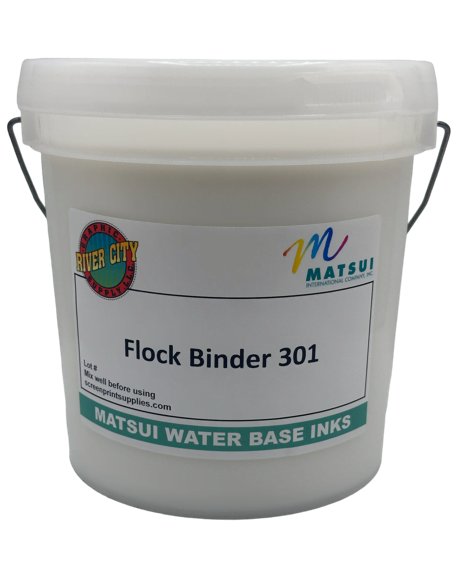
⚠️ Flock fibers are NOT included. Matsui Flock Binder 301 (WB0058) is a water-based adhesive base designed specifically for the direct flocking process in screen printing. You screen print the adhesive onto the garment, then apply loose flock fibers (velvet-like micro fibers) onto the wet adhesive. The flock fibers bond upright to the adhesive surface, creating a raised, velvety, suede-like texture that transforms a flat screen print into a three-dimensional tactile experience. Flock Binder 301 delivers excellent adhesion to flock pile while maintaining a soft hand feel — the flock area feels plush and flexible, not stiff or rigid. Tint with Matsui Neo Pigments to color-match the adhesive to your flock color for seamless, professional edges. Prints through mesh 80-120/inch (32-47/cm). If the adhesive penetrates too deeply into the fabric, a base coat may be needed to keep the adhesive on the surface where flock fibers can bond. Enhance production with Matsui additives — Retarder MG (1-5%) for open time. Stir well before use. Requires zero viscosity modifications. Cures at 320°F (160°C). PVC-free. OEKO-TEX® compliant, CPSIA, and HR4040 compliant.
Price range: $89.99 through $399.99
Description
Matsui Flock Binder 301 — The Foundation of Velvet Texture Printing
Flock printing is the premium tactile effect in screen printing. Where metallic shimmer catches the eye and crackle creates visual texture, flock catches the hand. The wearer reaches down and touches raised, velvety fibers that feel like suede, velour, or felt. The print is not flat. It is dimensional. It has depth, softness, and a luxury hand feel that no ink — not even the softest water-based ink — can replicate.
The secret to flock printing is not the flock itself. It is the adhesive underneath.
Flock Binder 301 is that adhesive. It is a screen-printable binder that creates the foundation layer to which flock fibers bond. You print it through a screen just like ink. Then, while the adhesive is still wet, you apply loose flock fibers — extremely short, precision-cut textile fibers — onto the adhesive surface, either by hand sprinkling, mechanical application, or electrostatic flocking equipment. The flock fibers stand upright in the wet adhesive. When the adhesive cures at 320°F (160°C), the fibers are permanently locked in position, creating a dense, even, velvety surface.
The quality of the flock print depends entirely on the quality of the adhesive. If the adhesive is weak, fibers wash off. If the adhesive is too stiff, the flock area feels rigid and uncomfortable. If the adhesive sinks too deep into the fabric, there is not enough surface adhesive for the fibers to bond to.
Flock Binder 301 is formulated to solve all three issues. It gives strong adhesion that holds flock fibers through repeated washing, a soft hand feel that keeps the flock area flexible and comfortable, and a viscosity designed to stay on the fabric surface where flock fibers can bond effectively.
How Direct Flocking Works — Step by Step
Direct flocking is a straightforward process once you understand the sequence.
Step 1: Screen print the adhesive
Load Flock Binder 301 into your screen and print the design area onto the garment just like printing ink. Use mesh 80–120/inch (32–47/cm). Print a generous, even deposit. The adhesive must stay on the surface of the fabric, not sink through it. A thick stencil helps.
Step 2: Apply flock fibers immediately
While the adhesive is still wet, apply loose flock fibers onto the printed area. The fibers bond to the wet adhesive and stand upright. Application methods include hand sprinkling for small runs, mechanical shaker or sifter setups for medium production, or electrostatic flocking equipment for professional production. Electrostatic charge orients fibers perfectly upright for the densest, most even velvet texture.
Step 3: Cure
Run the garment through the dryer at 320°F (160°C). The heat cures the adhesive and permanently locks the flock fibers in position.
Step 4: Remove excess
After curing, vacuum, shake, or brush off any loose fibers that did not bond to the adhesive. The bonded fibers remain and create the finished velvety surface.
Important base coat consideration: If the Flock Binder penetrates too deeply into the fabric, leaving insufficient adhesive on the surface for fiber bonding, print a base coat first using a layer of Matsui white or clear ink, flash it, then print Flock Binder on top. The base coat seals the fabric surface and keeps the adhesive where the flock fibers need it.
Tinting with Neo Pigments for Color-Matched Adhesive
Tint Flock Binder 301 with Matsui Neo Pigments to color-match the adhesive to your flock fiber color.
Why does adhesive color matter? Flock fibers are extremely short, typically 0.5mm to 2mm. Even at maximum density, tiny gaps between fibers can expose the adhesive layer below. If the adhesive is a contrasting color to the flock, those gaps create a visible mismatch at close range. By tinting the adhesive to match the flock color, any visible adhesive between fibers blends much more seamlessly.
- Red flock — tint binder with Neo Pigment Red so the adhesive disappears under the red fibers
- Navy flock — tint with Neo Pigment Blue for seamless support under navy fibers
- Black flock — tint with Neo Pigment Black so the adhesive disappears visually
- White flock — leave binder untinted or tint very lightly with Neo Pigment White for a clean base
- Green flock — tint with Neo Pigment Green to match green flock fibers
Keep pigment additions moderate. Flock Binder 301 is an adhesive system, and its primary job is bonding fibers. Excessive pigment can affect adhesion properties. The goal is moderate tinting for color matching, not heavy pigmentation.
Explore the full Matsui Neo Pigment collection here.
Flock Binder 301 vs. Foil Adhesive TFG 301 — Direct Flocking vs. Heat-Press Flock Sheets
Matsui makes two adhesive bases that can work with flock, but they use completely different processes. Customers often confuse them, so this comparison helps clarify the difference.
| Spec | Flock Binder 301 (WB0058) | Foil Adhesive TFG 301 |
|---|---|---|
| Primary Purpose | Direct flocking — loose flock fibers applied to wet adhesive on the press | Heat transfer foil, flock sheets, and Reflectalite SK applied after adhesive is cured |
| The Process | Print adhesive, apply loose fibers to wet adhesive immediately, cure, then remove excess | Print adhesive, cure adhesive, position flock sheet or foil, then heat press to transfer |
| Flock Material | Loose flock fibers — individual micro fibers bond upright to the adhesive surface | Pre-made flock sheets — flock fibers pre-bonded to a carrier sheet |
| Equipment Needed | Screen printing press plus a flock application method such as hand, shaker, or electrostatic equipment | Screen printing press plus a heat press |
| Texture Result | Dense, even velvet texture with upright fibers | Pre-manufactured flock texture that is already uniform from the sheet |
| Flock Color Control | Total — choose your own loose flock fiber color, length, and type | Limited to available flock sheet colors from the supplier |
| Multi-Color Flock | Possible — apply different flock colors to different adhesive areas | Requires multiple sheets and multiple registrations |
| Adhesive Mesh | 80–120/inch (32–47/cm) | 60–110/inch |
| Best For | Premium velvet or suede texture, custom flock colors, varsity lettering, luxury embellishment, tactile graphics | Foil effects, pre-made flock sheet transfers, Reflectalite reflective, and mixed-material heat-press embellishment |
| Choose This When… | You want direct flocking with loose fibers and maximum color control | You want heat-press flock sheets, metallic foil, or Reflectalite transfers |
The bottom line: Flock Binder 301 is for direct flocking with loose fibers applied to wet adhesive on the press. Foil Adhesive TFG 301 is for heat-press transfers such as flock sheets, foil, and Reflectalite applied after the adhesive is cured. Different processes need different products.
Flock Binder 301 vs. Glitter Base 301 — Two Binder Systems for Two Different Embellishments
Both are binder systems where you add your own material, but the materials and final results are completely different.
| Spec | Flock Binder 301 (WB0058) | Glitter Base 301 (WS0504) |
|---|---|---|
| You Add | Loose flock fibers | Glitter flakes |
| Application Method | Print adhesive, then apply fibers to the wet surface | Mix glitter into the binder before printing |
| How Binder Behaves | Stays on the surface so fibers can bond upright | Permeates into the fabric while glitter stays exposed on top |
| Tactile Result | Velvet, suede, or felt-like soft raised texture | Dry, dimensional sparkle points |
| Visual Effect | Matte, plush, dimensional velour-like look | Bright, sparkling, light-catching glitter look |
| Mesh | 80–120/inch (32–47/cm) | Up to 80/inch (32/cm) |
| Best For | Luxury tactile embellishment, varsity lettering, premium branding, high-end fashion decoration | Sparkle effects, cheer and dance apparel, kids’ designs, event merch, holiday prints |
How Matsui Additives Improve Your Production with Flock Binder 301
Flock Binder 301 is production-ready from the container. Matsui additives help optimize the process.
The problem: Adhesive dries in the screen during production pauses, and dried adhesive in the screen before flock application means the adhesive is no longer wet enough for fibers to bond. The additive solution: Retarder MG at 1–5% extends open time. This is particularly important in direct flocking because the adhesive must remain wet until flock fibers are applied.
The problem: Adhesive is too thin and flows into the fabric instead of staying on the surface. The additive solution: Thickener B at 0.1–0.5% increases viscosity to keep the adhesive on the surface where flock fibers can bond. This uses a lower dosage range than many standard applications.
The problem: Adhesive is too thick for smooth printing. The additive solution: RV Additive at 0.1–1.0% reduces viscosity. This also uses a lower dosage range than standard.
Important: Stir well before use. Flock Binder 301 must be stirred thoroughly before printing, especially after extended storage, because adhesive components can settle.
Browse the complete Matsui additive collection here.
Why Screen Printers Choose Flock Binder 301
I want velvet-textured lettering and logos on garments — raised, touchable, dimensional.
This is the core Flock Binder application. Print the adhesive, apply flock fibers, and cure. The result is a raised, velvety surface that adds a premium tactile dimension to any design. Varsity lettering, luxury logos, and high-end brand marks all benefit from flock.
I want full control over flock fiber color, type, and length.
Direct flocking with Flock Binder 301 gives you broad flock options. Any flock fiber color, any fiber length, and any fiber type can be used. You are not limited to the pre-made flock sheet colors available from a supplier.
I want to color-match the adhesive to the flock for seamless edges.
Tint the adhesive with Neo Pigments so visible adhesive between fibers blends in instead of creating a color mismatch.
My flock fibers keep falling off after a few washes.
Check three things. First, make sure the adhesive deposit is thick enough by using lower mesh and a thicker stencil. Second, make sure the adhesive is staying on the fabric surface instead of sinking through, and use a base coat first if necessary. Third, make sure the print is fully cured at 320°F (160°C). Undercuring is one of the biggest reasons flock adhesion fails.
I want multi-color flock on one garment.
Direct flocking makes this possible. Print adhesive in one area, apply one flock color, then repeat in another area with a different flock color. Because you control where the fibers go, multi-color flock work can be built directly into the design.
I want the flock area to feel soft and flexible — not stiff.
Flock Binder 301 is built for a soft hand feel. The flock area stays flexible and comfortable. The velvet texture is plush, not rigid.
Key Features
- Flock fibers not included — adhesive base only, so you supply your own flock fibers
- Designed for the direct flocking process — print adhesive, apply loose flock fibers to the wet surface, and cure
- Excellent adhesion to flock pile — strong fiber bonding that holds through repeated washing when properly cured
- Soft hand feel — flock area remains flexible and comfortable
- Tintable with Neo Pigments — color-match the adhesive to the flock color for cleaner, more professional edges
- Base coat option — helpful if adhesive penetrates too deeply into fabric
- Production-optimized with Matsui additives — compatible with Retarder MG, Thickener B, and RV Additive
- Zero viscosity modifications required — prints from the container, though it should be stirred well before use
- PVC-free and eco-compliant — OEKO-TEX® compliant, CPSIA compliant, and HR4040 compliant
Recommended Additives for Flock Binder 301 Production
| Additive | Dosage | Production Problem It Solves |
|---|---|---|
| Retarder MG | 1–5% | Adhesive drying in the screen or before flock fibers can be applied — critical for keeping the adhesive wet enough for bonding |
| Thickener B | 0.1–0.5% | Adhesive too thin and sinking into fabric — helps keep adhesive on the surface |
| RV Additive | 0.1–1.0% | Adhesive too thick for smooth printing — reduces viscosity |
Note: Flock Binder 301 uses lower additive dosage ranges than many standard Matsui systems. Thickener B at 0.1–0.5% and RV Additive at 0.1–1.0% should be used conservatively. Flock Binder adhesion properties are sensitive to formulation changes, so start low and test before production.
Browse the complete Matsui additive collection here.
Technical Specifications
| Specification | Detail |
|---|---|
| Product Name | Matsui Flock Binder 301 |
| Product Code | WB0058 |
| Type | Water-based adhesive base for the direct flocking process. ⚠️ FLOCK FIBERS NOT INCLUDED. |
| Process | Screen print adhesive → apply loose flock fibers to wet surface → cure → vacuum excess |
| Flock Fibers | NOT included — you supply and apply your own flock fibers |
| Adhesion | Excellent adhesion to flock pile — fibers bond upright for dense velvet texture |
| Hand Feel | Soft — flock area remains flexible and comfortable |
| Neo Pigment Tinting | Yes — Neo Pigments to color-match adhesive to flock color for seamless edges |
| Recommended Mesh Count | 80-120/inch (32-47/cm) |
| Base Coat | May be needed if adhesive penetrates too deeply into fabric — print a base coat (white or clear ink) first, flash, then Flock Binder on top |
| Cure Temperature | 320°F (160°C) |
| Primary Substrates | Cotton and cotton blends — various textiles |
| Companion Products | Foil Adhesive TFG 301 for heat-press flock sheets and foil (different process). Glitter Base 301 for glitter effects (different embellishment). |
| Additives | Retarder MG (1-5%), Thickener B (0.1-0.5%), RV Additive (0.1-1.0%). ⚠️ Lower dosage ranges than standard. |
| Viscosity Modifications | None required — stir well before use, especially after storage |
| Compliance | OEKO-TEX® compliant, CPSIA, HR4040 |
| Formulation | PVC-free, environmentally safe |
| Storage | 65°F to 95°F (18°C to 35°C). Avoid direct sunlight. Stir well after extended storage. |
| Cleanup | Water and mild soap or detergent |
| Available Sizes | Quart, Gallon |
Benefits at a Glance
- ⚠️ Flock fibers NOT included — adhesive base only. Total control over flock fiber color, length, and type.
- Designed for the direct flocking process — screen print adhesive, apply loose fibers to wet surface, cure
- Excellent adhesion to flock pile — fibers bond upright for dense, even velvet texture
- Soft hand feel — flock area remains flexible and comfortable, not stiff
- Tintable with Neo Pigments to color-match adhesive to flock color for seamless professional edges
- Base coat option for fabrics where adhesive penetrates too deeply
- Multi-color flock possible — apply different flock colors to different adhesive areas
- Premium tactile embellishment — transforms flat prints into dimensional, touchable velvet surfaces
- ⚠️ Lower additive dosage ranges than standard Matsui products — adhesion properties are sensitive to formulation changes
- Zero viscosity modifications — stir well before use
- PVC-free, OEKO-TEX® compliant, CPSIA and HR4040 compliant
- Perfect for varsity lettering, luxury logos, premium branding, high-end fashion decoration
Technical Sheets / Safety Data Sheets / Documents
FREQUENTLY ASKED QUESTIONS
Does Flock Binder 301 come with flock fibers?
No — Flock Binder 301 is the adhesive base only. Flock fibers are not included. You supply your own loose flock fibers and apply them to the wet adhesive during printing. This gives you total control over flock color, fiber length, and type.
How does direct flocking work?
Screen print Flock Binder 301 onto the garment just like printing ink. While the adhesive is still wet, apply loose flock fibers onto the printed area by hand, mechanical shaker, or electrostatic flocking equipment. The fibers bond upright to the wet adhesive. Cure at 320°F (160°C), then vacuum or brush off the excess loose fibers. The bonded fibers create a dense, velvety surface.
What is the difference between Flock Binder 301 and Foil Adhesive TFG 301?
They are used for different processes. Flock Binder 301 is for direct flocking, where loose fibers are applied to wet adhesive on the press. Foil Adhesive TFG 301 is for heat-press transfers such as flock sheets, foil, and Reflectalite that are applied after the adhesive has been cured. Flock Binder gives you more flock color flexibility. Foil Adhesive gives you more embellishment type flexibility.
Can I tint the adhesive to match my flock color?
Yes — add Neo Pigments at moderate levels to color-match the adhesive to your flock. Red adhesive under red flock and black adhesive under black flock help eliminate visible color mismatch in any small gaps between the flock fibers.
My flock fibers keep falling off after washing. What is wrong?
Check three things. First, make sure the adhesive deposit is thick enough by using lower mesh and a thicker stencil. Second, make sure the binder is staying on the fabric surface instead of sinking into the fabric. If it is sinking in, print a base coat first to seal the surface. Third, make sure the print is fully cured at 320°F (160°C). Undercuring is one of the main reasons flock adhesion fails.
What mesh count should I use?
Use 80–120/inch (32–47/cm). Lower mesh deposits more adhesive for stronger fiber bonding. The adhesive needs to stay on the fabric surface, so a thick, heavy deposit helps keep it where the flock fibers need it.
Do I need a base coat?
Only if the adhesive penetrates too deeply into the fabric. In that case, print a layer of Matsui white or clear ink first, flash it, then print Flock Binder 301 on top. The base coat seals the fabric surface and helps prevent the adhesive from sinking through. Test on your specific fabric to see whether a base coat is needed.
What flock application method is best?
Electrostatic flocking equipment produces the best results because the electrostatic charge orients flock fibers perfectly upright for the densest, most even velvet texture. Mechanical shakers work well for medium production. Hand sprinkling works for small runs and testing.
Can I do multi-color flock on one garment?
Yes — print adhesive in one area and apply flock Color A, then print adhesive in a second area and apply flock Color B. Direct flocking lets you apply different flock colors to different areas of the same garment.
What additives should I use?
Use Retarder MG at 1–5% to keep the adhesive wet until flock fibers are applied. Use Thickener B at 0.1–0.5% if the adhesive is sinking into the fabric. Use RV Additive at 0.1–1.0% if the adhesive is too thick. Note the lower dosage ranges compared to standard Matsui products. Browse all Matsui additives here.
Do I need to stir Flock Binder before use?
Yes — stir well before use, especially if it has been stored for an extended period. Adhesive components can settle during storage, and thorough stirring helps ensure proper adhesion performance.
Is Flock Binder 301 safe?
Yes. It is PVC-free, OEKO-TEX® compliant, CPSIA compliant, and HR4040 compliant. It is environmentally safe.
Reviews
Only logged in customers who have purchased this product may leave a review.
You May Also Like
Related products
-
Matsui Stretch Clear 301 | Silicone-Like Water-Based Clear Mixing Base for Custom Colors on Performance & Stretch Fabric Screen Printing
Price range: $29.99 through $299.99 -
Matsui Crack Base Clear | Water-Based Crackle Effect Ink for Vintage Weathered Distressed Screen Printing on Cotton & Blends — Tintable with Neo Pigments
Price range: $29.99 through $339.99 -
Matsui Soft-Tex Base 350 | Polyurethane Rubber-Binder Water-Based Clear Mixing Base for Extreme-Stretch Silicone-Like Custom Colors on Performance Fabrics
Price range: $109.99 through $4,499.99 -
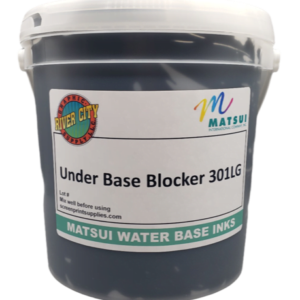
Matsui Under Base Blocker 301-LG Black | Maximum-Density Water-Based Dye Migration Blocker for Aggressive Polyester, Sublimated Garments & Performance Fabrics — Works Under Water-Based AND Plastisol Inks
Price range: $29.99 through $399.99
Reviews