Printers Choice Degreaser (1:3 Concentrate) – Professional Screen Mesh Degreaser for Screen Printing
Printers Choice
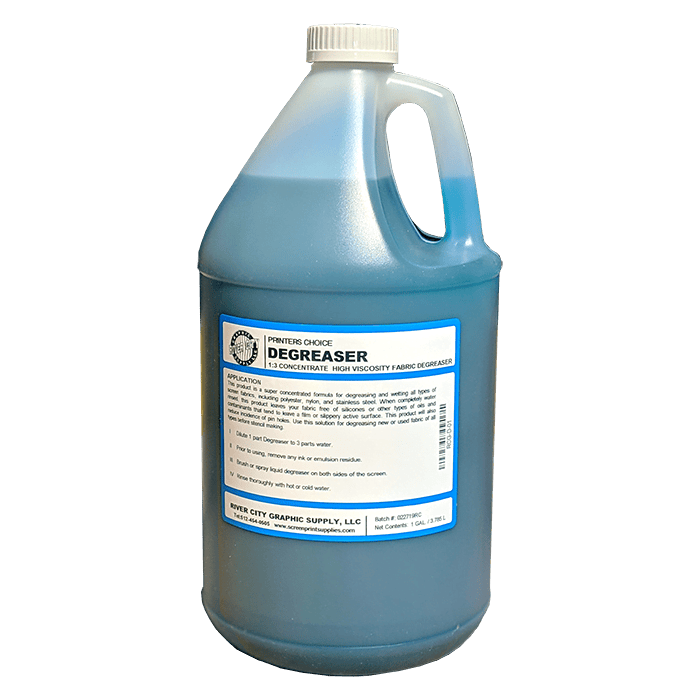
Printers Choice Degreaser is a super-concentrated professional mesh prep solution that removes the oils, silicones, and shop contaminants that cause pinholes and fisheyes in your emulsion coating. Dilute 1:3 with water — one gallon concentrate makes four gallons of working solution. Safe on all mesh types including polyester, nylon, and stainless steel. Required before every emulsion coat on every screen — new screens, freshly reclaimed screens, no exceptions. After ink, blockout, and emulsion removal, spray both sides, scrub, rinse thoroughly, and dry before coating. Non-hazardous and drain safe.
Price range: $14.99 through $39.99
Description
✅
Degrease Every Screen, Every Time — No Exceptions
Degreasing is required before every emulsion coating — not just on new screens. A freshly reclaimed screen still has cleaning chemical residues, skin oils from handling, and shop contaminants that will interfere with emulsion adhesion. No exceptions. Every screen. Every coat.
Printers Choice Degreaser — Super-Concentrated Mesh Prep That Prevents Pinholes & Improves Emulsion Adhesion
Every pinhole, every fisheye, every patch of premature stencil breakdown starts the same way: contaminated mesh. The oils, silicones, and residues that accumulate on screen mesh during printing, reclaiming, and handling are invisible — but they block emulsion from bonding to the fibers it needs to grip. Printers Choice Degreaser removes them completely. Apply to the reclaimed screen after all other chemistry, scrub with a nylon brush, rinse until the water sheets clean, and dry. That’s the surface emulsion needs. 1:3 concentrate — one gallon makes four gallons of working solution. Safe on polyester, nylon, and stainless steel mesh. Non-hazardous.
Every Screen, Every Time — No Exceptions
This is the most commonly skipped step in screen making. Degreasing is required before every emulsion coating — not just on new screens. A freshly reclaimed screen still carries residues from cleaning chemistry, emulsion remover, and haze remover. Any screen that has been handled by human hands carries skin oils. All of these contaminate the mesh surface and prevent emulsion from bonding properly. New screen, used screen, freshly reclaimed screen: degrease before every coat.
What Contamination Does to Emulsion
Mesh contamination is invisible to the eye but catastrophic to emulsion adhesion. Silicones, oils, and chemical residues create a film on the mesh fibers. When emulsion is applied over this film, it cannot bond to the fiber surface directly. The result: pinholes (where the emulsion pulls away from isolated fibers), fisheyes (circular areas of separation), uneven coating, and premature stencil breakdown on press. The degreaser eliminates this film, giving emulsion bare fiber to adhere to.
Works on All Mesh Types
Printers Choice Degreaser is safe and effective on polyester, nylon, and stainless steel mesh. These are the three mesh types used in professional screen printing. One product handles all mesh in your screen room.
1:3 Concentrate — 4x the Working Volume
This is a super-concentrated formula, not a ready-to-use product. Dilute 1 part concentrate with 3 parts water in a plastic container before applying. One quart makes one gallon of working solution. One gallon makes four gallons. The concentration makes this significantly more economical than ready-to-use alternatives at equivalent volume.
Removes Silicones and Oils That Standard Cleaning Misses
Standard screen wash and emulsion removers are not designed to remove silicone contamination. Silicone pallet adhesives, silicone softeners in garments, and silicone compounds in shop environments migrate to screen surfaces over time. Printers Choice Degreaser is specifically formulated to remove silicone-based contamination along with standard oils, dirt, and chemical residues.
Reduces Pinholes and Fisheyes
Pinholes and fisheyes are the two most common emulsion defects caused by mesh contamination. Pinholes appear where oil spots repel emulsion, leaving tiny uncoated areas. Fisheyes are circular separation marks caused by larger contamination spots. A properly degreased mesh eliminates both defects at their source, before emulsion is ever applied.
Improves Emulsion Adhesion and Stencil Life
Degreasing does more than just clean — it improves the wettability of the mesh surface. A clean, degreased mesh allows emulsion to flow evenly into and around the mesh fibers, creating a stronger mechanical bond. This directly extends stencil life on press — a properly degreased screen holds emulsion longer, produces sharper edges, and is less prone to premature breakdown.
Non-Hazardous and Drain Safe
Printers Choice Degreaser is non-hazardous. No special handling requirements, no hazmat shipping fees, no industrial ventilation needed. Safe for drain disposal under standard conditions — check local sanitation authority for specific requirements.
Dilution Ratio1:3
1 part + 3 parts water
Working Volume4x
Per gallon of concentrate
Mesh TypesPoly · Nylon · SS
All professional mesh types
HazmatNone ✔
Ships standard, all sizes
💰 1:3 Concentration — The Cost Math
1 Quart Concentrate
Makes 4 quarts (1 gallon) of working solution
1 Gallon Concentrate
Makes 4 gallons of working solution
Mix in a Plastic Container
1 part concentrate — 3 parts water. Mix in a plastic (not metal) container before applying.
❌ What Goes Wrong Without Proper Degreasing
- Pinholes — oil spots repel emulsion, leaving tiny uncoated gaps
- Fisheyes — circular emulsion separation from larger contamination spots
- Premature stencil breakdown — emulsion peels mid-run on press
- Uneven coating — emulsion pools and thins around contamination
- Poor halftone reproduction — dot contamination causes bridging
- Wasted emulsion — screens that can’t hold a stencil get coated again
✅ Critical Application Rules
- Degrease every screen, every time before coating
- Use a nylon brush only — never woven scrub pads
- Rinse completely — degreaser residue causes fisheyes
- Do not touch mesh after degreasing — skin oil recontaminates
- Dry completely before applying emulsion
- Mix in a plastic container — not metal
How to Use Printers Choice Degreaser
Step 1 — Complete Full Reclaim First
Remove all ink, blockout, and emulsion using your standard reclaim process before applying degreaser. Degreaser is the final mesh prep step — after the screen is fully reclaimed and chemically cleaned.
Step 2 — Mix the Working Solution
Dilute 1 part Printers Choice Degreaser concentrate with 3 parts water in a plastic container. Never mix in a metal container. Prepare enough working solution for your current screen room workload.
Step 3 — Wet the Screen
Wet both sides of the screen with water before applying degreaser. Working on a damp screen helps the degreaser spread and activate more uniformly across the mesh.
Step 4 — Spray or Apply Both Sides
Spray or apply the diluted degreaser solution generously to both sides of the screen. Ensure complete coverage of the mesh area.
Step 5 — Scrub with a Nylon Brush
Scrub both sides of the screen with a clean nylon bristle brush until the degreaser begins to foam. Important: use only nylon brushes or foam pads. Never use woven scrub pads — the small fibers break loose and lodge in the mesh, causing pinholes.
Step 6 — Allow to Work 1–2 Minutes
Allow the degreaser to dwell on the mesh for 1–2 minutes after scrubbing. This gives the chemistry time to lift contamination from the mesh fibers.
Step 7 — Rinse Thoroughly
Rinse both sides completely with clean water until all traces of degreaser are gone. This step is critical: any soap or degreaser residue left on the mesh will cause fisheyes and emulsion adhesion problems. Rinse until the water sheets off cleanly.
Step 8 — Do Not Touch the Mesh
After rinsing, do not touch the mesh with bare hands. Skin oils transfer immediately to the clean mesh surface and undo the degreasing. Handle screens only by the frame.
Step 9 — Dry Completely Before Coating
Allow the screen to dry completely in a clean, dust-free environment before applying emulsion. Coating a damp screen results in emulsion dilution and uneven thickness. Store screen-side down or in a drying cabinet.
🧼 The Rinse Step Is Not Optional
Degreaser residue left on the mesh will cause the exact fisheyes and adhesion issues you’re trying to prevent. Rinse until the water runs completely clean and sheets off the mesh in a uniform layer rather than beading or breaking. If water beads on the mesh after rinsing, there’s still contamination present — continue rinsing.
Ready to Order?
Same-day shipping on in-stock orders before 3:30 PM CT from San Antonio, TX.
🏆 Why Order from River City Supply?
📦 Private Label Quality
Printers Choice is our in-house brand — professional-grade chemistry at a River City Supply price.
🚚 Same-Day Shipping
Orders placed before 3:30 PM CT ship same day from San Antonio, TX.
💰 Concentrated = Economical
1:3 ratio — one gallon concentrate makes four gallons of working solution.
🎁 Free Shipping Over $200
Free ground shipping on qualifying orders over $200.
📞 Expert Support
Call (512) 454-0505 with any screen prep or emulsion questions.
⭐ 17+ Years in Business
Founded 2008. Serving screen printers nationwide for over 17 years.
More Degreasers at River City Supply:
Technical Specifications
✅
Degrease Every Screen, Every Time — No Exceptions
Degreasing is required before every emulsion coating — not just on new screens. A freshly reclaimed screen still has cleaning chemical residues, skin oils from handling, and shop contaminants that will interfere with emulsion adhesion. No exceptions. Every screen. Every coat.
| Printers Choice Degreaser — Technical Specifications | |
|---|---|
| Product Name | Printers Choice Degreaser (1:3 Concentrate) |
| Brand | Printers Choice — River City Supply |
| SKU | RC PC Degreaser |
| Type | Super-concentrated professional screen mesh degreaser |
| Dilution Ratio | 1:3 — 1 part concentrate to 3 parts water |
| Working Volume | 1 gallon concentrate makes 4 gallons working solution |
| Mix Container | Plastic container only — do not mix in metal |
| Mesh Compatibility | Polyester, nylon, and stainless steel mesh |
| Use When | Before every emulsion coating — required on new and reclaimed screens |
| Removes | Oils, silicones, cleaning chemical residues, skin oils, shop contaminants, dirt |
| Prevents | Pinholes, fisheyes, uneven emulsion coating, premature stencil breakdown |
| Application | Spray or apply both sides; scrub with nylon brush until foaming; dwell 1–2 min; rinse thoroughly |
| Brush Type | Nylon bristle brush or foam pad ONLY — never woven scrub pads |
| Rinsing | Rinse until water sheets cleanly off mesh with no beading — residue causes fisheyes |
| After Degreasing | Do NOT touch mesh with bare hands — skin oils recontaminate immediately |
| Drying | Dry completely before applying emulsion |
| Hazmat | Non-hazardous — ships standard, no additional fees |
| Drain Safe | Yes — check local sanitation authority for specific requirements |
| Available Sizes | Quart, Gallon |
Technical Sheets / Safety Data Sheets / Documents
FREQUENTLY ASKED QUESTIONS
Do I really need to degrease my screen every time, even after reclaiming?
Yes — every screen, every time, no exceptions. A freshly reclaimed screen has been exposed to ink removers, emulsion removers, haze removers, and water. All of these leave residues. The screen has also been handled by human hands, which transfer skin oils instantly. None of these residues are removed by the reclaiming process — they require a dedicated degreaser. Skipping degreasing on a reclaimed screen is one of the most common causes of pinholes in production screen rooms.
How do I mix it correctly?
Add 1 part Printers Choice Degreaser concentrate to 3 parts clean water in a plastic container. Do not mix in a metal container. Mix before applying — do not apply the concentrate directly to the screen undiluted. One quart of concentrate makes one gallon of working solution. One gallon makes four gallons.
Why can’t I use a regular scrub pad?
Woven scrub pads — the green or white abrasive pads common in most shops — shed small synthetic fibers during scrubbing. These fibers become trapped in the mesh weave. When emulsion is applied, it cannot coat evenly around the fibers, creating pinholes and weak spots in the stencil. Use only nylon bristle brushes or smooth foam pads for degreasing.
How do I know if I’ve rinsed enough?
Watch the water behavior on the mesh. A properly rinsed, clean, degreased screen will show water sheeting off in a smooth, even film — the mesh is fully wetted. If water beads up or breaks into droplets on the mesh surface, contamination is still present and the screen needs more rinsing. Continue rinsing until you achieve a clean, continuous sheet of water across the entire mesh.
Why can’t I touch the mesh after degreasing?
Human skin constantly produces oils, which transfer immediately to any surface touched. A single fingerprint on degreased mesh is enough to cause a pinhole or fisheye in the emulsion coat over that spot. After rinsing, handle screens by the frame only. If the mesh is accidentally touched, that area must be re-degreased before coating.
Does it remove silicone contamination?
Yes. Printers Choice Degreaser is specifically formulated to remove silicone-based contamination — including silicone from pallet adhesives, silicone softeners in garment fabrics, and airborne silicone compounds in the shop environment. Standard cleaning chemistry does not remove silicone. This is a primary cause of persistent pinholes in shops that print heavily on high-polyester or performance fabrics.
Can it be used on new screens that have never been printed?
Yes, and it should be. New mesh is cleaned during manufacturing, but accumulates contamination during shipping, handling, and screen stretching. By the time a new screen reaches your coating table, it has picked up oils from multiple sets of hands and environmental contaminants from storage. Degrease every new screen before its first coating.
How does degreasing extend stencil life on press?
Emulsion bond strength to mesh fibers is directly related to how clean and properly wetted the fiber surface is at the time of coating. Contaminated mesh creates a weak bond that is more susceptible to ink pressure, squeegee force, and chemical exposure during printing. A properly degreased mesh creates a strong mechanical bond between the emulsion and the fiber, which translates to longer stencil life, more consistent printing, and less screen repair during runs.
Questions about screen mesh prep or emulsion?
Call (512) 454-0505 or email [email protected].
Reviews
Only logged in customers who have purchased this product may leave a review.
You May Also Like
Related products
-

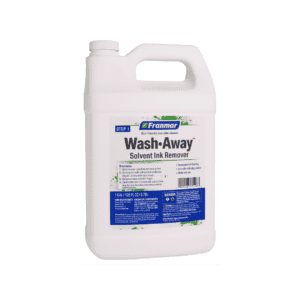
Franmar Wash-Away Solvent Ink Remover – Soy-Based Screen Cleaner for Solvent & UV Inks
Price range: $24.99 through $3,283.00 -
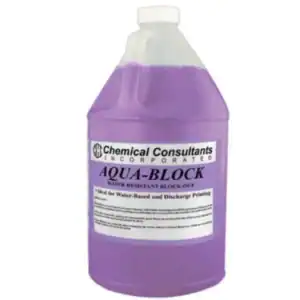
CCI Aqua-Block Water-Resistant Blockout – Durable Blockout for Water-Based & Plastisol Screen Printing
Price range: $24.99 through $1,136.40 -
Pro Soap Hand Cleaner – Industrial-Strength Hand Cleaner for Screen Printers & Shop Professionals
Price range: $49.99 through $299.99 -
Murakami MS Emulsion Reclaimable Hardener – Post-Exposure Stencil Hardener for Screen Printing
$49.99
Reviews