Saati Hi-Dro ECO Panel 20″×24″ (6-Pack) – Thin Thread Plasma-Treated Mesh for Water-Based, Discharge & Halftone Screen Printing
Nortech
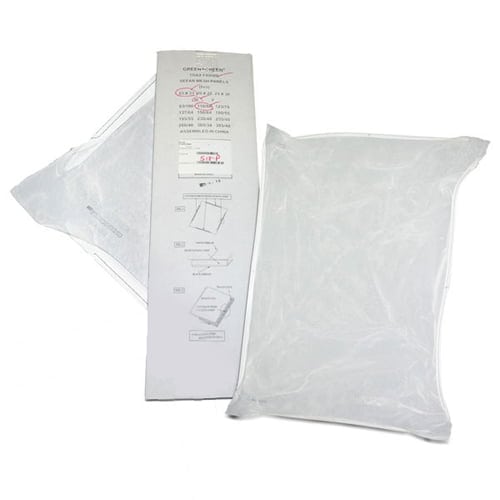
If you run a manual screen printing press, the mesh you choose has a direct, measurable impact on how hard you have to work — and how good your prints look. The Saati Hi-Dro ECO Panel 20″×24″ (6-Pack) is the thin-thread, plasma-treated screen printing mesh that lets ink flow freely at lower squeegee pressure, releases more completely on snap-off, and holds halftone dots with less interference than standard mesh at the same count. Each panel snaps into your Nortech ECO Frame 20″×24″ using the no-adhesive locking strip system — swap mesh counts in under 2 minutes, right at your press.
📦 What’s Included
Six (6) Saati Hi-Dro mesh panels cut to 20″×24″, each pre-woven into a plastic locking strip for direct installation into the Nortech ECO Frame 20″×24″. Mesh count and color selected at purchase. You also need the Nortech ECO Stretching Tool to install panels — sold separately.
⚠️ Drop Ship Item: Ships directly from Nortech Graphics in Arkansas. Shipping times vary. Questions? Contact us at [email protected] or at (512) 454-0505.
Ships direct from Nortech · Free shipping on orders over $200 · (512) 454-0505
Price range: $104.42 through $130.63
Description
Manual Press Printers: This Mesh Changes How Hard You Have to Work
On a manual press, every stroke costs you energy. The ink has to clear the screen, the squeegee has to push hard enough, and the mesh has to release cleanly on snap-off. Standard mesh makes all of this harder than it needs to be. Saati Hi-Dro’s thinner thread diameter and wider mesh openings mean the ink flows through with less resistance, releases more completely, and lands on your substrate brighter and softer — at lower pressure. For manual printers, that’s the difference between a long, tiring print run and one that actually feels effortless.
Why Thin Thread Matters More on a Manual Press
💪 Lower Pressure = Less Arm Fatigue
On an automatic press, squeegee pressure is set and consistent. On a manual press, it comes from you — every single stroke. Hi-Dro’s wider mesh openings let ink clear the screen more easily, so you can print at lower, more consistent pressure. Less force per stroke means less fatigue across a long run, and more consistent prints from first shirt to last.
🎯 Consistent Pressure = Consistent Prints
Manual printing’s biggest quality challenge is stroke-to-stroke consistency. Hi-Dro’s lower pressure threshold creates a wider “sweet spot” where the ink clears properly — making it easier to hit that sweet spot on every pull. Your ink deposit becomes more uniform from shirt to shirt, especially on longer runs where fatigue sets in.
🖨️ Better Halftones Without a CTS Unit
On a manual press with traditional film output, Hi-Dro’s thinner thread profile is your biggest upgrade for halftone print quality. Smaller threads clip fewer dots during exposure and printing — giving you better dot resolution, cleaner gradients, and higher achievable LPI with your existing emulsion and film workflow.
🎬 See the ECO Frame Panel System in Action
Watch how these Hi-Dro panels install into the Nortech ECO Frame 20″×24″ in under 2 minutes using the locking strip system.
The Thin Thread Science — What’s Actually Happening
At the same mesh count, Hi-Dro uses a smaller thread diameter than standard Hi-Tex mesh. That single change cascades into every aspect of print quality:
Wider Mesh Openings
The 157 Hi-Dro has a 48 µm thread vs 64 µm on standard 158 Hi-Tex. That shrinks the thread and widens the gap — creating a 109 µm opening vs ~83 µm. More open space = more ink pathway per stroke.
Cleaner Ink Release
Thinner threads have less surface area in contact with ink. On snap-off, the ink releases from the mesh more completely — more lands on the shirt, less stays in the screen. That means brighter prints and less ink wasted per stroke.
Softer Hand Feel
Lower squeegee pressure means less ink is driven into the shirt fibers. The ink sits on top of the fabric creating a brighter, more vivid print with a noticeably softer hand — a major upgrade customers can feel as well as see.
No Degreasing Needed
Saati’s proprietary DBD plasma treatment permanently modifies the thread surface — eliminating the degreasing step before coating with emulsion. Install a panel and coat it immediately. Standard Hi-Tex must be degreased before every use.
Hi-Dro vs. Hi-Tex — Which Should Manual Printers Choose?
Both mesh types are available as 20″×24″ ECO Frame panels. Here’s how to decide:
| Factor | 💧 Saati Hi-Dro (This Product) | 🔴 Saati Hi-Tex |
|---|---|---|
| Thread Diameter (157 count) | 48 µm — Thinner | 64 µm — Thicker |
| Squeegee Pressure Needed | Lower — easier on manual press | Higher — more force required |
| Print Feel on Garment | Softer hand, brighter color | Heavier deposit, standard hand |
| Halftone Performance | Excellent — less dot clipping | Good — thicker threads clip fine dots |
| Water-Based Ink Suitability | Purpose-built — gold standard | Works — requires degreasing first |
| Plastisol Suitability | Yes — preferred for underbases & detail | Yes — workhorse for heavy deposits |
| Plasma Surface Treatment | Yes — coat straight from panel stack | No — must degrease before use |
| Tear Resistance | Handle with care — thinner is more fragile | More durable — thicker threads resist ripping |
| Best For | Water-based, discharge, halftones, soft-hand plastisol, detail work | High-opacity underbases, heavy plastisol, high-volume production |
For manual press shops: Most experienced manual printers stock Hi-Dro for their detail colors, halftone work, and all water-based printing — and Hi-Tex for heavy white underbases and high-opacity plastisol. The ECO Frame panel system makes it easy and affordable to keep both in rotation.
Yellow Mesh vs. White Mesh — What the Color Actually Does
⬜ White Mesh — Maximum Light Energy
White threads allow UV light to scatter and reflect during exposure. This is an advantage for solid areas and bold designs where you want maximum exposure energy. However, the light scatter can cause slight undercutting on fine halftone dots and thin stencil edges. Best for 110–157 count spot color and solid work.
🟨 Yellow Mesh — Sharper Stencil Edges
Yellow threads absorb the UV wavelengths that cause internal scattering. This keeps the exposure path clean and direct — exposing only where the film positive allows. The result is sharper stencil edges, better halftone dot integrity, and the ability to run higher LPI (40–55+ with appropriate emulsion). Always choose yellow for halftone and simulated process work.
Hi-Dro ECO Panel 20″×24″ — Full Mesh Count Guide
All six mesh counts are available as 20×24 ECO panels at River City Supply. Each panel snaps into the Nortech ECO Frame 20″×24″ using the locking strip system.
| Mesh Count | Color | Thread Dia. | Mesh Opening | Open Area | Best For |
|---|---|---|---|---|---|
| 110 Hi-Dro | ⬜ White | 64 µm | 167 µm | ~60% | Discharge whites, heavy water-based, thick specialty inks |
| 157 Hi-Dro | ⬜ White | 48 µm | 109 µm | 46% | General spot colors, all-around water-based, standard plastisol |
| 157 Hi-Dro | 🟨 Yellow | 48 µm | 109 µm | 46% | Best all-around Hi-Dro. Halftones, water-based, sim process. Runs 40–55+ LPI |
| 198 Hi-Dro | 🟨 Yellow | 40 µm | 85 µm | 44% | Fine detail, light ink deposits, photographic simulated process |
| 230 Hi-Dro | 🟨 Yellow | 40 µm | 68 µm | 38% | High-detail halftones, 4-color process, fine-line artwork |
| 305 Hi-Dro | 🟨 Yellow | 31 µm | 52 µm | ~36% | Ultra-fine detail, photographic work — handle with extra care |
⚠️ Handle Thin Thread With Care
Hi-Dro’s thinner thread is more fragile than standard Hi-Tex. Always use the Nortech Stretching Tool for installation, verify tension with the tension meter, and use correct squeegee pressure for the count. The print quality improvement is well worth the extra care.
Complete Your 20″×24″ ECO Frame Setup
These Hi-Dro panels install in the Nortech ECO Frame 20×24 using the locking strip system. Here’s everything else you need.
🖼️ Nortech ECO Frame 20″×24″ →
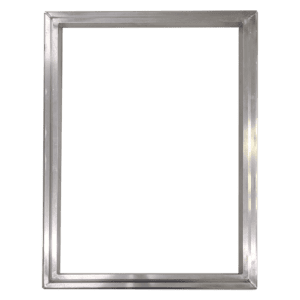
The retensionable aluminum frame these panels are cut for. Locking strip system — no adhesive required. Fully welded, dip tank safe, and 100% recyclable.
🔧 Nortech ECO Stretching Tool →
Required for panel installation. Seats the locking strip into the frame channel and applies even tension across all four sides of the mesh. Cannot install panels without it.
Especially critical with thin Hi-Dro thread. Verify tension in Newtons/cm after every install. Consistent tension = consistent halftone results and print-to-print registration on your manual press.
🟦 Chromaline, Murakami & Saati Emulsions →
Hi-Dro’s plasma treatment gives superior emulsion adhesion. No degreasing step needed — coat directly onto fresh panels. SBQ, dual-cure, and diazo options available.
Plastisol, water-based, discharge & specialty inks. Hi-Dro is purpose-built for water-based and discharge, and increasingly popular for soft-hand plastisol work.
Ink removers, emulsion removers, and degreasers — fully compatible with the ECO Frame no-adhesive system. Clean screens without worrying about adhesive delamination.
(512) 454-0505 · [email protected] · Same-day shipping before 3:30 PM CT · Free shipping over $200
Technical Specifications
Technical Specifications — Saati Hi-Dro ECO Panel 20″×24″ (6-Pack)
Manufacturer: Saati · Drop Ship via Nortech Graphics, Arkansas
| Mesh Type | Saati Hi-Dro — high modulus, low elongation monofilament polyester with proprietary plasma surface treatment (DBD technology) |
| Frame Compatibility | Nortech ECO Frame 20″×24″ only — locking strip system, no adhesive required |
| Pack Quantity | 6 panels per pack |
| Available Mesh Counts | 110 (White) · 157 (White) · 157 (Yellow) · 198 (Yellow) · 230 (Yellow) · 305 (Yellow) |
| Thread Diameter Range | 31 µm (305) to 64 µm (110) — thinner than Hi-Tex at same mesh count |
| Surface Treatment | Proprietary plasma treatment (DBD — Dielectric Barrier Discharge) — permanent surface modification |
| Degreasing Required | No — plasma treatment replaces the degreasing step; coat directly after installation |
| Ink Compatibility | Water-based, discharge, HSA, and plastisol inks — purpose-built for water-based |
| Emulsion Compatibility | SBQ photopolymer, dual-cure, and diazo emulsions — plasma treatment provides superior adhesion |
| Required Tool | Nortech ECO Stretching Tool (sold separately — required for installation) |
| Tension Verification | Nortech Tension Meter (sold separately — especially important with thin thread mesh) |
| Press Compatibility | Manual screen printing presses — ideal for the 20×24 platen setup. Also compatible with smaller automatic presses. |
| Recyclability | 100% recyclable — panels and ECO Frame aluminum are fully recyclable; no adhesive contamination |
| Handling Note | Thin thread is more fragile than standard mesh — handle with care, use correct squeegee pressure for the count |
| Shipping | Drop ship — ships direct from Nortech Graphics. Times vary. Nortech: 800-743-6473 · RCS: (512) 454-0505 |
Technical Sheets / Safety Data Sheets / Documents
FREQUENTLY ASKED QUESTIONS
What is the Saati Hi-Dro ECO Panel 20″×24″ and what frame does it fit?
The Saati Hi-Dro ECO Panel 20″×24″ is a thin-thread, plasma-treated screen printing mesh panel pre-woven into a locking strip that snaps directly into the Nortech ECO Frame 20″×24″ — no adhesive required. Sold in 6-packs, available in six mesh counts from 110 to 305 in white and yellow.
Why is Hi-Dro mesh better for manual screen printing?
On a manual press, every stroke’s pressure comes from you. Hi-Dro’s wider mesh openings let ink clear at lower pressure — reducing arm fatigue, improving print-to-print consistency, and keeping ink on top of the fabric for brighter, softer results. The lower threshold creates a wider “sweet spot” that’s easier to hit consistently across a full production run.
What is the difference between Hi-Dro and Hi-Tex for the 20″×24″ ECO Frame?
Hi-Dro is thin-thread, plasma-treated mesh built for water-based inks, halftones, and soft-hand printing. Hi-Tex is thicker-thread standard mesh — more durable, better for heavy plastisol underbases and high-volume production. Most manual press shops stock both and swap panels at the ECO Frame as needed.
Do I need to degrease Hi-Dro panels before coating?
Which Hi-Dro mesh count should I use for my manual press?
110 White — discharge whites, heavy deposits. 157 White — general spot colors and water-based. 157 Yellow — the most popular all-around count; halftones, water-based, soft-hand plastisol, runs 40–55+ LPI. 198 Yellow — finer detail, lighter deposits. 230 Yellow — high-detail halftones and 4-color process. 305 Yellow — ultra-fine detail, handle with extra care. Not sure? Call us at (512) 454-0505.
Why use yellow mesh instead of white for halftone printing?
Yellow threads absorb UV wavelengths that cause light scattering during exposure — preventing the undercutting of fine halftone dots that white threads allow. The result is sharper stencil edges, better dot integrity, and higher achievable LPI with your existing emulsion and film workflow. Always choose yellow for halftone and simulated process work.
Is Hi-Dro mesh fragile?
Yes — thin thread is more delicate than standard mesh. Always use the Nortech Stretching Tool for installation, verify tension with the tension meter after every install, keep sharp objects away from the mesh, and use correct squeegee pressure for the count. The print quality improvement is well worth the extra handling care.
Can Hi-Dro mesh be used with plastisol ink?
Yes — and this is increasingly popular. Plastisol on Hi-Dro sits on top of the fabric rather than being driven in under high pressure, creating softer, brighter prints. For heavy white underbases requiring maximum opacity, Hi-Tex is still the stronger choice. For halftone and simulated process plastisol work, Hi-Dro’s thread geometry produces better dot resolution at the same count.
Where does this product ship from?
Drop ship item — ships directly from Nortech Graphics in Arkansas. Shipping times vary. Questions: Nortech at 800-743-6473 or River City Supply at (512) 454-0505 or [email protected].
Questions about mesh count selection or the Hi-Dro system?
Our screen printing experts are here to help. | (512) 454-0505 | [email protected]
Reviews
Only logged in customers who have purchased this product may leave a review.
You May Also Like
Related products
-

Nortech ECO HD Frame 23″×31″ with Four Locking Strips – Ultra Heavy-Duty Retensionable Screen Printing Frame for High-Volume Auto Press Shops
$82.00 -
Nortech ECO HD Frame 25″×36″ with Four Locking Strips – Large Format Retensionable Screen Printing Frame for Production Auto Press Shops
$91.99 -
Sale!
23″×31″ Nortech ECO Frame with Four Locking Strips – Retensionable Aluminum Screen Printing Frame for Manual & Automatic Presses
Price range: $45.99 through $464.40 -
Sale!
20″×24″ Nortech ECO Frame with Four Locking Strips – Lightweight Retensionable Screen Printing Frame for Manual Press Shops
Price range: $39.99 through $408.00
Reviews