CCI Spot Black Water-Based Ink | EnviroLine® High-Opacity Ready-to-Use Black for Cotton Screen Printing — Thicker Viscosity, Long Run Stability, Fine Detail Through High Mesh

CCI
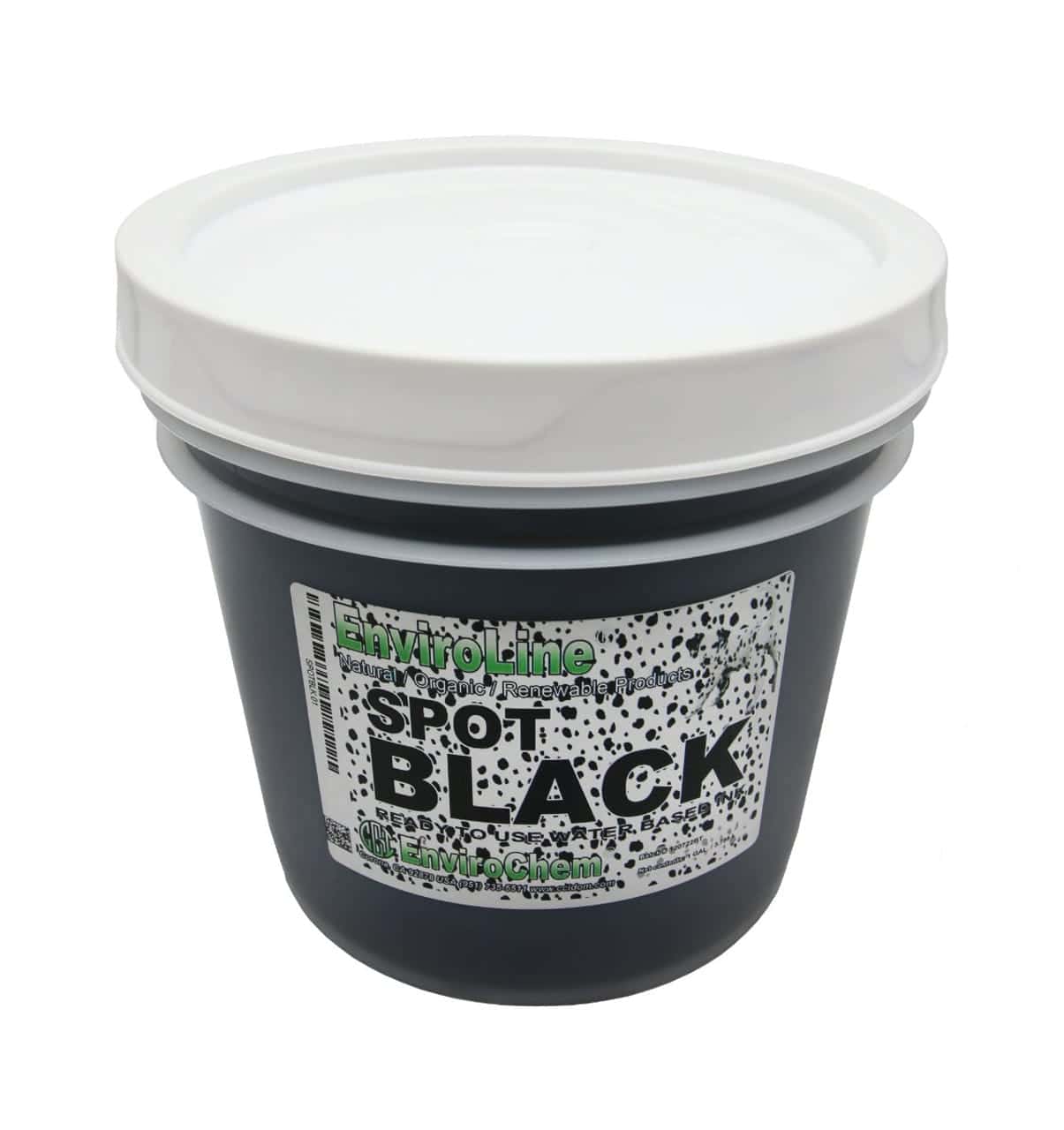
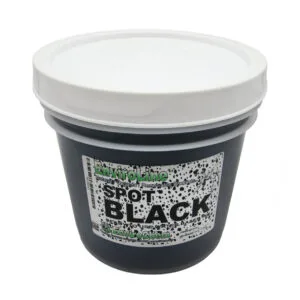
CCI EnviroLine® Spot Black is a premium ready-to-use (RFU) water-based black ink formulated for extremely dark, high-opacity black prints with fine image detail and a soft-hand feel on cotton and cotton-blend fabrics. Part of the CCI EnviroLine® eco-friendly ink system. What sets Spot Black apart from typical water-based blacks: it has a thicker viscosity than standard water-based inks, but its engineered rheology allows it to flow smoothly through high mesh counts (86-305) — delivering the deposit weight needed for deep, rich black coverage while still achieving fine detail and a softer finish through higher mesh. Designed for long production runs without drying in the screen — a critical advantage for high-volume shops where screen clogging kills productivity. Print wet-on-wet without flash curing, or print-flash-print for increased opacity. Compatible with CCI W-Base and the CCI CMS Color Mixing System. Thin with up to 10% water if needed. Add CCI EnviroLine® Retarder (up to 5%) for extended open time. Minimum cure: 90 seconds at 320°F (160°C). Optimal cure: 2-3 minutes at 340-350°F (171-177°C) with high-volume forced air. PVC-free. Phthalate-free.

Price range: $24.99 through $3,099.99

--- GLOBAL RULE LOCATIONS ---
Array
(
    [0] => stdClass Object
        (
            [post_id] => 1714
            [meta_key] => _pricing_rules
        )

    [1] => stdClass Object
        (
            [post_id] => 2853
            [meta_key] => _pricing_rules
        )

    [2] => stdClass Object
        (
            [post_id] => 2854
            [meta_key] => _pricing_rules
        )

    [3] => stdClass Object
        (
            [post_id] => 2884
            [meta_key] => _pricing_rules
        )

    [4] => stdClass Object
        (
            [post_id] => 2937
            [meta_key] => _pricing_rules
        )

    [5] => stdClass Object
        (
            [post_id] => 2941
            [meta_key] => _pricing_rules
        )

    [6] => stdClass Object
        (
            [post_id] => 2944
            [meta_key] => _pricing_rules
        )

    [7] => stdClass Object
        (
            [post_id] => 2955
            [meta_key] => _pricing_rules
        )

    [8] => stdClass Object
        (
            [post_id] => 2956
            [meta_key] => _pricing_rules
        )

    [9] => stdClass Object
        (
            [post_id] => 2957
            [meta_key] => _pricing_rules
        )

    [10] => stdClass Object
        (
            [post_id] => 2958
            [meta_key] => _pricing_rules
        )

    [11] => stdClass Object
        (
            [post_id] => 2959
            [meta_key] => _pricing_rules
        )

    [12] => stdClass Object
        (
            [post_id] => 2960
            [meta_key] => _pricing_rules
        )

    [13] => stdClass Object
        (
            [post_id] => 2961
            [meta_key] => _pricing_rules
        )

    [14] => stdClass Object
        (
            [post_id] => 2962
            [meta_key] => _pricing_rules
        )

    [15] => stdClass Object
        (
            [post_id] => 2963
            [meta_key] => _pricing_rules
        )

    [16] => stdClass Object
        (
            [post_id] => 2964
            [meta_key] => _pricing_rules
        )

    [17] => stdClass Object
        (
            [post_id] => 2965
            [meta_key] => _pricing_rules
        )

    [18] => stdClass Object
        (
            [post_id] => 2966
            [meta_key] => _pricing_rules
        )

    [19] => stdClass Object
        (
            [post_id] => 2967
            [meta_key] => _pricing_rules
        )

    [20] => stdClass Object
        (
            [post_id] => 2968
            [meta_key] => _pricing_rules
        )

    [21] => stdClass Object
        (
            [post_id] => 2977
            [meta_key] => _pricing_rules
        )

    [22] => stdClass Object
        (
            [post_id] => 3114
            [meta_key] => _pricing_rules
        )

    [23] => stdClass Object
        (
            [post_id] => 4638
            [meta_key] => _pricing_rules
        )

    [24] => stdClass Object
        (
            [post_id] => 4639
            [meta_key] => _pricing_rules
        )

    [25] => stdClass Object
        (
            [post_id] => 4667
            [meta_key] => _pricing_rules
        )

    [26] => stdClass Object
        (
            [post_id] => 3690
            [meta_key] => _pricing_rules
        )

    [27] => stdClass Object
        (
            [post_id] => 3692
            [meta_key] => _pricing_rules
        )

    [28] => stdClass Object
        (
            [post_id] => 3731
            [meta_key] => _pricing_rules
        )

    [29] => stdClass Object
        (
            [post_id] => 3752
            [meta_key] => _pricing_rules
        )

    [30] => stdClass Object
        (
            [post_id] => 3762
            [meta_key] => _pricing_rules
        )

    [31] => stdClass Object
        (
            [post_id] => 3792
            [meta_key] => _pricing_rules
        )

    [32] => stdClass Object
        (
            [post_id] => 3852
            [meta_key] => _pricing_rules
        )

    [33] => stdClass Object
        (
            [post_id] => 3980
            [meta_key] => _pricing_rules
        )

    [34] => stdClass Object
        (
            [post_id] => 4013
            [meta_key] => _pricing_rules
        )

    [35] => stdClass Object
        (
            [post_id] => 4020
            [meta_key] => _pricing_rules
        )

    [36] => stdClass Object
        (
            [post_id] => 4022
            [meta_key] => _pricing_rules
        )

    [37] => stdClass Object
        (
            [post_id] => 4044
            [meta_key] => _pricing_rules
        )

    [38] => stdClass Object
        (
            [post_id] => 4205
            [meta_key] => _pricing_rules
        )

    [39] => stdClass Object
        (
            [post_id] => 4270
            [meta_key] => _pricing_rules
        )

    [40] => stdClass Object
        (
            [post_id] => 4272
            [meta_key] => _pricing_rules
        )

    [41] => stdClass Object
        (
            [post_id] => 4620
            [meta_key] => _pricing_rules
        )

    [42] => stdClass Object
        (
            [post_id] => 4651
            [meta_key] => _pricing_rules
        )

    [43] => stdClass Object
        (
            [post_id] => 4673
            [meta_key] => _pricing_rules
        )

    [44] => stdClass Object
        (
            [post_id] => 4946
            [meta_key] => _pricing_rules
        )

    [45] => stdClass Object
        (
            [post_id] => 5355
            [meta_key] => _pricing_rules
        )

    [46] => stdClass Object
        (
            [post_id] => 5390
            [meta_key] => _pricing_rules
        )

    [47] => stdClass Object
        (
            [post_id] => 5398
            [meta_key] => _pricing_rules
        )

    [48] => stdClass Object
        (
            [post_id] => 5407
            [meta_key] => _pricing_rules
        )

    [49] => stdClass Object
        (
            [post_id] => 5445
            [meta_key] => _pricing_rules
        )

)

Description

CCI EnviroLine® Spot Black — The Workhorse Black That Does Not Quit Mid-Run

The #1 complaint about water-based black inks in production is simple: they dry in the screen.

You are running a 500-piece order. Black tees, white text, standard cotton. By shirt 50, the black is starting to clog. By shirt 100, you are stopping to mist the screen. By shirt 200, you are cleaning the screen entirely. The production rhythm is gone. Every pause costs time, every cleanup costs consistency, and the prints from shirt 1 do not match the prints from shirt 300.

CCI EnviroLine® Spot Black is engineered to eliminate this problem.

It is formulated to run long without drying in the screen. Where standard water-based blacks start skinning over in the mesh within minutes of a production pause, Spot Black maintains its screen life across extended print runs. You keep printing. The ink keeps flowing. The consistency holds from the first shirt to the last.

This is not a premium boutique ink for short specialty runs. This is a production workhorse — the black ink that high-volume shops rely on when the order count starts at 500 and goes up from there.

The Rheology Advantage — Thick Viscosity, High Mesh Flow

Most water-based inks that are thick enough for high-opacity black coverage cannot pass cleanly through high mesh. And most water-based inks that flow through high mesh do not deposit enough ink for a truly deep, saturated black.

CCI Spot Black solves both problems with engineered rheology.

The ink is thicker than standard water-based inks. It carries more pigment per stroke. More pigment means deeper, darker, more opaque black. But the rheology — the way the ink flows under shear stress from the squeegee — is engineered to allow this thick ink to pass cleanly through mesh counts from 86 all the way up to 305.

The result is that you get the deep, saturated black of a thick, high-pigment ink and the fine detail and softer finish of a high-mesh print. At 156 mesh, Spot Black delivers crisp text and clean edges with dense black coverage. At 230 mesh, it produces smooth halftones and detailed graphics. At 305 mesh, it achieves the finest image detail with a remarkably soft hand.

This dual capability — thick coverage and high-mesh detail — is the core technical advantage of CCI Spot Black.

Production Techniques — Wet-on-Wet and Print-Flash-Print

Wet-on-Wet (No Flash)

Print Spot Black directly onto the garment without flash curing between colors. This is the fastest production method because no flash means faster cycle time. Spot Black’s opacity is strong enough for most cotton applications in a single pass without flashing.

Print-Flash-Print (Maximum Opacity)

For the absolute densest black coverage, print Spot Black, flash, then print Spot Black again. The double-hit technique with a flash between passes builds maximum ink deposit for the deepest possible black. Use this when garment color or fabric texture demands extra coverage.

Heavy squeegee pressure preferred. Unlike some water-based inks that print best with light pressure, CCI Spot Black responds well to heavy squeegee pressure, pushing more of the thick ink through the mesh for better coverage in a single stroke.

Printing Tips for Maximum Performance

Mesh selection

Use 86–305 mesh. Lower mesh such as 86–156 gives maximum opacity and the heaviest deposit. Higher mesh such as 200–305 gives the finest detail, smoothest halftones, and softest hand. The engineered rheology is designed to handle the full range.

Squeegee

Use a 70–80 durometer squeegee with heavy pressure at about a 45-degree angle. Spot Black responds best when the thick ink is pushed aggressively through the mesh for strong single-pass coverage.

Long runs

Mist the screen occasionally with water during extended production runs. Even though Spot Black is formulated for long screen life, a light mist during pauses helps maintain ideal consistency. Keep lids on containers when not in use.

Thinning

If the viscosity feels too thick for your setup, add up to 10% water. Water is the primary thinner for CCI EnviroLine® inks, so no specialty thinner is required.

Retarder

Add CCI EnviroLine® Retarder at up to 5% to extend wet ink open time during the longest runs or in hot, dry shop environments.

Emulsions

Use water-resistant emulsions such as CCI WR-14, WR-25, or Absolute. Standard emulsions may break down during long runs because of water-based ink chemistry.

Cure completely

Proper curing is critical for wash fastness. Minimum cure is 90 seconds at 320°F (160°C). Optimal cure is 2–3 minutes at 340–350°F (171–177°C) with high-volume forced air. Always wash test before moving into full production.

Test substrate

Spot Black is designed for non-coated cotton and some polyester blends. Always test your specific fabric before production because coated or treated fabrics may not accept the ink properly.

Why Screen Printers Choose CCI Spot Black

I run high-volume orders and my water-based black keeps drying in the screen.

This is the number one reason to choose CCI Spot Black. It is specifically formulated for long production runs without drying in the screen, so your production rhythm stays consistent from shirt 1 to shirt 1000.

I need a deep, dense black through high mesh for fine detail.

CCI Spot Black’s engineered rheology delivers thick ink through high mesh. You get the opacity of a low-mesh heavy deposit and the fine detail of a high-mesh print in the same ink.

I print wet-on-wet and need a black that works without flash curing.

CCI Spot Black is designed for wet-on-wet production. Print black and other colors in sequence without flash curing between stations for faster cycle time and higher throughput.

I want the densest possible black on cotton tees.

Use the print-flash-print technique: Spot Black, then flash, then Spot Black again. The double-hit builds maximum deposit for the deepest and richest black achievable with water-based ink.

I already use CCI bases and pigments and need a matching ready-to-use black.

CCI Spot Black is part of the EnviroLine® system and is compatible with CCI W-Base, CCI CMS Pigment Concentrates, CCI EnviroLine® Retarder, and the full CCI additive and cleanup lineup.

My shop is hot and dry and water-based inks dry in the screen fast.

Add CCI EnviroLine® Retarder at up to 5% for more open time. Mist the screen with water during pauses. Spot Black already resists in-screen drying better than many standard water-based blacks, and those adjustments give you even more insurance.

Key Features

  • Extremely dark, high-opacity black with deep, rich, saturated color straight from the container
  • Thicker viscosity with engineered rheology for high-opacity deposit and clean flow through mesh up to 305
  • Long run stability formulated to resist drying in the screen during extended production
  • Wet-on-wet capable for faster cycle times without flash curing between colors
  • Print-flash-print workflow available for maximum possible opacity
  • Wide mesh range of 86–305 for everything from heavy coverage to fine detail
  • Heavy squeegee pressure preferred for strong single-pass coverage
  • Soft-hand feel despite the thicker viscosity
  • Part of the CCI EnviroLine® system and compatible with CCI bases, pigments, retarders, and cleanup products
  • Simple modifiers: thin with water up to 10% and retard with CCI EnviroLine® Retarder up to 5%
  • PVC-free and phthalate-free formulation

Recommended Additives & Modifiers

Modifier Dosage Production Problem It Solves
Water Up to 10% Ink too thick for your mesh or setup — reduces viscosity and serves as the primary thinner for CCI EnviroLine® inks
CCI EnviroLine® Retarder (WB-Retarder) Up to 5% Ink drying in the screen during the longest runs or in hot, dry environments — extends wet ink open time
Water mist (spray bottle) As needed Ink starting to skin over during production pauses — a light mist rehydrates the ink surface

Cleanup: Water for wet ink. CCI EnviroSolv® for on-press cleaning. CCI WB-1 for dried ink and haze stains.

Recommended Emulsions: CCI WR-14, WR-25, or Absolute water-resistant emulsions.

Technical Specifications

Specification Detail
Product Name CCI EnviroLine® Spot Black
Type Ready-to-use (RFU) water-based high-opacity black ink
Ink System CCI EnviroLine® water-based system
Color Extremely dark, high-opacity black
Viscosity Thicker than standard water-based inks — engineered rheology allows smooth flow through high mesh despite thick viscosity
Hand Feel Soft — comfortable, breathable prints
Recommended Mesh Count 86-305 mesh
Squeegee 70-80 durometer, 45-degree angle, heavy pressure preferred
Printing Method Wet-on-wet (no flash) OR print-flash-print for maximum opacity
Long Run Stability Specifically formulated for extended production runs without drying in the screen
Minimum Cure 90 seconds at 320°F (160°C)
Optimal Cure 2-3 minutes at 340-350°F (171-177°C) with high-volume forced air
Primary Substrates Non-coated cotton fabrics and some polyester blends. Test substrate before production.
Thinning Up to 10% water
Retarder CCI EnviroLine® Retarder / WB-Retarder (up to 5%)
Compatible System CCI W-Base, CCI CMS Color Mixing System, CCI EnviroLine® additives
Recommended Emulsions CCI WR-14, WR-25, or Absolute water-resistant emulsions
Cleanup (Wet Ink) Water
Cleanup (On-Press) CCI EnviroSolv®
Cleanup (Dried Ink/Haze) CCI WB-1
Formulation PVC-free, phthalate-free
Available Sizes Quart, Gallon

Benefits at a Glance

  • Extremely dark, high-opacity black — deep, rich, saturated coverage in a ready-to-use formulation
  • Thicker viscosity with engineered rheology — heavy deposit AND high-mesh detail in one ink (86-305 mesh)
  • Long run stability — specifically formulated to resist drying in the screen during extended production runs
  • Wet-on-wet capable — no flash curing required between colors for faster production cycle time
  • Print-flash-print for maximum density — double-hit technique for the absolute darkest black
  • Soft-hand feel despite thicker viscosity — comfortable, breathable prints on cotton
  • Heavy squeegee pressure preferred for best single-pass coverage
  • Part of the CCI EnviroLine® eco-friendly ink system
  • Simple modifiers — thin with water (up to 10%), retard with CCI Retarder (up to 5%)
  • Three-tier cleanup: water (wet), CCI EnviroSolv® (on-press), CCI WB-1 (dried ink/haze)
  • PVC-free and phthalate-free
  • Perfect for high-volume production shops printing black on cotton

Technical Sheets / Safety Data Sheets / Documents

FREQUENTLY ASKED QUESTIONS

What makes CCI Spot Black different from standard water-based black inks?

Two things set it apart. First, it has engineered rheology — a thicker viscosity for higher opacity, while still flowing smoothly through mesh counts up to 305 for fine detail. Most thick inks clog high mesh. Spot Black does not. Second, it has long run stability — it is formulated to resist drying in the screen during extended production runs. Most water-based blacks start clogging within minutes of a production pause.

What mesh count should I use?

Use 86–305 mesh. Lower mesh counts such as 86–156 give maximum opacity and heavier coverage. Higher mesh counts such as 200–305 give the finest detail, smoothest halftones, and the softest hand. The engineered rheology is designed to handle the full range.

Can I print wet-on-wet without flash curing?

Yes. CCI Spot Black is designed for wet-on-wet production, so you can print black and other colors in sequence without flash curing between stations. For maximum black opacity, you can also use a print-flash-print technique with a flash between two black passes.

How do I cure CCI Spot Black?

Minimum cure is 90 seconds at 320°F (160°C). Optimal cure is 2–3 minutes at 340–350°F (171–177°C) with high-volume forced air. Proper curing is critical for maximum wash fastness and durability, so always wash test before moving into full production.

What if the ink is too thick for my setup?

Add up to 10% water to reduce viscosity. Water is the primary thinner for CCI EnviroLine® inks, so no specialty thinner is required.

What retarder should I use?

Use CCI EnviroLine® Retarder (WB-Retarder) at up to 5%. It is formaldehyde-free and helps extend wet ink open time for the longest production runs and hot or dry shop environments. Do not use Matsui Retarder MG here. Use the retarder designed for the CCI system.

What fabrics work with CCI Spot Black?

It is designed for non-coated cotton fabrics and some polyester blends. Always test your specific substrate before production because coated or treated fabrics may not accept the ink properly.

How do I clean up CCI Spot Black?

There are three levels of cleanup. Use water for wet ink that has not dried. Use CCI EnviroSolv® for on-press screen cleaning during production. Use CCI WB-1 for dried ink and haze stains.

What emulsions should I use?

Use water-resistant emulsions such as CCI WR-14, WR-25, or Absolute. Standard emulsions may break down during extended production runs with water-based inks.

Is CCI Spot Black eco-friendly?

Yes. It is PVC-free and phthalate-free, and it is part of the CCI EnviroLine® eco-friendly ink system.

Can I mix CCI Spot Black with CCI pigment concentrates?

CCI Spot Black is a ready-to-use premixed black. If you need custom dark shades, use CCI W-Base with CCI CMS Pigment Concentrates for custom color mixing.

Reviews

Reviews

Only logged in customers who have purchased this product may leave a review.

You May Also Like

Additional Options