
Inktek LB Base — Plastisol Mixing Base for PC Pigment Concentrate Color Mixing System
Inktek

Inktek LB Base is the plastisol mixing base for the Inktek PC Pigment Concentrate system — a non-phthalate, general-purpose mixing base engineered for optimal color vibrancy, printability, and press performance on 100% cotton and cotton/poly blend garments. Add your PCPC pigment concentrates by weight, mix thoroughly, and you have a Pantone®-matched plastisol color ready to print on manual or automatic presses. Matte finish. Excellent crock resistance. Wet-on-wet capable. CPSIA compliant.
Price range: $79.99 through $389.99
Description
Inktek LB Base — The Foundation of Your Pantone Color Mixing System
Inktek LB Base is what turns raw PCPC pigment concentrates into printable, Pantone-matched plastisol inks. By itself, LB Base is a clear, print-ready plastisol carrier. Add pigment concentrates by weight according to your formula, mix for 60-90 seconds, and you have a repeatable, documented color that prints consistently from the first pull to the last shirt in a 10,000-piece run.
Inktek LB Base is the carrier base that transforms PCPC pigment concentrates into printable plastisol inks. Without the base, concentrates cannot be printed. With it, you can produce thousands of Pantone®-simulated colors using just 15 concentrates. Shop all PCPC Pigment Concentrates →
LB Base is specifically engineered to accept pigment loading without compromising print quality. The clear, consistent carrier allows concentrate pigments to develop at their full color potential, producing vibrant, accurate colors that match your Pantone formulas print after print.
Fully non-phthalate formulation meets CPSIA compliance requirements for children’s apparel, licensed programs, and brand decorators who require restricted substance compliance documentation. No reformulation required for regulated work.
Engineered for both manual and automatic screen printing operations. Consistent viscosity holds across press speeds, ensuring even ink deposit, clean edges, and predictable print results whether you’re running 12 shirts on a manual or 1,200 on a high-speed automatic.
LB Base mixed inks support wet-on-wet multi-color printing without excessive ink build-up on screens. Maintain registration accuracy and color consistency through long automatic production runs without excessive flash-cure interruptions.
Mixed inks deliver outstanding dry and wet crocking performance — critical for licensed apparel, athletic wear, and any program where rubbing or abrasion resistance is specified. Meets industry standards for crock resistance.
How to Mix Inktek LB Base with Pigment Concentrates
Open your Pantone® Solid Coated formula guide. Enter the target Pantone code in your formula software. The software returns exact gram weights of each PCPC concentrate per 1 lb of LB Base.
Tare your gram scale with a clean mixing container. Weigh out the specified LB Base amount. Add each pigment concentrate at the formula-specified grams directly on top. Mix with a drill mixer for 60-90 seconds until fully combined and uniform in color.
The mixed ink is ready to print immediately. Cure at 320F (160C) — verify with a donut probe. Log your formula, batch weight, LB Base lot, and production date so you can reproduce the same color exactly when the client reorders.
| Color Type | Concentrate % | Notes |
|---|---|---|
| Extra White / high-tint whites | 5–15% | Adjust up for more opacity; always weigh by grams |
| Standard colors (yellow, orange, green, blue) | 3–10% | Formula software gives exact ratio per Pantone target |
| Black & deep shades (maroon, marine, violet) | 2–8% | Very concentrated — small additions have major impact |
| Fluorescent colors (flo yellow, flo red, etc.) | 3–10% | Best results over white underbase on dark garments |
| Maximum recommended concentrate loading | ≤15% | Exceeding 15% total may affect printability and cure |
Always follow your formula software for exact ratios. The percentages above are general guidance only. Precise gram weights from formula software are required for Pantone-accurate results. Call us at (512) 454-0505 for mixing support.
Best Use Cases — Inktek LB Base
The primary use case. Use LB Base as the carrier for your PCPC pigment concentrate formulas. Open your Pantone Solid Coated guide, enter the PMS code, weigh the formula, mix — and you have a documented, repeatable color for every future reorder.
LB Base mixed inks maintain consistent viscosity across long press runs on automatic equipment. Wet-on-wet capability allows multi-color printing on high-speed automatics without excessive flashing.
Optimized for 100% cotton and cotton/poly blend garments. For 100% polyester or high-poly blends, print a low-bleed white underbase first to prevent dye migration into your mixed colors.
Excellent crock resistance and non-phthalate compliance make LB Base ideal for team and licensed apparel programs where color accuracy, wash performance, and compliance documentation are required.
Any shop building a Pantone color mixing capability from scratch should start with LB Base and the 15 PCPC pigment concentrates. The system produces hundreds of colors from a small, manageable inventory.
LB Base is equally suited for manual press operations. Consistent viscosity prints well through all standard mesh counts at manual press speeds without requiring additives or viscosity modification.
Complete the System — PCPC Pigment Concentrates
Inktek LB Base requires PCPC pigment concentrates to produce color. The full 15-concentrate system covers the complete color wheel — 10 standard colors and 5 fluorescents — all intermixable with each other and LB Base for thousands of Pantone-simulated color combinations.
Pro Tips — Getting the Most from Inktek LB Base
LB Base and all PCPC concentrates must be measured by grams on a calibrated gram scale. Visual estimation or volume measurement causes color drift between batches. A $40 gram scale pays for itself on the first reorder.
LB Base may thicken during storage, especially in cold environments. Before adding concentrates, use a spatula or low-speed mixer to modulate the base back to a smooth, creamy consistency. Adding concentrates to thick base produces uneven mixing.
Write down your Pantone target, gram weights of each concentrate, total batch weight, and production date for every color you mix. When the client reorders in 6 months, you reproduce the color in minutes — not by guessing from memory.
LB Base mixed inks cure at 320F (160C). Always verify with a donut probe on the ink surface — not just the dryer tunnel temperature. Run a wash test on every new garment or substrate before committing to production.
For dark or colored garments, print a bright white underbase first, flash to gel, then print your LB Base mixed colors on top. This dramatically improves color vibrancy and ensures your Pantone formulas reproduce accurately on dark fabric.
Store LB Base at 65-90F (18-32C). Never store on cold floors or in unheated spaces — temperatures below 32F can cause the plastisol to separate. Use within one year of manufacture for best results.
Technical Specifications
Inktek LB Base — Complete Technical Specifications
| Specification | Value / Detail |
|---|---|
| Product Name | Inktek LB Base — Plastisol Mixing Base |
| SKU / Part Number | LB-BASE |
| System Compatibility | Inktek PC 15-Concentrate Pigment System (PCPC series) |
| Ink Type | Plastisol — PVC-based, heat-cure |
| Formulation | Non-phthalate, CPSIA compliant |
| Color (unmixed) | Clear / translucent white |
| Finish (mixed & cured) | Matte |
| Fabric Compatibility | 100% cotton, cotton/poly blends (50/50 and similar) |
| Polyester & High-Poly Blends | Use a low-bleed white underbase first to prevent dye migration into mixed colors |
| Printing Method | Manual and automatic screen printing |
| Wet-on-Wet | Yes — suitable for wet-on-wet multi-color production printing |
| Cure Temperature | 320F (160C) — standard plastisol cure |
| Flash Temperature (gel) | 160–180F (71–82C) — surface should not transfer to next screen |
| Cure Verification | Donut probe thermometer on ink surface. Always wash-test samples before production. |
| Mesh Range | 86–305/in (34–120 t/cm) — most commonly 110–230/in for spot color production |
| Screen Tension | 25–35 N/cm² |
| Squeegee Durometer | 65–75 shore recommended for most applications; 70/90/70 triple-ply for fine halftones |
| Squeegee Angle | 10–15° off vertical |
| EOM (Emulsion Over Mesh) | 15–20% for spot color; 10–15% for halftones |
| Maximum Concentrate Load | ≤15% total by weight. Exceeding this may affect cure and printability. |
| Viscosity | Medium — designed for standard production printing. Modulate if base has thickened. |
| Mixing Method | Gram scale + drill mixer. Mix 60-90 seconds after adding all concentrates. |
| Available Sizes | Quart, Gallon, 5-Gallon |
| CPSIA | Compliant |
| Phthalate | Phthalate-free, non-phthalate |
| Storage | 65–90F (18-32C). Avoid cold floors, freezing temps, and direct sunlight. |
| Shelf Life | 1 year from manufacture date when stored properly |
Technical Sheets / Safety Data Sheets / Documents
FREQUENTLY ASKED QUESTIONS
What is Inktek LB Base and what is it used for?
Inktek LB Base is a non-phthalate plastisol mixing base used with the Inktek PC Pigment Concentrate system. It serves as the plastisol carrier base that transforms PCPC pigment concentrates into printable, Pantone-matched inks. By itself, LB Base is a clear, printable plastisol — add your pigment concentrates by weight according to your formula, mix for 60-90 seconds, and you have a ready-to-print color. Designed for manual and automatic printing on cotton and cotton/poly blends.
What pigment concentrates work with Inktek LB Base?
LB Base is compatible with the full Inktek PCPC pigment concentrate line — all 15 colors including Extra White, Black, Bright Yellow, Bright Orange, Maroon, Marine, Green, Blue, Violet, Magenta, and the 5 fluorescent concentrates. All 15 are intermixable with each other and with LB Base to produce thousands of Pantone-simulated colors. Browse all PCPC concentrates at screenprintsupplies.com.
How do I mix Inktek LB Base with pigment concentrates?
(1) Enter your target Pantone code in your formula software to get exact gram weights. (2) Tare your gram scale with a clean mixing container. Weigh the specified amount of LB Base. (3) Add each pigment concentrate at the formula-specified gram weight directly into the base. (4) Mix with a drill mixer for 60-90 seconds until fully combined. (5) The mixed ink is ready to print. Cure at 320F. Log your formula for future reorders.
What is the cure temperature for Inktek LB Base mixed inks?
Inktek LB Base mixed inks cure at 320F (160C) — standard plastisol cure temperature. Always verify with a donut probe thermometer on the actual ink film surface, not just the dryer tunnel temperature setting. Run a wash test on every new garment or substrate before committing to full production. An undercured plastisol print looks fine off the press but will crack or fade after the first wash.
Can I use Inktek LB Base on polyester garments?
LB Base mixed inks are optimized for 100% cotton and cotton/poly blends. For 100% polyester or high-polyester blends, you must first print a low-bleed white underbase to prevent dye migration. Polyester dyes activate under the heat of curing and can migrate into the ink film, causing color shift — especially in light colors and fluorescents. A proper low-bleed white base printed and flashed first eliminates this issue.
What mesh count should I use with Inktek LB Base?
LB Base mixed inks work well across a broad mesh range from 86 to 305/in (34–120 t/cm). For most spot color production on automatics, 110–160/in is common. For fine detail or halftone work, use 180–230/in with a thinner stencil (EOM 10-15%). For heavy deposit white underbases, 86–110/in is typical. Always set up your stencil tension to 25-35 N/cm² for consistent registration and print quality.
How long does Inktek LB Base last and how should it be stored?
Store LB Base at 65-90F (18-32C) away from direct sunlight and never on cold floors or in freezing conditions — temperatures below 32F can cause the plastisol to separate. Shelf life is 1 year from manufacture date when stored properly. Base may thicken over time; modulate back to a smooth consistency with a spatula or low-speed mixer before use. Always keep containers tightly closed when not in use.
Reviews
Only logged in customers who have purchased this product may leave a review.
You May Also Like
Related products
-

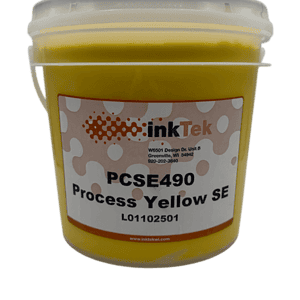
Inktek SE490 Process Yellow – High-Quality Black Plastisol Ink for Four-Color Process Screen Printing
Price range: $40.99 through $306.99 -
Sale!
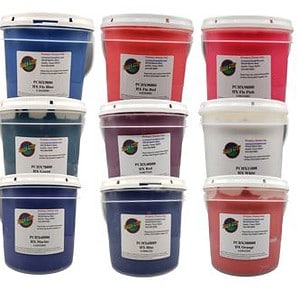
Inktek LBX Pantone Matching Low Cure Pantone Mixing Plastisol Ink Starter Kit
Price range: $449.99 through $999.99 -
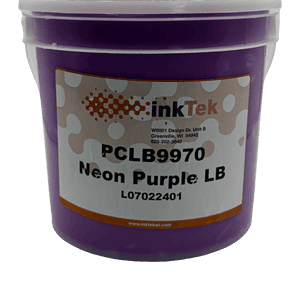
Inktek 9970 Neon Purple Plastisol Ink – Unmatched Brightness in Color
Price range: $44.99 through $114.99 -
Sale!
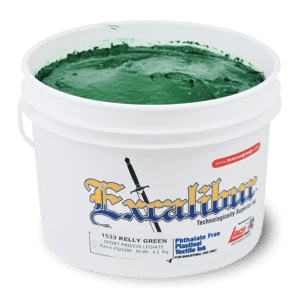
Excalibur SportPRO 1550 Kelly Green Plastisol Ink
Price range: $19.99 through $49.99
Reviews