CCI “The Pink Stuff” – Powerful Ghost Image Remover & Degreaser for Screen Printers
CCI
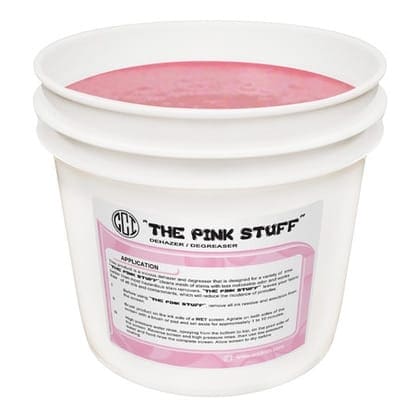
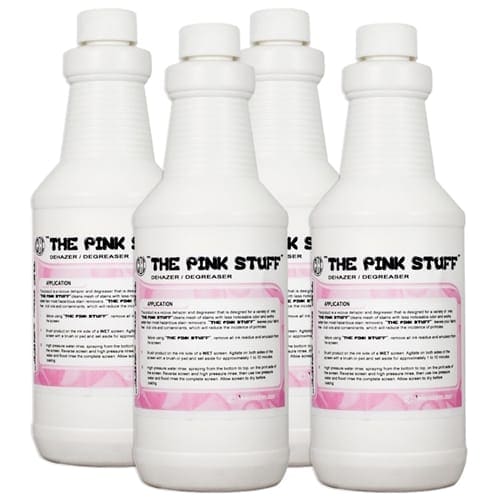
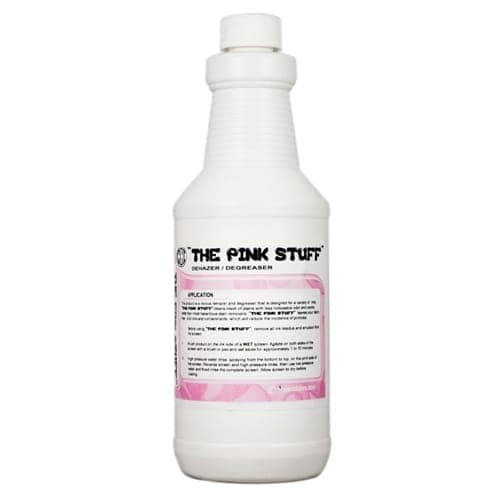
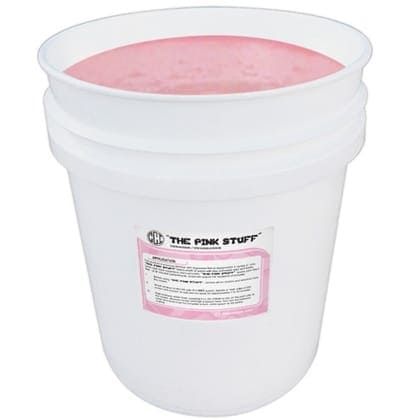
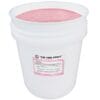
Remove ghost images, degrease screens, and prep new mesh in a single step with CCI “The Pink Stuff” — the screen printing industry’s most trusted haze remover, degreaser, and mesh abrader for over 15 years. This viscous, water-based formula works across all ink systems — plastisol, water-based, discharge, solvent, and UV — on every mesh type including polyester, nylon, and stainless steel. Built-in micro-particles abrade new mesh for superior emulsion adhesion, while a proprietary mesh protector extends screen life with every use. Non-hazardous, biodegradable, drain safe, and far milder odor than paste stain removers.
✓ 3-in-1 Formula
Dehaze ghost images, degrease mesh, and abrade new fabric — one product, one step
✓ All Ink Systems
Plastisol, water-based, discharge, solvent, UV-cure — no exceptions, no separate products
✓ Eliminates Pinholes
Strips oils and contaminants at the fiber level — zero residue before emulsion coating
✓ New Mesh Abrader
Micro-particles roughen virgin polyester so emulsion grips tight from the very first coat
✓ Eco-Friendly Formula
Biodegradable, drain safe, low-VOC, non-hazardous — no special disposal required
✓ Proprietary Mesh Protector
High-load-capacity formula extends screen life and reduces your cost per reclaimed screen
•
📦 Free Shipping on orders over $200
•
🏠 Ships from San Antonio, TX ☀
Price range: $24.99 through $2,999.99
Description
CCI The Pink Stuff: Screen Printing’s Best Ghost Image Remover, Degreaser & Mesh Abrader
Ghost images aren’t just unsightly — they contaminate fresh emulsion, cause adhesion failures, and silently ruin print quality on every job that follows. CCI “The Pink Stuff” has been the reclaim chemical of choice in professional screen printing shops for over 15 years because it solves three critical problems at once: it removes ghost stains and ink haze, degreases the mesh to eliminate pinholes and fish-eyes, and abrades new fabric with micro-particles so emulsion bonds immediately and holds through long production runs. One product. One step. No compromises.
Ghost Image & Haze Removal
The viscous formula penetrates mesh threads to dissolve cured ink staining and ghost images that survive standard reclaiming. Works on polyester, nylon, and stainless steel without degrading fabric or shortening screen life. The proprietary mesh protector actively conditions the fabric while the dehazer does its work.
Degreaser & Wetting Agent
Skin oils, press residue, and airborne contaminants are the #1 hidden cause of pinholes and fish-eyes in emulsion. The Pink Stuff’s dual-action surfactant system strips the mesh fiber-deep, leaving zero residue so emulsion wets out fully and coats with complete uniformity every single time.
New Mesh Abrader
Fresh polyester mesh is smooth and hydrophobic — emulsion doesn’t want to grip a slick surface. The micro-particles in The Pink Stuff mechanically roughen the fiber surface at a microscopic level, creating the texture emulsion needs to lock on tight and deliver consistent stencil thickness through the entire production run.
Where Does The Pink Stuff Fit in Your Screen Reclaim Workflow?
This is the question every new screen printer asks. The Pink Stuff is used after ink removal and emulsion stripping — it is the dedicated dehazing and degreasing step that gets the mesh truly clean before you coat again. Here is where it lives in a complete professional reclaim workflow:
How to Use CCI The Pink Stuff — Step by Step
Remove all ink residue and strip the emulsion before applying The Pink Stuff. It works on staining and contamination at the mesh level — not on bulk ink or emulsion. Pre-cleaning gives it a clear, unobstructed path to the fabric.
Brush The Pink Stuff onto the ink side of a wet screen. Use a non-abrasive scrub pad or brush to work the product into both sides of the fabric. Let dwell for 1 to 10 minutes — longer for heavier ghost staining. New mesh: add one extra minute of dwell time.
For dehazing: flood rinse with hose pressure first to prevent chemical atomization during the high-pressure step. Then high-pressure rinse the print side starting at the bottom and working upward. Reverse and repeat. 1,000 PSI or more — this is the step most shops underpower and wonder why results disappoint.
Finish with a thorough low-pressure flood rinse to clear all surfactant residue. The screen must be completely and fully dry before emulsion application — any trace of moisture causes adhesion problems and pinholes. This is the most commonly skipped step in shops that rush.
Compatible With Every Ink System and Every Mesh Type
Ink Systems
Plastisol • Water-Based • Discharge • Solvent-Based • UV-Cure • Specialty
Mesh Types
Polyester • Nylon • Stainless Steel • All Thread Counts • New and Reclaimed
Shop Types
Garment Decorators • Promotional Printers • Industrial • Hobbyist • Production Shops
The Pink Stuff vs. Paste Stain Removers
| Feature | CCI The Pink Stuff | Typical Paste Remover |
|---|---|---|
| Removes Ghost Images / Ink Haze | Yes | Yes |
| Degreases Mesh in Same Step | Yes — dual action | No — separate step required |
| Abrades New Mesh | Yes — micro-particle formula | No |
| Contains Mesh Protector | Yes — proprietary formula | No |
| Odor | Mild and pleasant | Strong / harsh chemical |
| Biodegradable & Drain Safe | Yes | Often No |
| Non-Hazardous Shipping | Yes — not DOT/IATA regulated | Often No |
Troubleshooting: When Screens Aren’t Coming Out Clean
Ghost image won’t fully clear
Extend dwell time to the full 10 minutes. Make sure you are rinsing at 1,000+ PSI — underpowered rinse is the most common cause. On stubborn stains, apply a second treatment after the first rinse.
Still getting pinholes after using it
The screen may not be completely dry before emulsion coating — even slight moisture causes pinholes. Also verify you are completing a thorough flood rinse to remove all surfactant residue before drying.
Emulsion not adhering on new mesh
Extend dwell time by 1–2 extra minutes on virgin polyester. The micro-particle abrader needs adequate contact time to roughen the smooth factory surface and prepare it for emulsion adhesion.
Product seems to rinse off too quickly
Always apply to a wet — not soaking — screen. Too much standing water dilutes the formula before it can work. If using a dip tank, ensure product concentration is maintained per shop volume.
Pro Tip: Dehazing
Flood rinse with hose pressure before the high-pressure step. This prevents chemical atomization in the air — protecting your lungs, eyes, and surrounding equipment from blow-back.
Pro Tip: Degreasing Only
When using as a standalone degreaser (no staining), think high volume, not high pressure on the final rinse. Thorough flood rinsing clears surfactant residue without driving contaminants back into the mesh.
Pro Tip: New Mesh
Add one extra minute of dwell time on brand-new polyester. The micro-particle abrader needs that additional contact time to fully condition the factory-smooth fiber surface before emulsion coating.
What Size Should You Order?
| Size | Best For | Typical Shop Volume |
|---|---|---|
| Pint | Hobbyist / occasional use | 1–5 screens/week |
| Quart | Small screen printing shop | 5–20 screens/week |
| Gallon | Mid-size production shop — best value per screen | 20–75 screens/week |
| 5-Gallon Pail | High-volume shop or multi-press operation | 75–300 screens/week |
| 55-Gallon Drum | Production facilities / automated reclaim systems | 300+ screens/week |
The Cleanest Screens Start Here
Available in Pint • Quart • 4×1 Quart Case • Gallon • 5-Gallon Pail • 55-Gallon Drum
Same-day shipping before 3:30 PM CT • Free shipping over $200 • Call (512) 454-0505
Technical Specifications
CCI “The Pink Stuff” — Full Technical Specifications
Source: CCI Official Technical Data Sheet & Safety Data Sheet (SDS) | SKU: TPS | Chemical Consultants Inc., Corona CA 92878
General Product Information
| Property | Detail |
|---|---|
| Product Name | CCI “The Pink Stuff” |
| Manufacturer | Chemical Consultants Inc. (CCI) — 1850 Wild Turkey Circle, Corona, CA 92878 | (951) 735-5511 |
| SKU | TPS |
| Product Function | 3-in-1 Abrader / Dehazer / Degreaser |
| Formulation | Viscous water-based liquid with micro-particle abrader system and proprietary mesh protector |
| Ink Compatibility | All systems — plastisol, water-based, discharge, solvent, UV-cure |
| Mesh Compatibility | Polyester, nylon, stainless steel — all thread counts, new and reclaimed |
| Dwell Time | 1–10 minutes (add 1 min for new mesh) |
| Recommended Rinse Pressure | 1,000+ PSI high-pressure washer |
Physical & Chemical Properties
| Property | Value |
|---|---|
| Physical Form | Viscous fluid |
| Color | Pink (per product specification) |
| Odor | Characteristic — mild and pleasant |
| Density at 20°C (68°F) | 1.1 g/cm³ (9.18 lbs/gal) |
| Boiling Point | 93°C (199.4°F) |
| Flash Point | 100°C (212°F) — non-flammable under normal conditions |
| Ignition Temperature | 445°C (833°F) |
| Vapor Pressure at 20°C | >1 hPa (>0.8 mm Hg) |
| Water Solubility | Fully miscible |
| VOC Content | 907.5 g/L / 7.57 lb/gal — Low-VOC |
| Explosion Hazard | Not an explosion hazard |
Chemical Composition — Key Ingredients (SDS)
| Ingredient | CAS No. | Concentration |
|---|---|---|
| Dimethyl Succinate | 106-65-0 | 10–20% |
| Sodium Carbonate | 497-19-8 | 10–20% |
| 2-Ethyl Hexanol EO-PO Nonionic Surfactant | 64366-70-7 | 1–10% |
| Balance: Non-hazardous additions — proprietary mesh protector and micro-particle abrader system | ||
Safety, Regulatory & Compliance
| Classification | Status |
|---|---|
| GHS Classification | Eye Irrit. 2A — H319 (causes serious eye irritation) |
| GHS Signal Word | Warning |
| Skin Irritation | No irritant effect on skin |
| California Prop 65 | No listed ingredients |
| SARA Section 313 | No listed ingredients |
| DOT Transport | Not regulated |
| IATA / IMDG | Not regulated |
| CA AQMD Rule 1171 | Compliant (when used as dehazer for cured ink removal) |
| Marine Pollutant | No |
| Biodegradable / Drain Safe | Yes |
| Emergency Phone | INFOTRAC 1-800-535-5053 |
PPE & Handling
| Protection | Requirement |
|---|---|
| Eye Protection | Tightly sealed safety goggles — required (GHS Eye Irrit. 2A) |
| Hand Protection | Impermeable protective gloves recommended |
| Respiratory | Not required under normal use conditions |
| Storage | Keep container tightly sealed — no special temperature requirements |
Technical Sheets / Safety Data Sheets / Documents
FREQUENTLY ASKED QUESTIONS
Frequently Asked Questions — CCI “The Pink Stuff” Screen Printing Dehazer & Degreaser
What is CCI The Pink Stuff used for in screen printing?
CCI The Pink Stuff is a 3-in-1 screen printing dehazer, degreaser, and mesh abrader. It removes ghost images and ink stains from reclaimed screens, degreases mesh to prevent pinholes and fish-eyes, and uses micro-particles to abrade new mesh so emulsion bonds immediately and holds through long runs. Works on all ink systems — plastisol, water-based, discharge, solvent, UV.
Where does The Pink Stuff fit in the screen reclaim workflow?
The Pink Stuff is Step 3 in the reclaim workflow: after ink removal (Step 1) and after emulsion stripping (Step 2), but before flood rinsing and drying (Step 4) and before emulsion coating (Step 5). It is the dedicated dehazing and degreasing step that gets mesh truly clean and ready to coat again.
What causes ghost images in screen printing?
Ghost images are caused by ink pigment that penetrates mesh threads during printing and is not removed by standard emulsion stripping. Plastisol inks are especially prone to leaving ghost staining because cured ink particles bond to polyester fiber surfaces. The Pink Stuff dissolves and lifts this cured staining that standard reclaim chemicals leave behind.
How do I remove ghost images from screen printing mesh?
Apply The Pink Stuff to both sides of a wet screen after stripping the emulsion. Scrub with a non-abrasive pad and allow 5–10 minutes dwell time for heavy ghost images. Flood rinse first, then high-pressure rinse at 1,000+ PSI working bottom to top on the print side. For stubborn staining, apply a second treatment after the first rinse. Dry completely before coating.
How do you use CCI The Pink Stuff on screens?
Remove all ink and emulsion first. Apply to both sides of a wet screen and scrub with a non-abrasive pad. Allow 1–10 minutes dwell time. Flood rinse first (dehazing), then high-pressure rinse at 1,000+ PSI from bottom to top. Reverse and repeat. Finish with a low-pressure flood rinse and dry completely before emulsion coating.
Does The Pink Stuff work on plastisol ink ghost stains?
Yes — it’s one of the most effective plastisol ghost stain removers available. The high-load-capacity viscous formula keeps active ingredients in direct contact with mesh during the entire dwell period, breaking down cured plastisol staining that water and standard reclaim chemicals can’t touch. Equally effective on water-based, discharge, and solvent stains.
Why do I keep getting pinholes in my emulsion even after degreasing?
If pinholes persist, the most common causes are: (1) the screen was not completely dry before coating — even slight moisture causes pinholes, (2) the flood rinse was not thorough enough to remove all surfactant residue, or (3) the degreaser didn’t get adequate dwell time to penetrate the mesh fiber. Use The Pink Stuff with full dwell time, thorough flood rinse, and allow screens to dry completely in a clean environment.
Can I use The Pink Stuff on brand-new screen printing mesh?
Yes — and CCI specifically recommends it. New polyester mesh is smooth and hydrophobic, which causes poor emulsion adhesion. The micro-particles in The Pink Stuff mechanically abrade the fiber surface, creating texture for emulsion to grip. Allow one extra minute of dwell time beyond standard when treating new mesh.
What mesh types is The Pink Stuff safe to use on?
Safe for all screen printing mesh — polyester, nylon, and stainless steel at any thread count. Non-corrosive, with a proprietary mesh protector in the formula designed to extend screen life, not shorten it.
What is the dwell time for CCI The Pink Stuff?
1 to 10 minutes depending on stain severity. Light degreasing or lightly stained screens: 1–3 min. Heavy ghost images: up to 10 min. New mesh: add 1 extra minute. Stubborn stains that don’t fully clear: apply a second treatment after the first rinse.
Do I need a high-pressure washer to use The Pink Stuff?
Strongly recommended — CCI specifies 1,000+ PSI for optimal results. High pressure physically drives loosened stain residue out of the mesh. Underpowering the rinse is the #1 reason shops see disappointing dehazing results. Finish with a high-volume, low-pressure flood rinse before emulsion coating.
Is CCI The Pink Stuff drain safe and biodegradable?
Yes. Biodegradable and drain safe for normal use quantities. Non-hazardous and not regulated by DOT, IATA, or IMDG for transport. California AQMD Rule 1171 compliant. For large spill volumes, dilute with water and dispose per local regulations.
What size of The Pink Stuff should I order for my screen printing shop?
Pint: Hobbyist, 1–5 screens/week. Quart: Small shop, 5–20 screens/week. Gallon: Mid-size shop, 20–75 screens/week (best value per screen). 5-Gallon Pail: High-volume or multi-press operation, 75–300 screens/week. 55-Gallon Drum: Production facilities and automated reclaim systems, 300+ screens/week.
How does The Pink Stuff compare to paste stain removers for screen printing?
The Pink Stuff outperforms paste removers across the board — it combines dehazing and degreasing in one step (paste doesn’t degrease), abrades new mesh (paste doesn’t), has a far milder odor, is biodegradable and drain safe, carries a proprietary mesh protector, and ships non-hazardous. Shops that make the switch report faster reclaim times, fewer pinholes, and stronger emulsion adhesion.
Still have questions about CCI The Pink Stuff?
Call our screen printing experts: (512) 454-0505 | [email protected]
Reviews
Only logged in customers who have purchased this product may leave a review.
You May Also Like
Related products
-

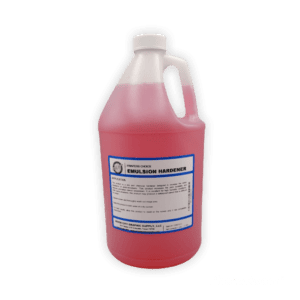
Printers Choice Emulsion Hardener – Water-Resistance Booster for Screen Printing Emulsions
Price range: $29.99 through $64.99 -
Printers Choice Cured Plastisol Stain & Spot Remover Fluid – Fast, Clean Ink Removal for Screen Printers
Price range: $19.99 through $199.99 -
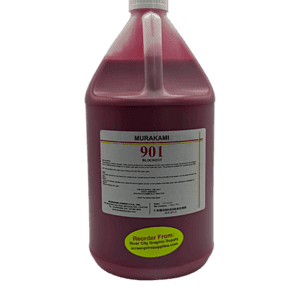
Murakami 901 Blockout Red – Fast-Drying Screen Blockout for Professional Screen Printing
$43.86 -
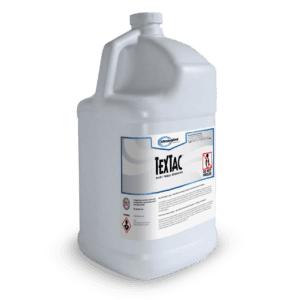
Chromaline TexTac Liquid Pallet Adhesive – Water-Based, Overspray-Free Adhesive for Screen Printing
Price range: $49.99 through $215.01

Reviews