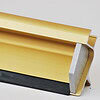
AWT Pro Angle 1 Single Sided Scoop Coater – Precision Single-Edge Scoop Coater for Emulsion Application

A.W.T.
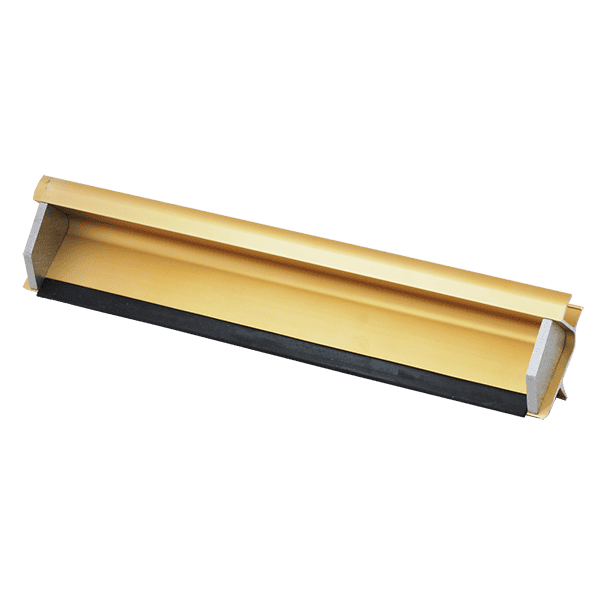
The AWT Pro Angle 1 Single-Sided Scoop Coater is the industry-standard single-edge aluminum scoop coater from A.W.T. World Trade — Made in America by the company that’s been engineering premium screen printing equipment in Chicago since 1957. Extruded aluminum body with hard-anodized gold finish, single sharp edge calibrated to deposit a precise, uniform emulsion or blockout film every pass. Permanent recessed end caps, anti-tip design, rubber edge protector included. Available in 14″, 15″, 16″, and 18″ — the 16″ is the production standard for 20×24 frames and the 18″ is the production standard for 23×31 frames.

Made in America
Manufactured in the USA by A.W.T. World Trade (Chicago, IL) — the company that has been engineering screen printing equipment domestically since 1957. American-made quality, American labor, American supply chain. Not an offshore import.
Premium AWT Engineering
A.W.T. is the long-established premium scoop coater brand in screen printing. Extruded aluminum body, hard-anodized gold finish, professional-grade build that lasts years in production environments — not a hobby tool, a production tool.
Single Sharp Edge for Precision Coats
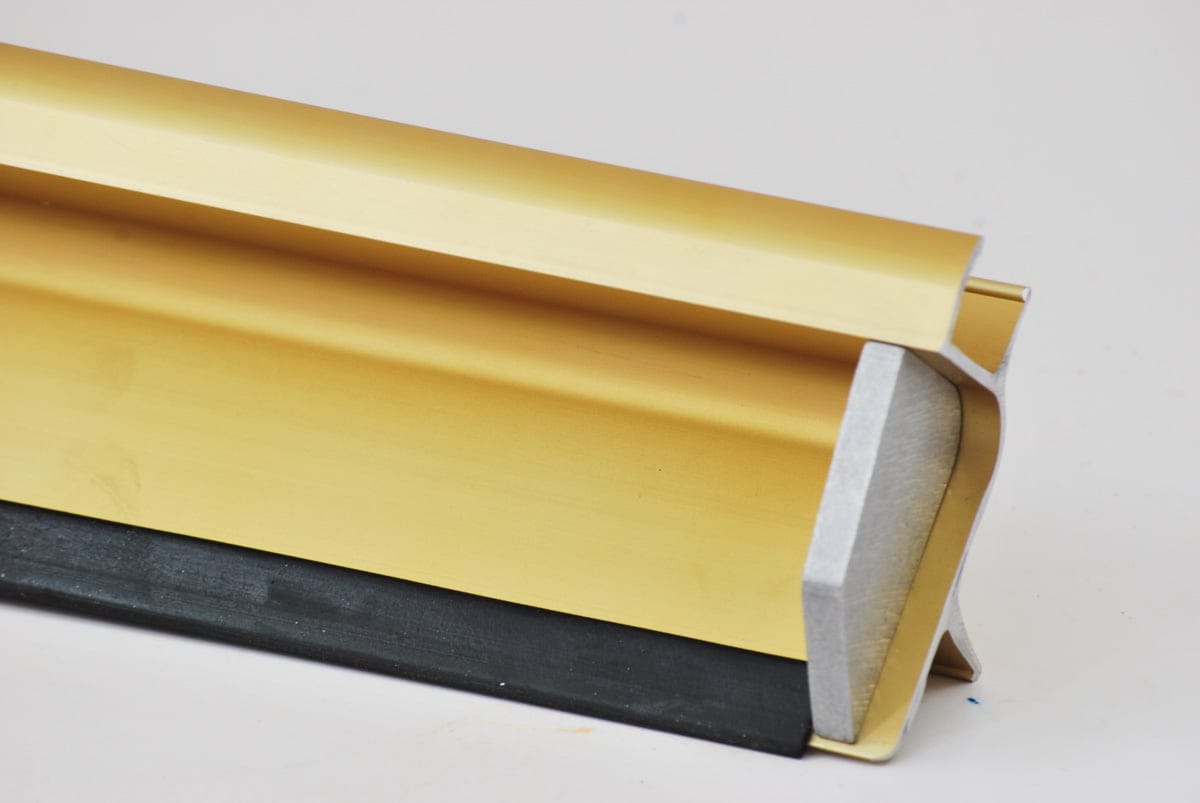
The Pro Angle 1 features a single sharp edge — calibrated by AWT to deposit a thinner, more controlled emulsion film. Ideal for high-mesh-count textile work, face coats over base layers, and shops that want consistent precision coating without thinking about edge selection.
Permanent Recessed End Caps
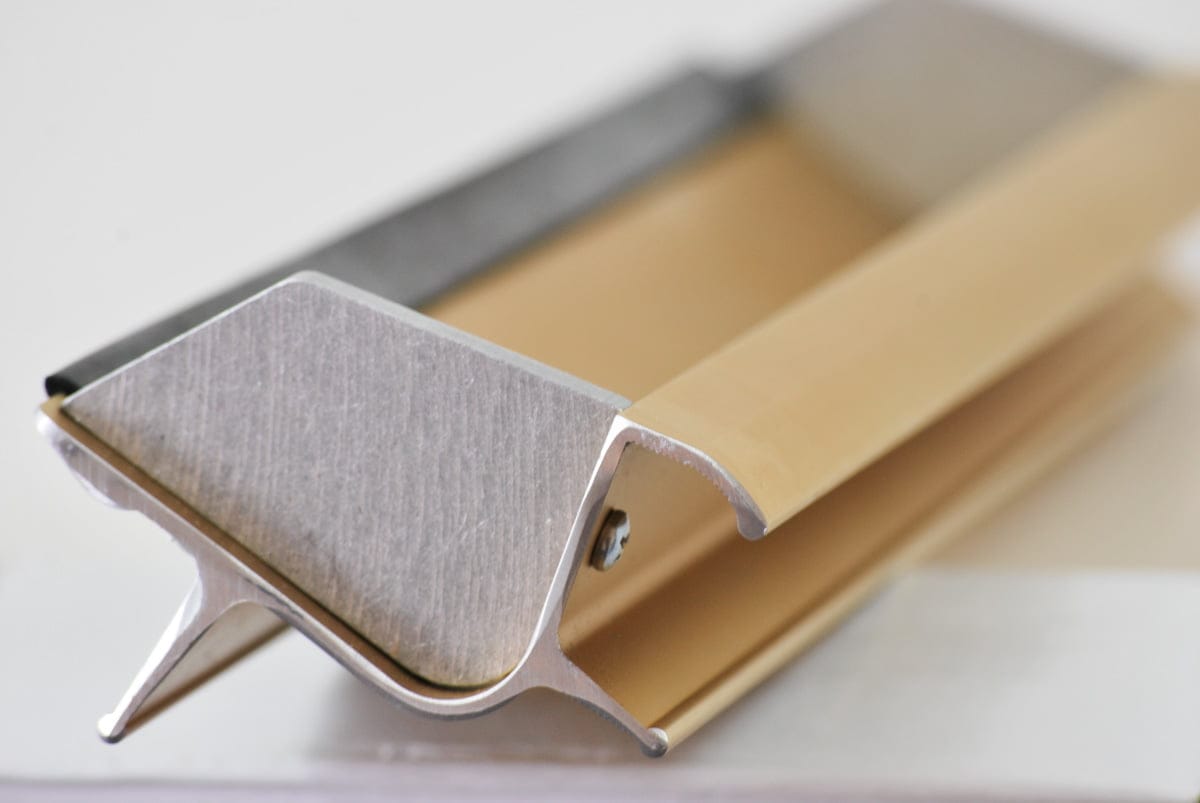
Drilled, tapped, and screwed-in aluminum end caps catch emulsion overflow and never fall off mid-coat. No plastic caps to lose or replace — cleanup is faster and the coater lasts longer.
Anti-Tip Design Saves Emulsion
Downward-projecting legs let you set the loaded coater flat on a counter without it tipping and dumping emulsion. Saves emulsion waste and cleanup time between coatings — a small detail that pays off every screen-making session.
Sized for Standard Production Frames
Available in 14″, 15″, 16″, and 18″. The 16″ is the most common size for 20×24 frames; the 18″ is the most common for 23×31 frames — the two screen sizes used by virtually every textile and graphic shop in production.
$34.99 – $39.99 · In stock and ships same-day from RCS San Antonio, TX · FREE shipping on orders over $200

Price range: $34.99 through $39.99

Description

AWT Pro Angle 1 Single-Sided Scoop Coater

Made in America · A.W.T. World Trade (Chicago, IL since 1957) · Single Sharp Edge for Precision Coats

The Pro Angle 1 is the entry into AWT’s professional scoop coater line — the premium, American-made, category-defining tool that has been the gold standard for direct-emulsion coating in screen printing shops for decades. Single sharp coating edge, calibrated by AWT to deposit a precise, thin-to-medium emulsion film. Built from extruded aluminum with a hard-anodized gold finish that survives years of daily production use. Available in four production-standard sizes (14, 15, 16, 18 inches) covering the two screen frames used by virtually every textile and graphic shop in the country: 20×24 and 23×31.

★ Made in America
Single sharp edge
Extruded aluminum
Anti-tip design
Permanent end caps

Why the AWT Pro Angle 1 Is the Best-Made Scoop Coater in the Industry

A scoop coater looks like a simple tool — a U-shaped aluminum trough with an edge. So why do AWT Pro Angle scoop coaters cost more than double what you’d pay for an import — and why has every serious production shop in America had at least one in the screen room for the last 50 years? The answer comes down to six engineering details that you can’t see in a product photo but show up the first time you use the tool.

★ MADE IN AMERICA
A.W.T. World Trade · Chicago, Illinois · Manufacturing since 1957

A.W.T. has manufactured screen printing equipment in the USA for over 65 years — the Pro Angle scoop coater design is the result of decades of iterative refinement based on direct feedback from American production shops. Cheap offshore copies imitate the visual design but skip the engineering details that actually matter. When you buy an AWT, you’re buying the original — engineered, machined, and finished in Chicago by people who understand the production environment it lives in.

1. Balanced & Calibrated Aluminum Extrusion
AWT’s aluminum extrusion profile is engineered as a system — wall thickness, trough depth, lip angle, and edge profile are tuned together to deposit a precisely uniform emulsion film top-to-bottom on the screen. Cheap aluminum coaters use generic extrusion profiles sourced from commodity suppliers; the resulting coater puts down thicker emulsion at one end of the screen than the other, which creates uneven stencil thickness and inconsistent print quality. The AWT lays down the same coat at the bottom of the screen as at the top — every pass, every screen, for years.
2. Permanent, Drilled-and-Tapped End Caps
The end caps on a Pro Angle 1 are aluminum — recessed into the body, drilled, tapped, and screwed into position. They are not removable, not replaceable, not glued, not snap-fit. Cheap import coaters use plastic snap-on end caps that crack from temperature swings, fall off in the middle of a coating pass, get lost in screen wash, and need ongoing replacement. AWT’s permanent end caps catch emulsion overflow on every pass and outlast the rest of the coater.
3. Hard-Anodized Gold Finish (Not Paint)
Hard anodization is a controlled electrochemical process that grows an aluminum oxide layer on the surface 5-10× harder than the raw aluminum underneath. The result: the trough resists staining from pigmented emulsion, screen wash and reclaim chemistry doesn’t etch the surface, and the calibrated edge maintains its profile through years of use. The gold color isn’t paint or anodized dye — it’s the natural color of the oxide layer at this thickness. It cannot chip, peel, or wear off.
4. Anti-Tip Geometry
The underside legs and trough geometry are designed so a loaded Pro Angle 1 rests flat on a counter without tipping forward and spilling emulsion. Cheap coaters with no anti-tip feature roll, tip, or drip the moment you set them down to grab a screen — wasting emulsion every coating session and creating cleanup work. The anti-tip detail is invisible until you experience the difference; once you do, you can’t go back to coaters that don’t have it.
5. Asymmetric End-Wall Geometry With Rounded Guide Corners
Look at the end walls of a Pro Angle 1 closely — they’re asymmetric. The leading edges (the part that slides up the screen) have rounded corners specifically machined to prevent damage to the mesh as the coater glides across it. The end walls function as guide surfaces that hold the coater at AWT’s engineered optimal angle relative to the screen without you having to think about it. Cheap coaters have flat square end caps that scratch screens and let the user accidentally tilt off-angle mid-stroke.
6. Decades of Production-Floor Refinement
AWT has been making this scoop coater for over 50 years — the current Pro Angle 1 design is the result of continuous refinement based on direct feedback from American production shops. Every detail you can identify is there for a reason that came from a real shop’s real problem. New scoop coater designs from import manufacturers haven’t had that feedback loop. AWT’s coater is what you get when one company spends 50+ years iterating on a single tool with the people who use it every day.
The bottom line on AWT vs cheap import scoop coaters
A cheap import scoop coater looks identical to an AWT in a product photo. But the import deposits inconsistent coating thickness, the plastic end caps fall off within a few months, the cheap finish stains and corrodes, and the edge profile dulls quickly. You replace it every year or two. An AWT Pro Angle 1 lasts 10+ years of daily production use — one tool, properly maintained, will outlast multiple sets of imports while delivering consistent coating quality every single time. The economic case for premium American-made tools is even more obvious when you factor in stencil quality: better coating means fewer rejected prints, less wasted ink, less reshoot work. The AWT pays for itself in the first year of serious production use.

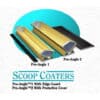
AWT Pro Angle 1 vs Pro Angle 2: Side-by-Side Comparison

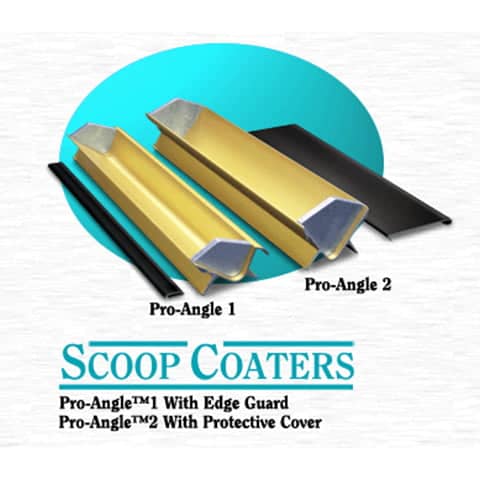
AWT makes two scoop coaters in the Pro Angle family. Both are Made in America, both use the same premium extruded aluminum and hard-anodized gold finish, both have permanent end caps and anti-tip design. The difference is the coating edge configuration and emulsion capacity. Use this chart to figure out which one is right for your workflow:

FeaturePro Angle 1 (This Product)Pro Angle 2
Coating EdgeSingle sharp edge — deposits a thinner, controlled emulsion filmDual edge: sharp side (thinner) + dull/round side (thicker)
Stencil DepositThin to medium — ideal for face coats, higher mesh count work, fine detail printsVariable — thinner with sharp edge OR thicker with dull edge (your choice mid-job)
Emulsion CapacityStandard trough capacity2× the capacity of the Pro Angle 1 — fewer refills between passes on larger screens
WorkflowSimple — one edge, one decision (pick up, coat, set down). Great when multiple people coat screens.Versatile — rotate the coater 180° mid-job to switch between thin and thick deposit profiles without changing tools.
Weight & HandlingLighter, easier on long coating sessions — less hand fatigueHeavier (larger trough + 2× emulsion) — more fatigue but better for high-volume continuous coating
Best ForTextile plastisol production, water-based work, face coats, shops doing consistent work at consistent mesh counts (110-200), hobbyist & intermediate printers, training environments where simplicity mattersHigh-deposit specialty work (puff, high-density, athletic ink, glitter, foil base), shops doing capillary film + emulsion combos, varying mesh counts (40-350), printers who want one tool for thin AND thick coats
Made in America✓ A.W.T. (Chicago, IL)✓ A.W.T. (Chicago, IL)
Anti-Tip Design✓ Standard✓ Standard
Permanent End Caps✓ Drilled, tapped, screwed✓ Drilled, tapped, screwed
Edge Guard / Dust CoverRubber edge protectorCombination edge guard + dust cover (also protects emulsion left in trough)
Price Point$34.99 – $39.99 (lower)Higher (premium for dual-edge + 2× capacity)
Product PageYou are here — the Pro Angle 1 pageView the AWT Pro Angle 2 →

Sharp Edge vs Dull/Round Edge: What’s the Difference?

Understanding the edge profile difference is the most important decision when picking between Pro Angle 1 and Pro Angle 2. The two edge types deposit different amounts of emulsion, which directly affects stencil thickness and how the printed result looks:

Sharp Edge (Pro Angle 1 + sharp side of Pro Angle 2)
A sharp edge cuts the emulsion as it travels up the screen, depositing a thinner, more controlled emulsion film. The cured stencil is thinner with sharper edges — ideal for:
  • Higher mesh count work (200-350 mesh)
  • Face coats on top of an already-coated screen
  • Fine line detail, halftones, and small text
  • Standard textile plastisol prints where stencil thickness doesn’t need to be excessive
  • Production work where consistency matters more than maximizing ink deposit
Dull / Round Edge (only on Pro Angle 2)
A dull or rounded edge pushes emulsion onto the screen rather than cutting it, depositing a thicker emulsion film and building a thicker stencil. Useful when you need a deeper ink well for higher ink deposit — ideal for:
  • Puff inks (need thick stencil to deposit enough ink for the puff to expand)
  • High-density inks — athletic ink, glitter ink, foil base, suede base
  • Lower mesh count work (40-110 mesh) where the stencil acts as the ink-thickness governor
  • Base coats that will be face-coated later to build total stencil thickness
  • Discharge ink work where extra ink deposit improves opacity
Pick the Pro Angle 1 if…
  • You print mostly textile work at consistent mesh counts (110-200 typical for plastisol; 200-305 for water-based)
  • You want the simplest possible coating workflow — pick up, coat, set down
  • Multiple people in your shop coat screens, and you want to eliminate the “which edge do I use?” confusion
  • Hand fatigue on long coating sessions matters (lighter tool)
  • You’re newer to screen coating and want consistent results without complicated edge-selection decisions
  • You print primarily standard prints (chest prints, back prints) without high-density specialty effects
Pick the Pro Angle 2 if…
  • You regularly print high-density specialty effects (puff ink, athletic ink, glitter base, foil base) that need thicker stencils — the round edge builds the needed thickness in fewer passes
  • You print across a wide range of mesh counts (40-350) and want to optimize stencil thickness per job
  • You want to do base coats with the dull edge and face coats with the sharp edge in the same workflow
  • You’re coating larger screens and the 2× emulsion capacity means fewer refills
  • You’re an experienced printer who knows when each edge type is the right choice
  • You’d rather own one versatile tool than buy a Pro Angle 1 now and a separate thicker-deposit tool later

How to Pick the Right Scoop Coater Size for Your Screens

This is the question that trips up almost every new screen printer: what size scoop coater do I need? AWT’s official rule is simple, but worth understanding so you order correctly the first time:

AWT’s Sizing Rule
Order a scoop coater 3 inches larger than your image area.
The math: 1 inch coating margin on each side of the image (so the emulsion extends fully past the image area) + 0.5 inch end cap recess on each side (where the scoop coater itself doesn’t coat). 1 + 1 + 0.5 + 0.5 = 3 inches added to the image area to get the right outside coater dimension.

Sizing Math: Match the Coater to Your Frame and Image Area

Scoop Coater SizeImage Area It CoatsMost Common Frame Match
14″ coaterSmaller frames, sleeve prints, pocket prints, hobby use
15″ coater12″ image areaSmaller 20×24 frames, narrower image areas
16″ coater  ★13″ image areaMost common for 20×24 frames — the production-shop standard size
18″ coater  ★15″ image areaMost common for 23×31 frames — full-back prints, jumbo chest, larger image areas
✓ The two production-shop standards
If you’re running a typical textile or graphic shop with both 20×24 and 23×31 frames in rotation, you need both the 16″ and the 18″. The 16″ covers all your standard chest-print and back-print work on 20×24 frames. The 18″ handles full-back and larger jumbo image work on 23×31 frames. Buy them as a pair the first time and you won’t need to come back for another size for years.
⚠ Make sure the coater fits inside your frame
The scoop coater needs to physically fit between the inside edges of the frame. A 16″ coater needs the inside dimension of your 20×24 frame to accommodate it — standard 20×24 textile frames have ~17-18″ inside width, so the 16″ fits with clearance. An 18″ coater fits comfortably in 23×31 frames (~20-21″ inside width). Measure inside-frame width before ordering if you have non-standard or custom frames.

Proper Coating Technique With the Pro Angle 1

Good coating technique matters more than which scoop coater you use. The AWT Pro Angle 1 makes consistent coating easier, but only if you follow the basics. Here’s the production-shop method:

1
Prep the Screen and Emulsion
Screen must be reclaimed clean, degreased, and fully dry. Wet spots or oils on the mesh cause coating defects. Emulsion should be mixed (sensitized if required), stirred slowly without whipping in bubbles, and at room temperature. Work under yellow safelights if the emulsion is light-sensitive.
2
Pour Emulsion Into the Trough
Pour slowly along the length of the trough to distribute the emulsion evenly. Fill to about ¾ full — enough emulsion to coat top-to-bottom without running out, but not so much that it overflows. Critical: a half-empty coater deposits unevenly. Refill between coats; never coast on a low coater.
3
Position at the Bottom of the Screen, Tilt Toward the Mesh
Set the coater at the bottom of the screen (the side closest to you), flat against the mesh. Tilt the coater toward the mesh until the emulsion just touches and starts to wet the mesh. The angle matters — too vertical and the emulsion won’t flow onto the mesh; too horizontal and you flood it. The AWT’s calibrated edge tells you when you’ve hit the right angle by feel.
4
Drag Upward, Slow and Steady (6-10 Seconds)
Pull the coater straight up the screen with even pressure. 6 to 10 seconds is the right pace for a textile-frame coat — slow enough for the emulsion to penetrate the mesh, fast enough that you don’t pull excess. Both hands on the coater (one on each end of the handle) gives the most even cross-screen pressure. Don’t stop mid-pass; one continuous motion.
5
Feather Off at the Top
As you approach the top edge of the screen, gradually tilt the coater further away from the mesh to taper the emulsion off cleanly. Without the feather technique, emulsion piles up at the top of the screen, drips, and creates exposure problems.
6
Flip the Screen, Repeat on the Other Side
Most emulsions specify 1+1 (one coat each side) or 2+1 (two print side, one squeegee side). Always finish with the final coat on the squeegee side — this pushes emulsion through to the print side where the ink gasket forms. Refill the coater between sides if needed.
7
Dry the Screen Print-Side Down
Place coated screen horizontally with the print side facing down in a clean, light-safe drying cabinet at 86-104°F (30-40°C) and 30-50% relative humidity. Gravity pulls the emulsion toward the print side, creating the sharp stencil profile needed for clean prints. Drying upside-down or vertically creates emulsion thickness inconsistencies.

Caring for Your Pro Angle 1 (So It Lasts 10+ Years)

A well-cared-for AWT scoop coater easily lasts a decade of daily production use. A neglected one can be ruined in months. Three habits make the difference:

Clean the Coating Edge After Every Use
Per AWT’s care instructions: wipe the coating edge with a warm damp cloth after each coating session. Dried emulsion on the edge changes the coating profile and causes streaks. Never use abrasive pads or scrapers on the edge — the anodization is wear-resistant, but mechanical damage to the calibrated edge is permanent and ruins coating consistency.
Use the Edge Protector When Stored
The rubber edge guard that ships with the coater isn’t decorative — it protects the calibrated coating edge from nicks when the coater is stored or transported. A single nick from a tool dropped on the edge can permanently affect the coating profile. Snap the protector back on whenever the coater isn’t being used. Replacement edge protectors are available if the original wears out.
Cover the Trough When Emulsion Is in It
If you leave sensitized emulsion in the trough between coats (even for a few minutes), cover the trough with plastic wrap or a piece of cardboard. Exposed emulsion picks up dust that ends up in your stencil as pinholes, plus light hitting sensitized emulsion in the trough partially exposes it before it ever touches the screen. A quick cover prevents both problems.
Never Force the Coater Through Stuck-On Material
If you find dried emulsion or debris on the edge, soak the coater in water until the material softens, then wipe it away gently. Scraping or prying at hardened emulsion damages the edge profile. The anodized aluminum is hard, but the calibrated edge is precision-machined — treat it like the precision tool it is, not like a putty knife.

Pair Your Pro Angle 1 With the Right Emulsion

A precision scoop coater only matters if you’re coating with good emulsion. Here are the Murakami emulsions most production shops pair with the Pro Angle 1 for textile and graphic work:

Murakami Photocure BLU

Pre-sensitized PVA-SBQ photopolymer in blue. 41% solids, fast exposure. The everyday textile workhorse emulsion.

View Photocure BLU →

Murakami T9 Pink

Pre-sensitized photopolymer in pink. 44% solids, 17,000 mPa·s. Higher viscosity for thicker stencils on demanding work.

View T9 Pink →

Murakami Photocure WSR

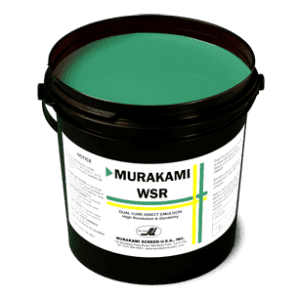
Solvent-resistant dual-cure. 44% solids. For shops running water-based, discharge, HSA, and plastisol with aggressive cleanup.

View Photocure WSR →

Murakami SP-1400 (Diazo)

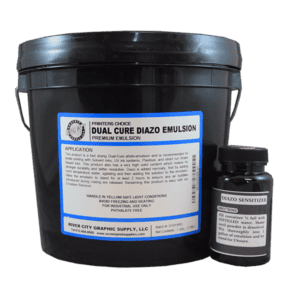
Traditional diazo emulsion in blue. 42% solids. For shops preferring the classic diazo workflow.

View SP-1400 →

Murakami SP-9500 (Dual-Cure)

All-purpose dual-cure in green. 36% solids. For UV, solvent, plastisol, and graphic/industrial printing.

View SP-9500 →

Murakami 901 Blockout Red

Fast-drying screen blockout for masking off pinholes and unwanted open areas. Same scoop coater works for both emulsion and blockout.

View 901 Blockout →

Browse the full screen printing emulsion category for all the options available, including Chromaline, Saati, and other brands. New to coating screens or troubleshooting issues? Our Emulsion Troubleshooting Guide covers the most common coating, exposure, washout, and on-press problems.

FREE SHIPPING ON ORDERS OVER $200
AWT Pro Angle 1 Single-Sided Scoop Coater ships same-day from San Antonio, TX

Not sure which size to order? Got a question about edge profile, AWT vs other brands, or coating technique? Call us — we’ve been distributing AWT scoop coaters and screen printing supplies since 2008 and we’ll help you pick the right tool the first time.

Call (512) 454-0505

Technical Specifications

Product Identification

SpecificationValue
Product NameAWT Pro Angle 1 Single-Sided Scoop Coater
ManufacturerA.W.T. World Trade (American Wood Type)
DistributorRiver City Supply (San Antonio, TX)
Manufacturer Part NumberAWT SC series (size-dependent)
Product FamilyAWT Pro-Angle series (Pro Angle 1 = single edge; Pro Angle 2 = dual edge)
Available Sizes (RCS)14″, 15″, 16″, 18″ (outside dimension)
Custom SizesAvailable from AWT up to 144″ (call for special-order quote)
CategoriesEmulsions & Stencil Supplies / Production Supplies

Construction & Materials

ComponentSpecification
Body MaterialTop-quality extruded aluminum, balanced and calibrated
FinishHard-anodized gold aluminum (chemical oxide layer 5-10× harder than raw aluminum)
Coating EdgeSingle sharp edge, calibrated by AWT for thin-to-medium emulsion deposit. Ideal for face coats, higher mesh counts, and consistent precision coating.
End CapsPermanent aluminum end caps — recessed, drilled, tapped, and screwed into the body. Catches overflow and never falls off. Recessed 0.5″ per side.
StabilityAnti-tip design (downward-projecting legs allow flat resting position with emulsion loaded, no spillage)
Edge ProtectorIncluded — rubber edge guard protects calibrated coating edge during storage and transport
Handle DesignIntegrated extruded handle along one side of the trough — designed for two-handed coating with even pressure distribution

Size Selection Guide (AWT’s 3-Inch Rule)

AWT’s official sizing recommendation: the scoop coater outside dimension should be 3 inches larger than your image area. This accounts for 1″ of coating margin per side (so emulsion fully extends past the image) plus 0.5″ of end cap recess per side (where the coater itself doesn’t lay down emulsion).

Scoop Coater SizeCoating Area (Outside − 1″)Recommended Image AreaMost Common Frame Match
14″13″11″ image areaSmaller frames, sleeve prints, pocket prints, hobby use
15″14″12″ image areaSmaller 20×24 frames, narrower image areas
16″  ★15″13″ image areaMost common for 20×24 frames (production standard)
18″  ★17″15″ image areaMost common for 23×31 frames (full-back prints, jumbo chest)

Notes: All sizes refer to outside dimension of the scoop coater. Coating area = outside dimension minus 1″ (0.5″ end cap recess per side). The recommended image area equals coating area minus 2″ (1″ coating margin per side). The two starred sizes (16″ and 18″) are the production-shop standards — most textile and graphic shops own both. For specialty frames or non-standard image areas, custom sizes up to 144″ are available from AWT on special order.

Compatibility

Use WithNotes
Direct EmulsionsAll direct screen printing emulsions: photopolymer (PVA-SBQ), diazo, dual-cure. Works with Murakami, Chromaline, Saati, Ulano, Easiway, and any other brand.
BlockoutSame coater handles screen blockout application — the calibrated edge deposits a smooth, even layer just like with emulsion.
Screen FramesVerify scoop coater fits inside frame dimensions. Standard 20×24 textile frames accommodate up to 18″ coaters. 23×31 frames accommodate up to 20″+ coaters. Static aluminum and wood frames both compatible.
Capillary FilmNot used for capillary film application (capillary films apply with water and a separate roller, not a scoop coater). However, the Pro Angle 1 can be used to apply emulsion over a dried capillary film for combination stencils.

Technical Sheets / Safety Data Sheets / Documents

FREQUENTLY ASKED QUESTIONS

Is the AWT Pro Angle 1 made in America?
Yes — the AWT Pro Angle 1 is Made in America. A.W.T. World Trade has manufactured screen printing equipment domestically in Chicago, Illinois since 1957. The aluminum is extruded in the USA, the coater is machined and assembled in the USA, and the hard-anodization is done in the USA. Buying an AWT supports American manufacturing and gives you a tool engineered by people who understand American shop conditions. Cheap offshore scoop coaters imitate the visual design but skip the engineering details that actually matter for production-quality coating.
Why is this the best-made scoop coater in the industry?
Six engineering details set the AWT Pro Angle 1 apart from cheaper imports: (1) balanced & calibrated extrusion that deposits uniform coating top-to-bottom; (2) permanent drilled-and-tapped aluminum end caps that never fall off; (3) hard-anodized gold finish that’s 5-10× harder than raw aluminum and never chips or peels; (4) anti-tip geometry that lets a loaded coater rest flat without spilling; (5) asymmetric end-wall guide surfaces with rounded corners that protect the mesh; and (6) over 65 years of A.W.T. iterative refinement based on direct feedback from American production shops. Cheap import coaters skip every one of these details. The AWT lasts 10+ years of daily production use; cheap coaters need annual replacement. See the full breakdown in the Description tab above.
What size scoop coater do I need?
Two ways to figure out the right size. Easy way: if you’re running standard 20×24 frames, get the 16″ — that’s the production-shop standard for this frame size. If you’re running 23×31 frames, get the 18″. Most textile shops own both. Precise way: use AWT’s 3-inch rule — order a scoop coater 3 inches larger than your image area (1″ coating margin per side + 0.5″ end cap recess per side). Example: 13″ image area → 16″ coater. 15″ image area → 18″ coater.
What’s the difference between the Pro Angle 1 and Pro Angle 2?
The Pro Angle 1 (this product) has a single sharp edge — one calibrated coating profile that deposits a thinner, controlled emulsion film. The Pro Angle 2 is dual-edge (one sharp side + one dull/round side) with about 2× the emulsion capacity. The dull/round side on the Pro Angle 2 deposits a thicker emulsion film and builds a thicker stencil — useful when you need a deeper ink well for high-deposit specialty ink prints like puff, athletic ink, glitter, or foil base. See the full side-by-side comparison chart above. Both are Made in America by A.W.T. and share the same premium build. View the Pro Angle 2 →
Is the Pro Angle 1 a sharp edge or a round edge?
The Pro Angle 1 has a sharp edge — this is the key thing to know when comparing it to the dual-edge Pro Angle 2. A sharp edge cuts the emulsion as it travels up the screen, depositing a thinner, more controlled film. The cured stencil is thinner with crisper edges — ideal for face coats, higher mesh count work, fine line detail, and standard textile prints. A dull or round edge (the other side of the dual-edge Pro Angle 2) pushes emulsion onto the screen and builds a thicker stencil — better when you need a deeper ink well for high-density ink deposits (puff, athletic ink, glitter base, foil base). If your work needs thick stencils on a regular basis, look at the Pro Angle 2 for the dual-edge option.
Will the Pro Angle 1 fit my screen frame?
For standard textile frames, yes — the math works out. 20×24 frames typically have ~17-18″ inside width, which comfortably accommodates a 16″ coater (the production-shop standard for this frame size). 23×31 frames have ~20-21″ inside width, which comfortably accommodates an 18″ coater (the production-shop standard for this frame size). Measure inside-frame width before ordering if you have non-standard or custom frames. For specialty oversize frames, AWT makes Pro Angle 1 coaters up to 144″ on special order — call us for a quote.
Can I use the same scoop coater for emulsion and blockout?
Yes — the Pro Angle 1 is designed for both emulsion and blockout. Same calibrated edge handles both. Best practice: if your shop runs both regularly, consider owning two coaters (one dedicated to emulsion, one dedicated to blockout) since switching between emulsion and blockout requires thorough cleaning to avoid cross-contamination. At $35-40 per coater, this is a small investment that prevents stencil quality issues.
How do I clean the Pro Angle 1?
Per AWT’s care instructions: wipe the coating edge with a warm damp cloth after each use. For dried emulsion on the trough, soak in water until it softens, then wipe gently. Never use abrasive pads, scrapers, or sharp tools on the coating edge — the calibrated edge is precision-machined and a single nick or scratch ruins coating consistency. The anodized aluminum is wear-resistant, but mechanical damage to the edge is permanent. Always snap the rubber edge protector back on when storing.
How long should the Pro Angle 1 last?
Properly maintained, an AWT Pro Angle 1 easily lasts 10+ years of daily production use. The aluminum body and hard-anodized finish are practically indestructible under normal conditions; the permanent end caps don’t crack or fall off; and the calibrated edge stays sharp through years of use if you protect it with the included edge guard during storage. The most common reason for early replacement is mechanical damage to the coating edge from being dropped or scraped — that’s why the edge protector matters.
Can I leave emulsion in the trough between coatings?
Yes for short periods (a few minutes between coats during the same screen-making session), but always cover the trough with plastic wrap or cardboard to keep dust out and prevent partial UV exposure of sensitized emulsion. For longer storage, pour the emulsion back into its container, wipe the coater clean, and snap on the edge protector. Leaving emulsion in the trough for hours or overnight wastes emulsion (it dries on the trough) and exposes it to dust and light that ruin stencil quality.
How many scoop coaters should my shop own?
Most production shops own 2-3 different sizes — one for chest prints (14″ or 15″), one for larger prints (16″ or 18″), and maybe a backup. If your shop runs both emulsion and blockout regularly, owning a dedicated coater for each prevents cross-contamination. At the Pro Angle 1’s price point ($34.99-$39.99), it’s cost-effective to have the right size for every common job rather than constantly swapping between an undersized and oversized coater.
Why does AWT use hard-anodized gold aluminum?
Hard anodization is a controlled electrochemical process that creates an aluminum oxide layer on the surface 5-10× harder than raw aluminum. This makes the trough resistant to staining from pigmented emulsion (so cleanup stays easy after years of use), resistant to chemical etching from screen wash solvents, and resistant to mechanical wear from handling. The gold color isn’t paint or coating — it’s the natural color of the hard-anodized oxide layer. It will not chip, peel, or wear off.
What’s the “anti-tip” design about?
The underside of the Pro Angle 1 has downward-projecting legs (and the trough geometry is balanced) so the coater rests flat on a counter without tipping forward and spilling emulsion. Cheaper coaters without anti-tip design dump emulsion the moment you set them down to grab a screen — wasting emulsion and creating cleanup mess. The anti-tip design saves emulsion every screen-making session and is one of the small engineering details that justifies AWT’s premium positioning.
Can I use the Pro Angle 1 with non-Murakami emulsion brands?
Yes — the AWT Pro Angle 1 works with any direct screen printing emulsion regardless of brand. The coating edge is brand-agnostic; the same calibrated edge that handles Murakami emulsion handles Chromaline, Saati, Ulano, Easiway, Hydro-X, CCI, and any other manufacturer’s direct emulsion. The Pro Angle 1 also works for blockout regardless of brand.
Why is the AWT more expensive than cheap import scoop coaters?
Three reasons: (1) calibrated extrusion — AWT’s aluminum profile is engineered for uniform coating, cheap imports use generic extrusions that deposit inconsistent thickness; (2) hard-anodized finish — the gold finish is a hardness treatment, not paint, so the trough stays clean and the edge stays sharp for years; (3) permanent drilled-and-tapped end caps — AWT’s end caps never fall off, while plastic snap-on end caps on cheap coaters break, get lost, or fall into the trough during coating. The premium pays for itself in years of reliable service vs annual replacement of cheap coaters.
Do I need a special tool to load emulsion into the coater?
No — you pour emulsion directly from the emulsion container into the trough. Pour slowly along the length of the trough to distribute evenly. Don’t overfill (about ¾ full is right). If your emulsion container is too large to pour directly, decant some into a smaller squeeze bottle or pitcher first.
Is shipping really same-day?
Yes — the AWT Pro Angle 1 Single-Sided Scoop Coater ships from our San Antonio, TX warehouse when in stock. Orders placed before 3:30 PM Central Time on a business day typically ship the same day. Most US destinations receive shipment in 2-5 business days via standard ground. FREE shipping on orders over $200. Many customers add a scoop coater to an emulsion order to combine shipping — the coater is light enough that it adds minimal weight to a full ink or emulsion order.
Need Help Choosing the Right Scoop Coater Size?

Tell us your screen frame size and your typical image area — we’ll tell you which Pro Angle 1 size fits. Or ask about Pro Angle 1 vs Pro Angle 2 for your specific workflow. RCS has distributed AWT scoop coaters since 2008.

(512) 454-0505

Reviews

Reviews

    Only logged in customers who have purchased this product may leave a review.

    You May Also Like

    Additional Options